Vietnam · Laos · Cambodia
Expert connections to local tour operators, hotels, restaurants and cruises. Unlock 5–12% extra value with our Final Bargain Advantage.

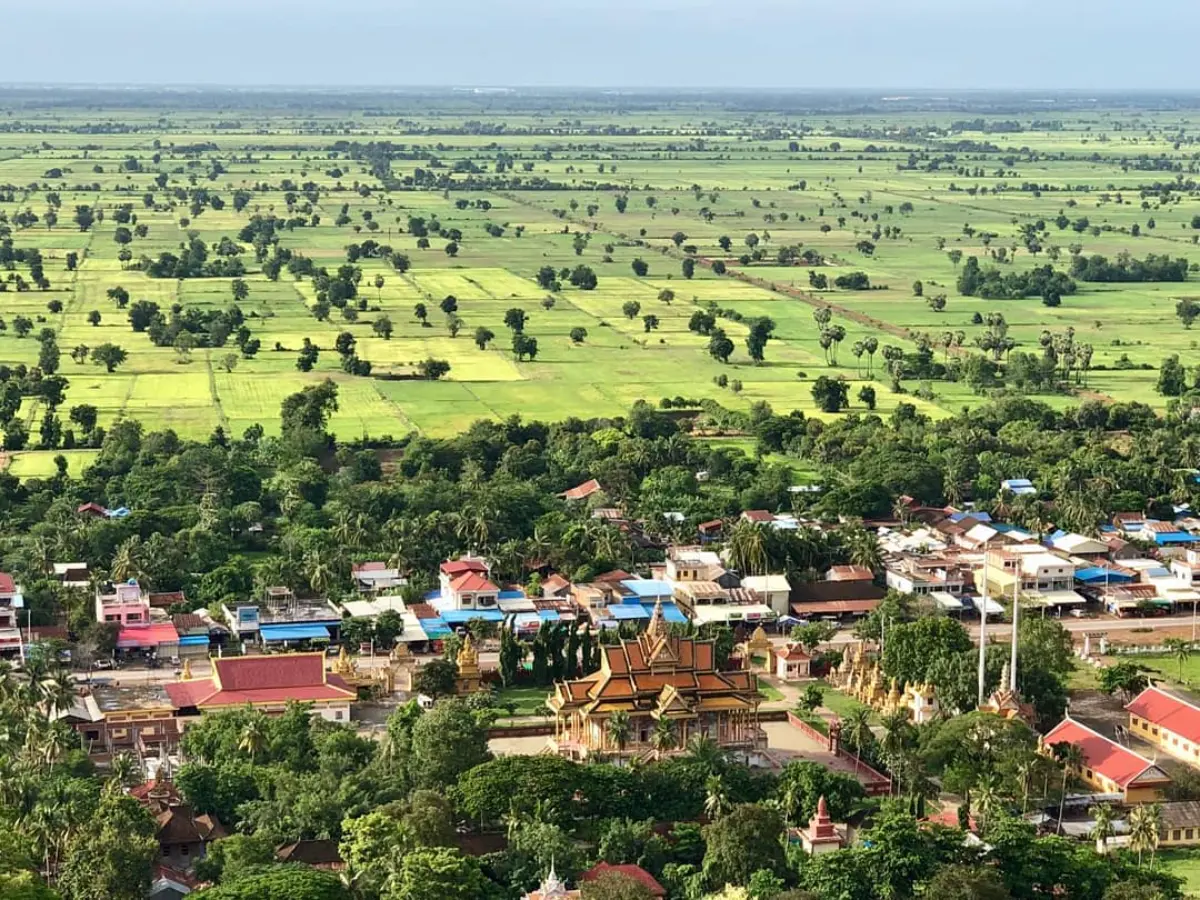
Battambang is Cambodia’s hidden gem: a city that moves at the rhythm of the Sangkae River. Known as the “rice bowl of Cambodia,” it is also the country’s artistic heartbeat, with a thriving contemporary art scene, well-preserved colonial architecture, and some of the most authentic Khmer temple ruins outside Angkor. The legendary bamboo train (norry), the bat-filled caves of Phnom Sampeau, and the warm smiles of its people make Battambang an essential stop for any traveller seeking the soul of modern Cambodia.
Battambang province was a key region of the Khmer Empire, with ancient temples dating back to the 11th and 12th centuries. The city itself flourished under the French protectorate (1863–1953), becoming an agricultural and administrative centre. Many of the town’s most beautiful buildings – the Governor’s Mansion, the old railway station, and the shophouses along Street 1 – date from this era. After the Khmer Rouge years, Battambang has slowly rebuilt and is now a hub for education, rice production, and creative arts. Its name means “loss of staff” – referring to a legendary stick used by the god Indra.
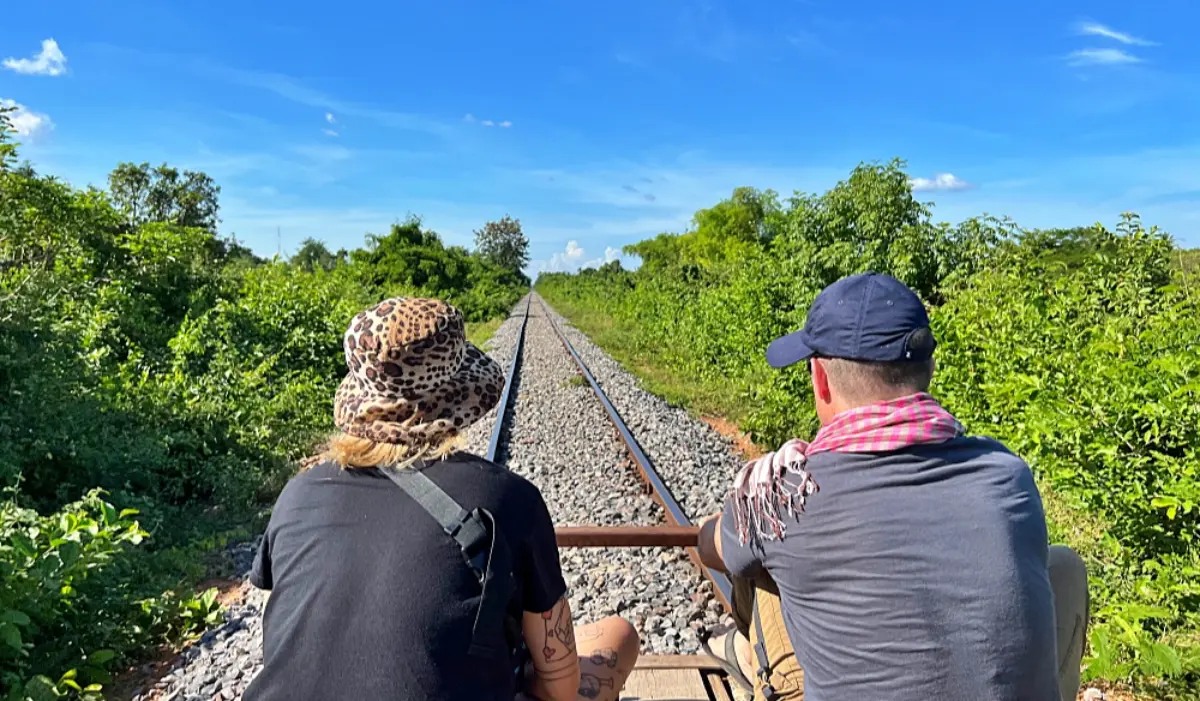
The Bamboo Train (Norry) is a one-of-a-kind experience: a simple bamboo platform mounted on two axles, powered by a small motorcycle engine. It runs along a single, abandoned railway track, reaching speeds of up to 30 km/h. When two trains meet, the one with fewer passengers is disassembled to let the other pass. The ride takes you through rice paddies, villages, and fruit orchards. The original line near Battambang was dismantled in 2017, but a tourist-friendly replica operates about 7 km from town, offering a 30-minute round trip. It’s a nostalgic, fun, and utterly Cambodian experience.
Phnom Sampeau (Ship Mountain) is a 100-meter limestone hill about 12 km southwest of Battambang. The climb (or motorbike ride) to the top rewards you with stunning views of the surrounding countryside. At the summit, you’ll find a pagoda, a reclining Buddha, and – most hauntingly – the Killing Caves (Wat Sampeau), a memorial to victims of the Khmer Rouge. Inside a large cave, a glass-sided stupa contains the skulls and bones of those who were killed and thrown into the crevices. At sunset, millions of bats stream out of another cave (Prak Tee Pov) – a breathtaking natural spectacle. Arrive around 5:15 PM to watch the bat exodus.
“Battambang taught me that beauty and tragedy can coexist. The same mountain that holds a killing cave also releases a river of bats into the sunset – a reminder of nature’s resilience and Cambodia’s unbreakable spirit.” — travel writer Pico Iyer
For those who love Khmer archaeology, Battambang offers two remarkable temple sites without the crowds of Angkor. Wat Ek Phnom is an 11th-century Angkorian temple (built under King Suryavarman I) located 11 km north of town. The main prang (tower) leans precariously, surrounded by a broken wall and a seated Buddha statue added later. A large baray (reservoir) nearby adds to the serene atmosphere. Wat Banan, built in the 11th century on a hilltop, is often called “mini-Angkor Wat” for its five towers (prasats) and steep laterite staircase (358 steps). The view from the top over the Sangkae River valley is spectacular. Both temples are easily reached by tuk-tuk.

Battambang is the undisputed arts capital of Cambodia. Phare Ponleu Selpak (The Brightness of the Arts) is a remarkable non-profit school founded by former refugees in 1994. It offers free education in visual arts, theater, music, and circus arts to underprivileged children and youth. In the evening, Phare performers stage an acrobatic circus show that blends traditional Khmer stories with modern choreography – a world-class performance that rivals any in the region. Other notable venues include Romano Gallery, Battambang Museum, and Ostro Art Space, showcasing both emerging and established Cambodian painters and sculptors. The city’s creative energy is palpable.
Battambang’s riverside is the heart of the city. Street 1 (also called Promenade) is lined with French colonial shophouses, many converted into cafes, restaurants, and boutique hotels. The Psar Nat (Central Market) is a beautiful Art Deco building from 1936, still bustling with vendors selling everything from fresh produce to gold jewellery. The Governor’s House (now the Provincial Hall) is a classic example of colonial architecture with its yellow façade and wooden shutters. Walking or cycling along the river at sunset is a daily ritual for locals and travellers alike.
Battambang is a food lover’s paradise. The province produces Cambodia’s best rice, oranges, and bamboo shoots. Must-try dishes include samlor korkor (a traditional Khmer vegetable soup), fish amok (steamed fish in coconut curry, served in a banana leaf), and kdam chha (stir-fried crab with green pepper). The city is also famous for ambok (toasted sticky rice flakes) and kralan (bamboo sticky rice with coconut and beans). For dessert, seek out num bot (rice cakes with palm sugar). The night market along the river offers inexpensive street food, while high-end restaurants like Jaan Bai and Kinyei serve creative Cambodian-fusion cuisine.
Battambang is not a city that shouts for attention. It whispers – in the creak of a bamboo train, the brushstroke of a young artist, the chant of a pagoda monk. It is a place where the past is not forgotten but woven into a hopeful present. Whether you come for the temples, the art, or simply to watch the bats spiral into the dusk, Battambang will leave you with a sense of quiet wonder. Slow down, stay a few days, and let this riverside town capture your heart.
“Have you ridden the bamboo train or watched the bats of Phnom Sampeau? Share your story – or let Indochine Chic arrange a custom art and heritage tour of Battambang.”