

Cambodia: The Kingdom of Wonder
Siem Reap & Angkor: The Temple Complex
The Heart of the Khmer Empire
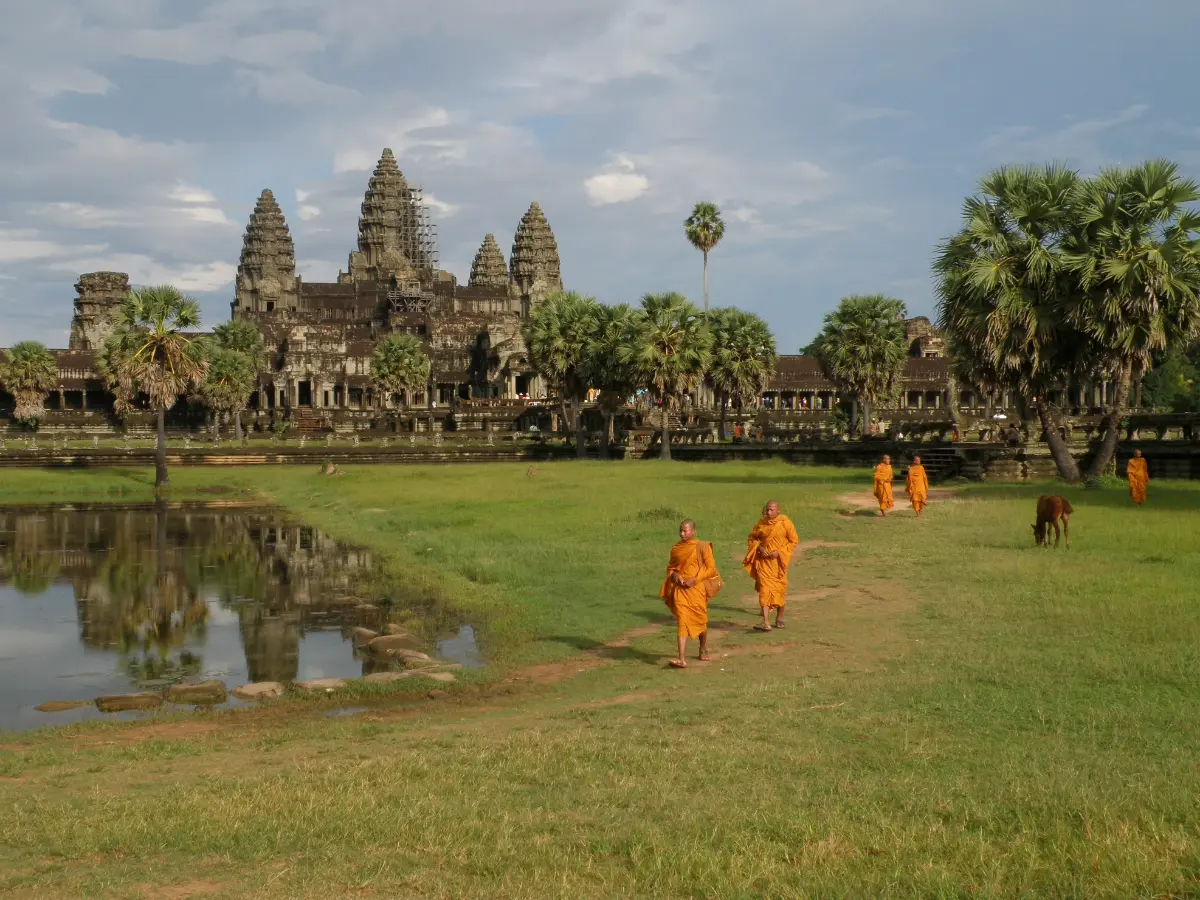
The temples of Angkor are the crown jewel of Cambodia. Stretching across 400 square kilometers, the park contains the ruins of the Khmer Empire, which flourished from the 9th to the 15th centuries. Angkor Wat, the largest religious monument in the world, is the centerpiece — a temple of such symmetry and scale that it appears on the national flag. Bayon Temple, with its 216 smiling faces carved in stone, is a masterpiece of art and architecture. Ta Prohm is the temple where nature has reclaimed the stones, with silk‑cotton trees growing through the ruins. A visit to Angkor is a journey into a civilization that built the most extraordinary monuments of Southeast Asia.
The Modern City of Siem Reap
Siem Reap has grown from a quiet town into the gateway to Angkor. The city’s streets are lined with restaurants, markets, and the famous Pub Street, where travelers gather in the evening. But Siem Reap also offers quieter experiences: the Phare Circus, a performance by students of the Cambodian circus school; the Angkor National Museum, which provides context for the temples; and the floating villages of Tonlé Sap, where life is lived on the water.
Phnom Penh: The Capital on the Mekong
History, Culture, and Resilience
Phnom Penh, Cambodia’s capital, is a city of contrasts. The Royal Palace and Silver Pagoda are symbols of the monarchy’s enduring presence. The National Museum houses the world’s finest collection of Khmer sculpture. But the city also holds the memory of the Khmer Rouge era at the Tuol Sleng Genocide Museum and the Killing Fields of Choeung Ek — sites that are essential for understanding Cambodia’s modern history. Along the riverfront, the city pulses with energy, its cafes and bars looking out over the Mekong.
Battambang: Colonial Charm & Bamboo Trains
Cambodia’s Second City
Battambang, Cambodia’s second city, is a place of French colonial architecture, quiet streets, and the famous Bamboo Train — a makeshift railway vehicle that runs along the tracks through the countryside. The city is also known for its art scene, with galleries and workshops that produce contemporary Cambodian art. The nearby Phnom Sampeau mountain offers sunset views and caves that were used as killing fields during the Khmer Rouge era — a reminder of the region’s history.
Kampot & Kep: The Coastal South
Pepper, Seafood & Serenity
The southern coast offers a different Cambodia. Kampot is a riverside town known for its French colonial architecture, its world‑famous pepper, and the nearby Bokor National Park with its abandoned French hill station. Kep, a short drive away, was once a seaside resort for the French elite; today, it is known for its crab market and the quiet beaches of Kep National Park. The Kep crab, served with Kampot pepper, is a culinary highlight.
The Mekong & Tonlé Sap
The Water That Shapes the Land
Cambodia is defined by its water. The Mekong River flows through the country, sustaining the rice fields that feed the nation. The Tonlé Sap lake is the largest freshwater lake in Southeast Asia, its waters rising and falling with the seasons, creating a unique ecosystem. The floating villages on the lake are a world unto themselves, with schools, churches, and markets on the water.
The Cardamom Mountains & Islands
Wilderness & Seclusion
For those seeking adventure, the Cardamom Mountains offer some of Southeast Asia’s most pristine rainforest. Trekking, wildlife spotting, and river kayaking are possible in this protected area. The islands of the southern coast — Koh Rong and Koh Rong Samloem — are developing as beach destinations, with white‑sand beaches and turquoise water that rival any in the region.
Cambodia Tour Packages
Angkor Discovery (3–4 Days): Explore the temples of Angkor, with sunrise at Angkor Wat, Bayon, Ta Prohm, and a visit to the floating villages of Tonlé Sap.
Cambodia Journey (7–10 Days): Combine Siem Reap, Phnom Penh, and Battambang, with time for the Killing Fields and the Royal Palace.
Southern Escape: Spend time in Kampot and Kep, with pepper farms, crab markets, and the beaches of the south.
Complete Cambodia: A comprehensive tour from the temples to the coast, including the Mekong and Tonlé Sap.
The Essence of Cambodia — Cambodia is a country of contradictions: the grandeur of Angkor and the quiet of the countryside, the energy of Phnom Penh and the serenity of Kampot, the memory of suffering and the resilience of its people. To travel Cambodia is to walk among the ruins of an empire, to taste the flavors of a rich culinary tradition, and to witness a nation’s slow, steady renewal. It is a journey that will stay with you long after you return home.
Frequently Asked Questions
A minimum of 3 days is recommended to explore the main temples of Angkor. A one‑day pass allows you to see the highlights, but two or three days are better for a deeper experience.
The dry season (November–April) offers the best weather for temple exploration. The rainy season (May–October) is quieter, with lush landscapes.
Yes. Most visitors can obtain an e‑visa online or a visa on arrival at airports and land borders.
The US dollar is widely used alongside the Cambodian riel. Prices are often quoted in dollars; change is given in riel.
Fish amok (steamed fish curry), beef loc lac (stir‑fried beef), Kampot pepper crab, and the Khmer noodle soup (kuy teav).
Yes. Cambodia is generally safe for travelers. Take standard precautions against petty theft and be respectful of local customs.