Điện Biên Phủ: The Valley of History
The Battle That Changed History
56 Days and Nights
The Battle of Điện Biên Phủ was the climactic confrontation between the French colonial forces and the Việt Minh during the First Indochina War. The French had established a fortified base in the valley, hoping to cut off Việt Minh supply lines and draw them into a conventional battle. Under the command of General Võ Nguyên Giáp, the Việt Minh instead encircled the base, hauling artillery piece by piece over the mountains and positioning them in the hills above. When the battle began on March 13, 1954, the French found themselves trapped. After 56 days of relentless shelling, human wave assaults, and hand‑to‑hand combat, the garrison fell on May 7. The victory led to the Geneva Accords and the end of French colonial rule in Vietnam. Today, the battlefield is preserved as a memorial to the soldiers who fought — and to the strategy that made victory possible.
A1 Hill: The Heart of the Battle
The Most Fiercely Contested Position
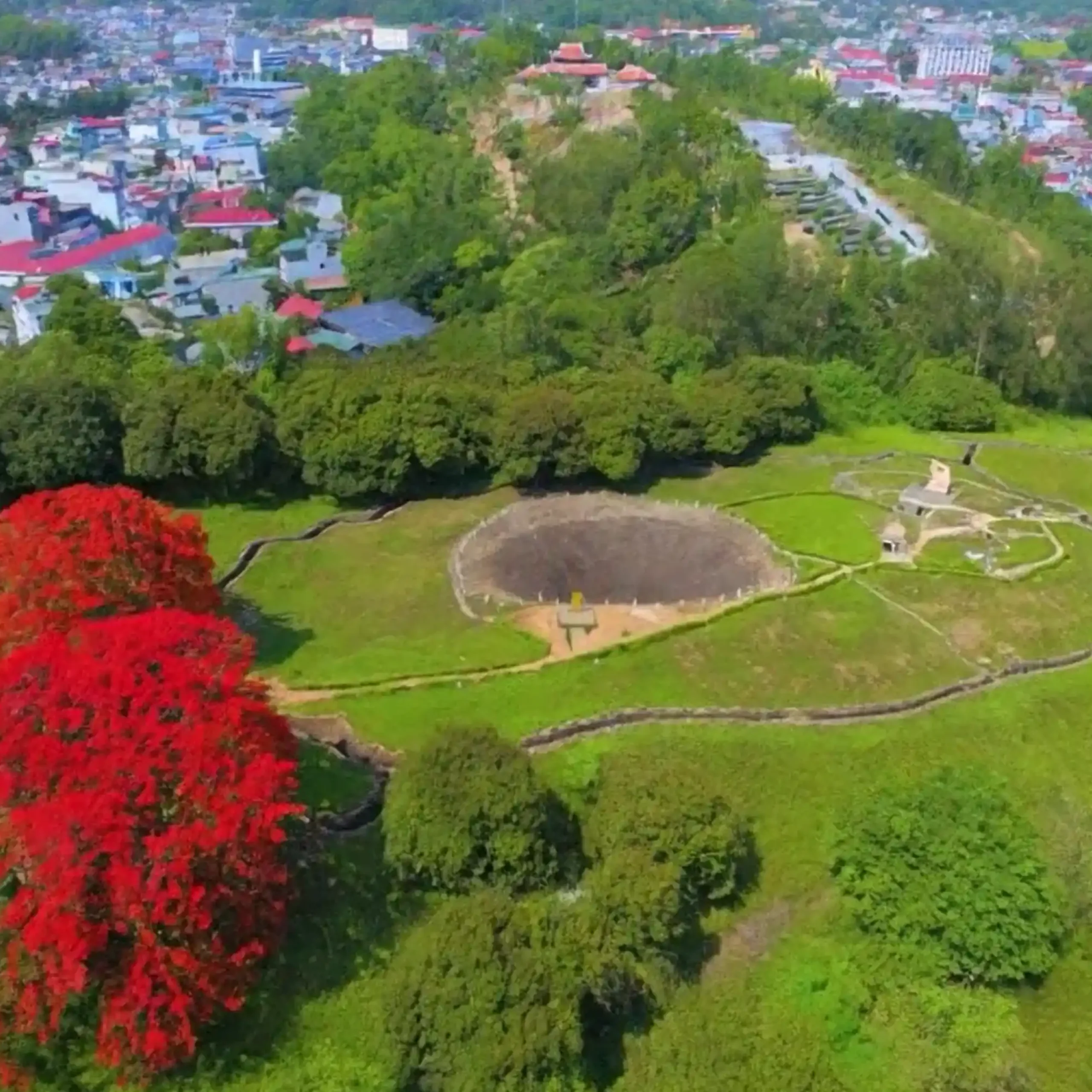
Hill A1 (known to the French as Élise) was the key to the French defense. The battle for this hill was among the most brutal of the siege, with both sides suffering heavy casualties. The Việt Minh eventually tunneled beneath the French fortifications and detonated a massive charge, collapsing the bunker complex. Today, visitors can walk the site, see the crater left by the explosion, and view the restored bunkers and trench systems. The hill is crowned with a memorial and a tank that was abandoned by the French forces. Standing at the top, looking down at the valley below, you can grasp the strategic importance of this ground — and the courage required to take it.
The Museum of Victory
Relics of a Turning Point
The Điện Biên Phủ Victory Museum houses an extensive collection of artifacts from the battle: weapons, maps, photographs, and personal belongings of soldiers on both sides. The centerpiece is a large diorama depicting the entire battlefield, with illuminated displays that trace the progress of the siege. The museum’s exhibits offer context for the battle, explaining the strategy of General Giáp, the supply lines that sustained the Việt Minh, and the international significance of the victory. For those seeking a deeper understanding of the history, the museum is an essential stop before exploring the battlefield sites.
General Giáp’s Command Bunker
Where Strategy Was Born
Hidden in the forest west of the valley, the Command Bunker of General Võ Nguyên Giáp is where the strategy of the siege was devised. From this simple earthen dugout, Giáp directed the campaign, famously changing the plan from “fast attack, fast victory” to “steady attack, steady advance” — a decision that proved decisive. The site has been preserved, with a replica of the bunker and a small museum explaining Giáp’s role. A walk through the forest to the bunker offers a sense of the conditions under which the Việt Minh leadership operated — a reminder that victory was as much about endurance as about firepower.
Other Battlefield Sites
The Landscape of Siege
Beyond A1, the valley is dotted with memorials and preserved sites. Hill D1 offers views of the city and the surrounding mountains, and its trenches are still visible. Hill C1 and Hill E1 were part of the defensive ring, and each has its own memorial. A tour of these hills — by motorbike or car — gives a sense of the scale of the battlefield and the network of fortifications the French constructed. The Muong Thanh Bridge, which the French defended fiercely, still spans the Nam Rôm River. And the French Cemetery, restored with the graves of soldiers from both sides, is a place of quiet reflection.
The City Today: Culture & Cuisine
Life in the Valley
Điện Biên Phủ is not only a historic site but a living city. The surrounding villages are home to the Thái, H’Mông, and Giáy ethnic groups, whose traditions of weaving, farming, and festivals continue. The Điện Biên Market is a vibrant place to see local life — the colors of traditional dress, the aromas of mountain cuisine, and the commerce of a provincial capital. The Thái stilt houses along the river offer a glimpse of traditional architecture, and the surrounding hills are planted with rice terraces that echo the patterns of the battlefield.
The Taste of the Northwest
Cơm Lam, Pa Pỉnh Tộp & Thắng Cố
Cơm Lam: Sticky rice cooked in bamboo tubes — the signature dish of the northwest. Served with grilled chicken or pork, it is a meal that carries the scent of the forest.
Pa Pỉnh Tộp: Grilled fish wrapped in banana leaves with forest herbs — a Thái specialty that is both simple and deeply flavorful.
Thắng Cố: The H’Mông horse meat stew, an acquired taste that has become a symbol of the highlands. Available in markets and restaurants, it is a dish of tradition and community.
Chẩm Chéo: The essential dipping sauce of the northwest — a blend of roasted chili, salt, garlic, and forest herbs that accompanies almost every meal.
Dien Bien Phu Tour Packages
Battlefield Tour: A half‑day or full‑day tour covering A1 Hill, the museum, General Giáp’s bunker, and other key sites.
Northwest Loop: Combine Điện Biên Phủ with Sơn La, Mộc Châu, and Lai Châu for a journey through Vietnam’s northwestern highlands.
Cultural & Historical Immersion: Visit Thái villages, the Điện Biên Market, and explore the region’s ethnic traditions alongside the battlefield sites.
Private Tour: For those seeking flexibility, a private guide can tailor the experience to your interests and pace.
The Essence of Điện Biên Phủ — Điện Biên Phủ is a place where history is not confined to museums but is present in the landscape. The hills still bear the scars of battle, the trenches still cut through the earth, and the memory of those who fought is honored at every memorial. To visit is to walk on ground that changed the world — to understand the cost of independence and the courage that made it possible. But it is also to experience the beauty of the northwest, the warmth of its people, and the quiet of a valley that has returned to peace.
Frequently Asked Questions
A minimum of 2 days allows you to visit the key battlefield sites and the museum. For those interested in the surrounding villages and ethnic culture, 3 days is recommended.
The dry season (October–April) offers the most comfortable conditions for exploring the battlefield. The anniversary of the victory (May 7) is a time of ceremonies and commemoration.
By air to Điện Biên Phủ Airport (DIN) from Hanoi (1.5 hours), by bus from Hanoi (8–10 hours), or by private car. The journey by road passes through stunning mountain scenery.
Light clothing for daytime, a light jacket for cooler evenings (especially in winter), comfortable walking shoes, a hat, sunscreen, and insect repellent.
Yes. English‑speaking guides can be arranged through tour operators. The museum has English signage and exhibits.
Cơm lam (bamboo rice), pa pỉnh tộp (grilled fish), and thắng cố (horse meat stew) for the adventurous. Don’t miss chẩm chéo, the essential dipping sauce of the northwest.