Quảng Bình: The Underground Kingdom
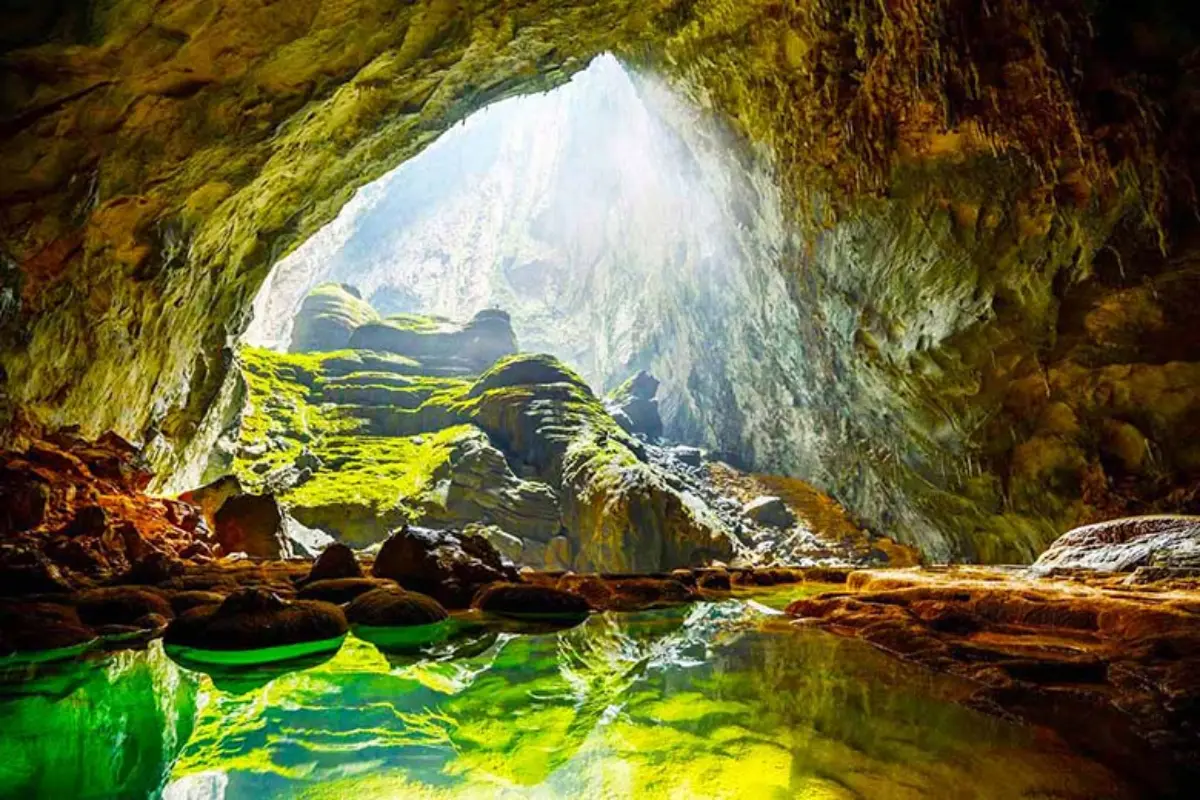
400 Million Years in the Making
UNESCO’s Underground Masterpiece
The Phong Nha-Kẻ Bàng National Park is one of the world’s most significant karst landscapes, formed over 400 million years — the oldest major karst in Asia. Recognized by UNESCO in 2003 and again in 2015 for its outstanding geological value, the park contains hundreds of cave systems, underground rivers, and some of the largest caverns on the planet. Its forests shelter rare primates, including the red‑shanked douc langur, and its limestone peaks rise dramatically from the surrounding lowlands. This is not merely a national park; it is a geological archive of Earth’s deep history.
The Rhythm of the Seasons
When to Descend
Dry Season (April–August): The best time for cave exploration. Rivers are low, cave passages are accessible, and the weather is warm and sunny. April and May are particularly ideal, with lower humidity and clear skies.
Rainy Season (September–March): From September to November, heavy rains can flood cave entrances, closing some tours. However, the landscape becomes lush and dramatic, and the crowds disappear. Some caves remain accessible, offering a different perspective — the thunder of underground rivers at their peak. December to March is cooler, with occasional mist that shrouds the karsts in mystery.
The Legendary Caves
The Largest Cave Passage on Earth
Sơn Đoòng Cave is not just a cave — it is a world unto itself. Discovered in 1991 by a local farmer and explored by the British Cave Research Association in 2009, it was confirmed as the largest natural cave passage on Earth, with sections reaching over 200 meters in height and 150 meters in width. Inside, there are collapsed ceilings that create openings to the surface — dolines — where jungles grow beneath the sky, earning the cave the nickname “the cave with its own jungle and river.” The expedition to Sơn Đoòng is one of the world’s most exclusive adventures, limited to a few hundred visitors each year, requiring a 4‑day trek and rigorous safety screening. For those who go, it is a journey to the center of the Earth.
Paradise Cave: An Underground Palace
Known as Thiên Đường (Paradise) Cave, this 31‑kilometer dry cave is considered the most beautiful in the park. A wooden walkway leads visitors through 1 kilometer of illuminated chambers, where stalactites and stalagmites form a surreal landscape of flowstone, columns, and crystal curtains. The British Cave Research Association called it “the most beautiful and longest dry cave in Asia.” Unlike the river caves, here you walk through a silent, still world where the only sounds are your own footsteps and the distant drip of mineral‑rich water building structures that have been growing for millennia.
The River Cave
Phong Nha Cave gave the national park its name. Unlike Paradise, it is a water cave — entered by boat along the Son River, which flows directly into the mountain. The 7.7‑kilometer cave system features an underground river that has carved dramatic passages through the limestone. The boat journey takes you through the entrance chamber, where the ceiling rises to cathedral heights, and stalactites hang like frozen waterfalls. For many visitors, this is the quintessential Phong Nha experience — the silent drift into darkness, guided only by the boat’s headlamp and the occasional glimpse of a stalactite illuminated above.
Embrace the Darkness
For those seeking a more active experience, Dark Cave (Hang Tối) offers a different kind of exploration. True to its name, the cave has no artificial lighting — visitors wear headlamps and swim through the river entrance, then wade through chambers where the darkness is absolute. The adventure includes a zipline across the river, kayaking, and a mud bath in the cave’s natural clay. It is less about geological spectacle and more about the thrill of moving through the underworld.
Coastal Escape: Beaches of Quảng Bình
The Sea Beyond the Caves
After days underground, Quảng Bình’s coastline offers restoration. Nhật Lệ Beach, just northeast of Đồng Hới city, is a long stretch of white sand with clear waters and gentle waves — perfect for a sunset swim. The nearby harbor fills with fishing boats at dusk, their lights reflecting on the water.
Đá Nhảy Beach, 20 kilometers north of the city, takes its name from the “jumping rocks” — scattered boulders that create a rugged coastline. Here, the landscape feels more dramatic, with limestone outcrops meeting the sea. Both beaches remain relatively undeveloped compared to Vietnam’s better‑known coastal destinations, offering a sense of quiet authenticity.
The Taste of the Region
Cháo Canh, Bánh Lọc & Deo Potatoes
Cháo Canh: A thick noodle soup that is the signature breakfast of Đồng Hới. Thick, chewy noodles in a savory broth, served with shrimp, crab, or fish cake — it is the taste of the morning market.
Bánh Lọc (Quảng Bình Style): While found across Central Vietnam, here the tapioca dumplings are often filled with shrimp and pork, wrapped in banana leaves, and steamed or fried. Simple, satisfying, and ubiquitous.
Khoai Deo (Sweet Potato Strips): The sandy soils of Quảng Bình produce a unique variety of sweet potato. After harvest, they are peeled, sliced, and dried in the sun, resulting in a chewy, naturally sweet snack that makes the perfect souvenir.
Quảng Bình Tour Packages
Phong Nha Discovery: A 2‑day introduction — Phong Nha Cave boat tour, Paradise Cave walk, and Dark Cave adventure.
Multi‑Day Adventure: 3–4 days exploring deeper, with options for overnight jungle treks, kayaking, and visiting remote ethnic minority villages.
Sơn Đoòng Expedition: The ultimate adventure — a 4‑day, 3‑night journey into the world’s largest cave, with permits required and limited availability. Advance booking (often a year in advance) is essential.
Coastal & Caves Combo: Combine underground exploration with beach relaxation in Đồng Hới.
The Essence of Quảng Bình — Quảng Bình asks you to go deeper — literally. To descend into the earth, to navigate by headlamp, to stand in chambers where the scale of time becomes tangible. It is a destination for those who believe that the most profound landscapes are not always above ground. Here, in the darkness of a cave, you may find yourself thinking differently about light, about time, about the hidden worlds that exist beneath our feet. And when you emerge, the sun over the Nhật Lệ River feels like a benediction — the surface world, reclaimed.
Frequently Asked Questions
A minimum of 2–3 days allows for the classic caves — Phong Nha, Paradise, and Dark Cave. Adventure seekers and those wishing to explore remote caves should allow 4–5 days. The Sơn Đoòng expedition requires 4 days dedicated to the cave alone.
April–August offers the best conditions for cave exploration. For those prioritizing fewer crowds, December–February is cool and atmospheric, though some caves may be inaccessible during heavy rains (especially September–November).
By air to Đồng Hới Airport (Dong Hoi) with flights from Hanoi and Ho Chi Minh City; by train (Reunification Express) to Đồng Hới station; or by bus from major cities. The airport is 34 km from the city center.
Yes, but it requires booking through an authorized tour operator (exclusive permits). The expedition is physically demanding, involves 4 days of trekking and caving, and costs approximately $3,000 USD. Bookings often fill months in advance.
Sturdy, comfortable shoes with good grip (sneakers or hiking shoes), a change of clothes for wet caves, a headlamp (for some adventure tours), insect repellent, and a waterproof bag for cameras. Most tours provide helmets and life jackets.
Yes, for the main caves (Phong Nha and Paradise) which have well‑constructed paths and boat tours. The Dark Cave adventure is suitable for older children and active families; the Sơn Đoòng expedition is for experienced adult adventurers.