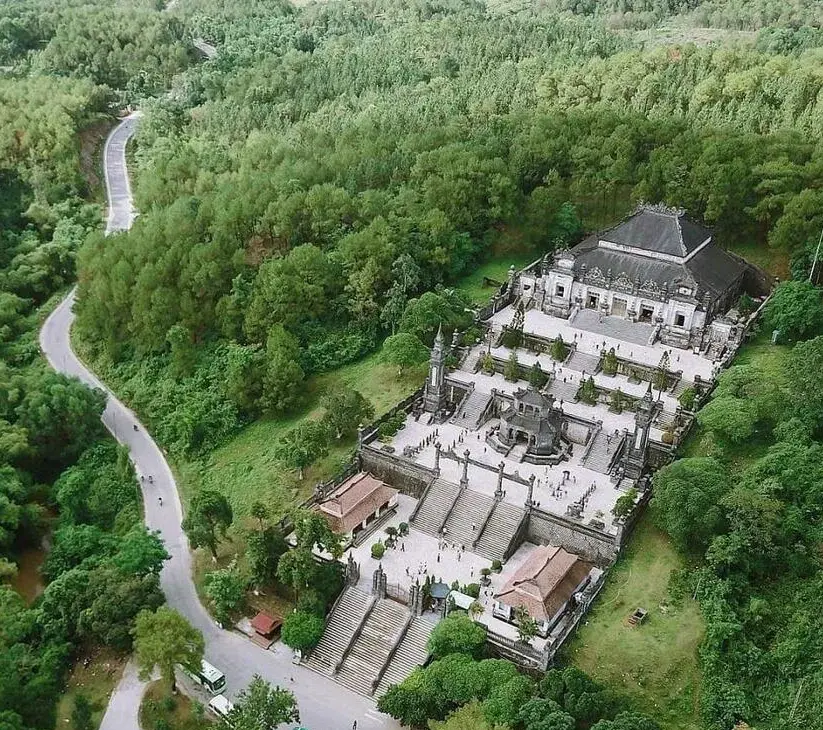
Heritage Hotels
Stay inside history within colonial mansions, converted royal residences, and boutique heritage gems across Indochina’s most beautiful cities.
Explore Hotels →The Ultimate Guide to Cambodia’s Temple of Eternity
The largest religious monument in the world — a 12th-century masterpiece of Khmer architecture, spiritual devotion, and timeless wonder. Complete guide to visiting Angkor Wat, the surrounding temples, and the ancient city of Angkor.
Where heaven meets earth — a monument to gods and kings
Angkor Wat is more than a temple — it is a vision of the cosmos carved in stone. Built in the early 12th century by King Suryavarman II, this architectural marvel was originally dedicated to the Hindu god Vishnu. Its five iconic lotus towers represent Mount Meru, the mythical home of the gods in Hindu and Buddhist cosmology.
Covering an area of 402 acres (162.6 hectares), Angkor Wat is the largest religious monument in the world — three times the size of the Vatican. Its intricate bas-reliefs, stretching over 800 meters, depict epic scenes from the Ramayana and the Mahabharata, as well as the Khmer king’s military campaigns and daily life.
Today, Angkor Wat is the spiritual heart of Cambodia. It appears on the national flag, and its image is synonymous with the country’s identity. For travelers, it represents the ultimate pilgrimage — a journey into the soul of Southeast Asian civilization.
From Hindu temple to Buddhist pilgrimage — 900 years of devotion
Angkor Wat was built during the height of the Khmer Empire under King Suryavarman II (ruled 1113–1150 AD). The temple was designed as a state temple and funerary monument for the king, dedicated to the Hindu god Vishnu. It took approximately 37 years to complete.
In the late 13th century, the Khmer Empire gradually transitioned from Hinduism to Theravada Buddhism. Angkor Wat was transformed into a Buddhist temple, with many of its Hindu iconography replaced or adapted. The temple remained in use throughout this period.
After the fall of the Khmer Empire in the 15th century, Angkor Wat was largely abandoned. The jungle slowly reclaimed the temple complex, and it became a pilgrimage site for Theravada Buddhists who maintained the site.
In 1860, French naturalist Henri Mouhot “discovered” Angkor Wat and brought it to Western attention. His published accounts sparked global fascination with the lost city of Angkor. The French colonial government began systematic restoration in the early 20th century.
In 1992, Angkor Wat was inscribed as a UNESCO World Heritage Site. The international community launched major restoration projects, including the iconic “Tourism Infrastructure” development that made the site accessible to millions.
Today, Angkor Wat is Cambodia’s most visited attraction, welcoming over 2 million visitors annually. It remains an active place of worship and a symbol of Cambodian national identity, appearing on the nation’s flag and currency.
A cosmic vision carved in stone

The five lotus towers of Angkor Wat represent Mount Meru, the sacred mountain at the center of the universe in Hindu and Buddhist cosmology. The central tower rises 65 meters above the ground, symbolizing the highest heaven.

The temple is surrounded by a 200-meter-wide moat, representing the cosmic ocean. The outer wall encloses the temple complex, symbolizing the mountains that encircle Mount Meru. The moat spans 1.5 kilometers by 1.3 kilometers.
Angkor Wat’s galleries contain over 800 meters of bas-reliefs, depicting scenes from Hindu mythology and Khmer history. The most famous include:
Creation myth of the universe — gods and demons churning the ocean to obtain the elixir of immortality.
From the Ramayana — the epic battle between Rama and the demon king Ravana.
Historical depiction of the Khmer king’s military campaigns and daily life.
Graphic depiction of 37 heavens and 32 hells, rewarding the virtuous and punishing the wicked.
Beyond Angkor Wat — exploring the ancient city
World’s largest religious monument. Sunrise is spectacular. Allow 2–3 hours. Best visited early morning or late afternoon.
Explore →
216 enigmatic stone faces gazing in four directions. Best visited in late afternoon when golden light illuminates the serene smiles.
Explore →
Giant silk-cotton trees strangle stone structures. Early morning offers solitude before crowds arrive. Tomb Raider filming location.
Explore →
“Citadel of Women” — carved from pink sandstone with the finest bas-reliefs in Cambodia. 25km from Siem Reap. Morning light is magical.
Explore →The last capital of the Khmer Empire. Includes Bayon, Baphuon, Phimeanakas, Terrace of the Elephants, and Terrace of the Leper King.
Explore →
Sunset viewpoint atop a hill temple. Arrive by 4:30 PM to secure a spot. Panoramic views over Angkor Wat and the surrounding jungle.
Explore →A sprawling monastic complex built by Jayavarman VII. 2.5 km east of Angkor Thom. Jungle-overgrown and atmospheric. Less crowded than Ta Prohm.
Explore →
Ta Prohm without crowds. A 12th-century temple swallowed by jungle. Located 68km from Siem Reap. Full-day excursion recommended.
Explore →Everything you need to know before you go
Purchase at the official ticketing office (Angkor Enterprise) or online. The 3-day pass is the most popular choice, covering the Grand Circuit and major temples.
Pro Tip: Purchase your pass at 4:30 PM for sunset entry — the following day is included free.
Best Time to Visit: November to February (cool, dry). March to May (hot, fewer crowds). June to October (green season, lush landscapes).
This is strictly enforced. You may be denied entry if not dressed appropriately.
The most magical moment in Cambodia
The five lotus towers of Angkor Wat rise from the darkness as the sky transitions from deep blue to pink and gold. The reflection in the western pool creates a perfect mirror image — one of the most photographed scenes in the world.
5:00 AM for best spot
Western pool or beyond
5:15–5:45 AM transition
6:00–6:30 AM exploration
Arrive by 5:00 AM during peak season (December–February). Bring a headlamp or flashlight — it’s still dark. The best photos are taken between 5:15 and 5:45 AM when the sky is at its most colorful. After sunrise, the temple is less crowded — explore the bas-reliefs before the main crowds arrive at 8:00 AM.
Maximize your time in the ancient city
5:00 AM: Angkor Wat sunrise
7:00 AM: Explore Angkor Wat
9:00 AM: Bayon and Angkor Thom
11:00 AM: Ta Prohm
1:00 PM: Lunch
3:00 PM: Phnom Bakheng sunset
Day 1: Angkor Wat sunrise, Bayon, Angkor Thom, Ta Prohm
Day 2: Banteay Srei, Preah Khan, Neak Pean, East Mebon, sunset at Phnom Bakheng
Day 1: Angkor Wat, Bayon, Angkor Thom
Day 2: Banteay Srei, Beng Mealea, Koh Ker
Day 3: Tonle Sap floating villages, Preah Khan, sunset
Discover the living culture of Siem Reap
Southeast Asia’s largest freshwater lake. Floating villages, stilted houses, and spectacular sunsets. A glimpse into life on the water.
Explore →Social enterprise reviving traditional Khmer crafts. Silk weaving, stone carving, woodworking, and lacquerware. Ethical shopping with purpose.
Visit →Contemporary circus arts with powerful Cambodian storytelling. Acrobatics, theater, and music supporting marginalized youth.
Book →Private blessing at a pagoda. Saffron-robed monks chant, tie sacred strings, and sprinkle holy water. A profound spiritual experience.
Book →Sacred mountain with River of 1000 Lingas and reclining Buddha. The birthplace of Angkor civilization.
Explore →Remote temple capital with a seven-tiered pyramid. A full-day excursion through stunning countryside.
Explore →Luxury sanctuaries after a day of exploring
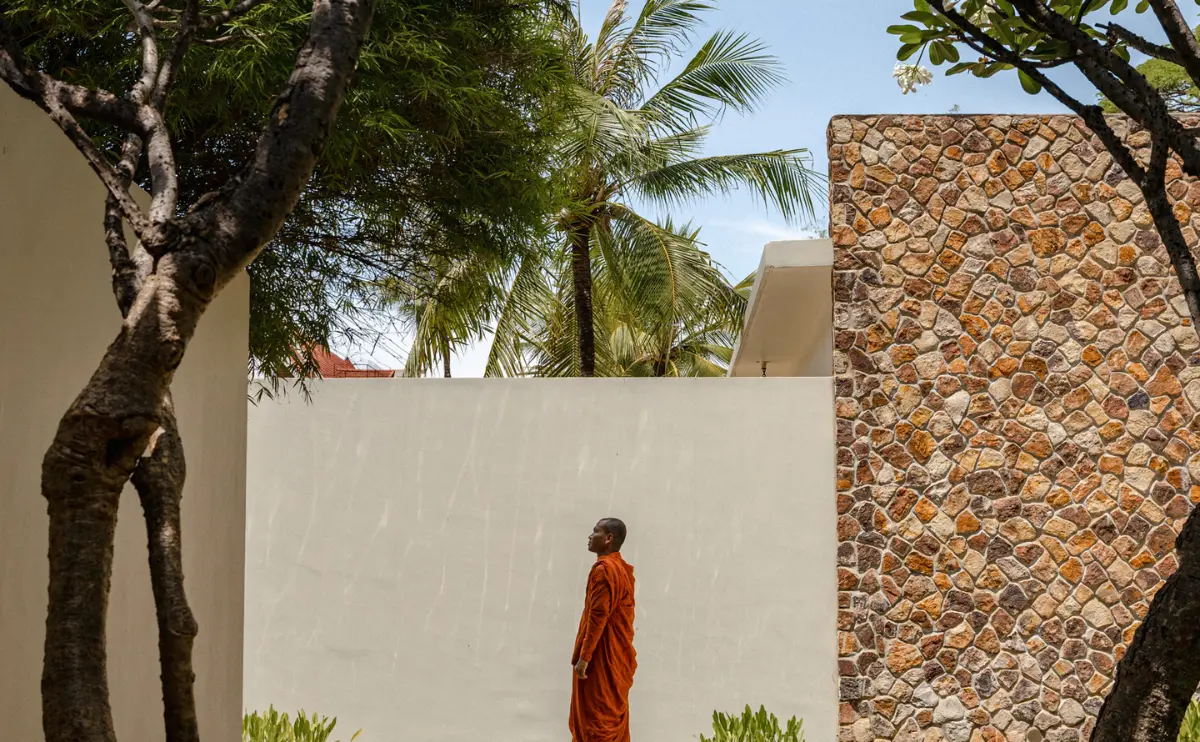
King Sihanouk’s former guest villa. 24 minimalist suites, private butler, and vintage Mercedes transfers to Angkor.
View →
Built in 1932. Art Deco elegance, legendary Elephant Bar, and museum-worthy interiors.
View →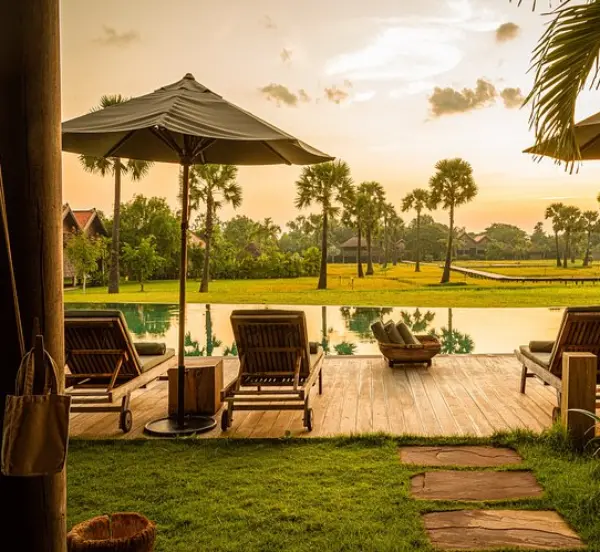
45 thatched villas on stilts over 8 hectares of rice paddies. Traditional Khmer architecture.
View →
Bill Bensley-designed boutique with social enterprise at its heart. Lush gardens and modern Khmer cuisine.
View →
Zero-plastic, eco-conscious luxury on the Siem Reap River. Complimentary daily massage included.
View →
Colonial-era riverside hotel with lush gardens, stunning pool, and renowned Kong Kea Spa.
View →From royal tasting menus to vibrant street food
1-day pass: $37 USD. 3-day pass: $62 USD. 7-day pass: $72 USD. Passes can be purchased at the official ticketing office or online.
The best time is November to February for cool, dry weather. March to May is hot with fewer crowds. June to October is the green season with lush landscapes.
Dress modestly with shoulders and knees covered. This is strictly enforced at Angkor Wat. Sleeveless tops, shorts, and short skirts are not permitted.
We recommend 3 to 5 days. The 3-day Angkor Pass covers the Grand Circuit and most major temples. A 5-day stay allows for remote temples, Tonle Sap, and cultural immersion.
Yes, you can explore independently. However, a private guide provides historical context, navigates the crowds, and reveals hidden details you would miss on your own.
Book a Private Guide →Extremely safe. The temple complex is well-patrolled and tourist-friendly. Use common sense and be aware of your surroundings.
Yes, the central tower is accessible via steep stairs. It offers panoramic views of the temple complex. Modest dress is required.
Limited accessibility. The main causeway and some ground-level galleries are accessible, but climbing the towers is not possible.
Angkor Wat leaves an indelible mark on the soul. The sunrise, the bas-reliefs, the silent faces of Bayon, the jungle swallowing Ta Prohm — these images stay with you long after you leave. This is not just a temple. It is a testament to human ambition, devotion, and the eternal pursuit of beauty. May your journey be as profound as the ancient stones themselves.
— The Indochine CHIC Team
© 2026 Indochine CHIC — Handcrafted luxury travel guides | Angkor Wat, Cambodia
Plan your complete Angkor experience
Let Indochine CHIC craft your perfect Angkor experience. Private guides, luxury hotels, VIP temple access, and bespoke itineraries.
enquiry@indochinechic.com
Explore the living legacy of Indochina through our curated editorial collection of heritage guides, hotels, and experiences.
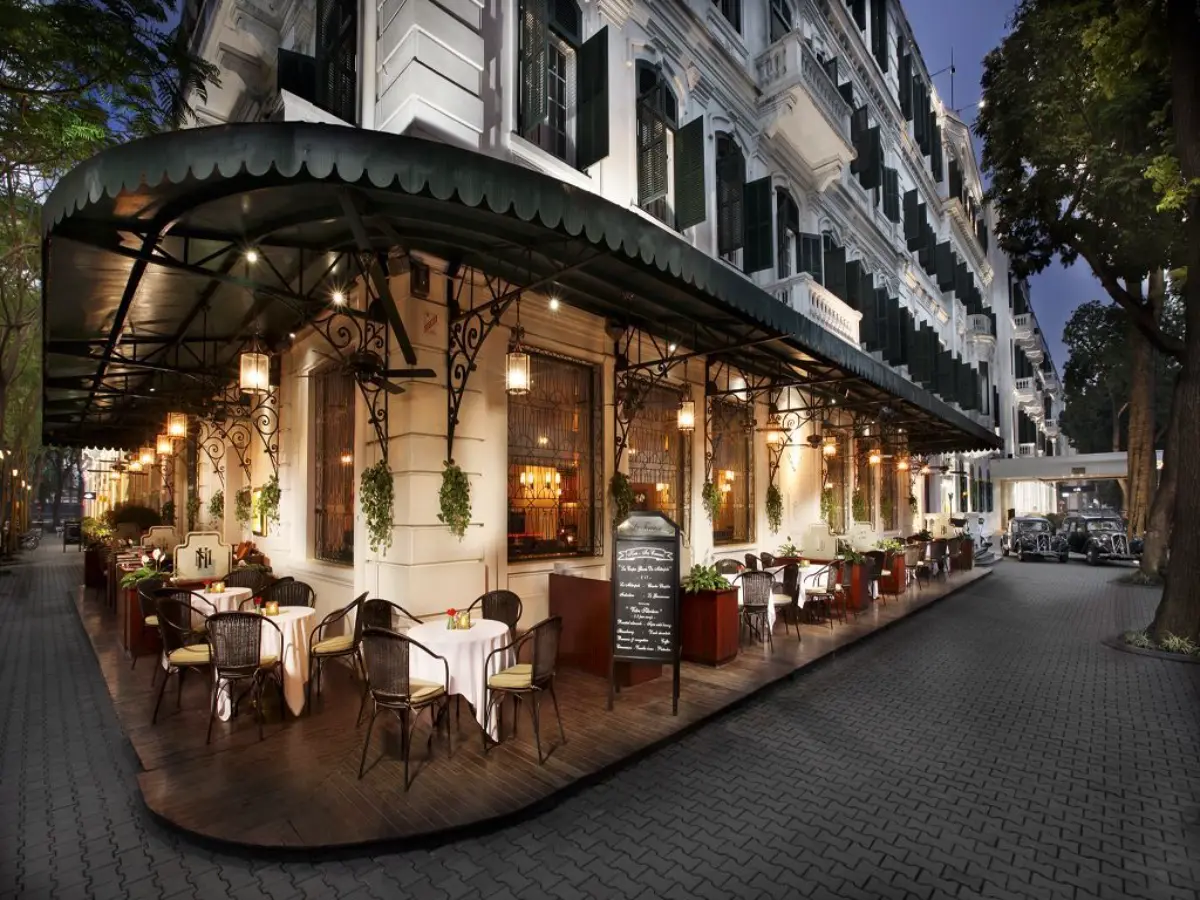
The ultimate crown jewel of classic French colonial elegance. Nostalgic white facades, timeless ironwork, and cinematic grandeur embody the peak of Indochine luxury.

Timeless Art Deco elegance sitting proudly on the banks of the Perfume River facing the ancient Imperial Citadel.

An architectural sanctuary layout directly on the pristine coast. Unrivaled luxury villas and soul-stirring cultural spas.

A pristine architectural heritage sanctuary dating back to 1930. Bask in old-world Saigon charm with opulent crystal chandeliers and nostalgic French-Indochine design lines.