
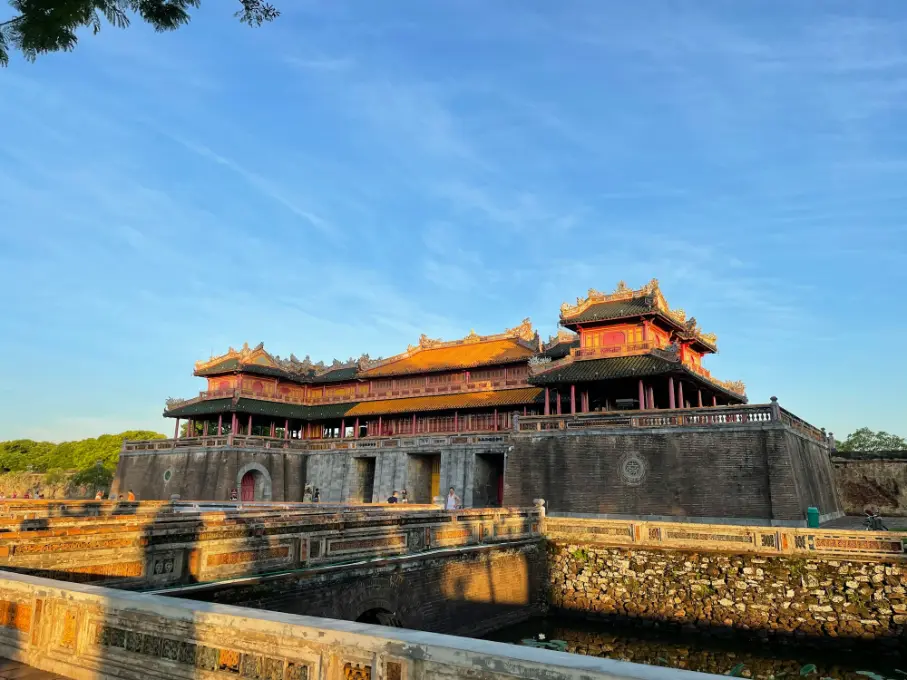
There is a city that does not boast. It mourns. It remembers. It sits on the banks of the Perfume River like an old scholar who has outlived all his students. This is Hue — Vietnam’s imperial capital for 143 years, home to thirteen Nguyễn emperors, and the stage for some of the country’s most glorious and tragic chapters. When you travel to Hue Imperial City, you do not come for nightlife or shopping. You come to walk among ghosts. You come to feel the weight of history pressing against your chest — not oppressively, but tenderly, like a hand on your shoulder saying, I was here. I mattered. Remember me. By the end of this memoir-guide, you will not have a checklist. You will have a quiet reverence. And you will know why Hue is the soul of Vietnam.
Quick Travel Snapshot (At-a-Glance)
| Category | The Indochine Chic Answer |
|---|---|
| Best Time to Visit | February to April — when the Perfume River is gentle, the sky is soft, and the royal tombs are blanketed in white ban flowers. |
| Typical Weather | Tropical monsoon. Dry season (Jan–Aug) is hot and humid. The rain from September to December adds a melancholic beauty. |
| Trip Length | 2 days for a pilgrimage. 3 days to linger. 4 days to let the imperial rhythm find you. |
| Where to Stay | On the south bank near the river (heritage mansions). Or inside the Citadel’s shadow (boutique hotels with royal gardens). |
| Getting Around | Cyclo for the Citadel. Private car with driver for the tombs. Dragon boat on the Perfume River for the romantic. |
| First-Timer Tip | Start at the Citadel at 8 AM before the heat. Save the tombs for late afternoon when the light turns golden and the crowds thin. |
The Destination in One Picture
Close your eyes. You are standing at the Meridian Gate of the Imperial City. It is 5 PM in October. The rain has just stopped. The stone flags are wet, reflecting the bruised purple sky. To your left, the Nine Dynastic Urns stand like silent sentinels — each one weighing two tons, each one dedicated to a different emperor. To your right, the Forbidden Purple City lies in ruins — destroyed by war, reclaimed by grass and wildflowers. A lizard scuttles across a moss-covered dragon stairway. In the distance, a monk’s chant drifts from a hidden pagoda. You are standing exactly where emperors once walked in silk robes, where concubines once whispered secrets, where a dynasty was born and buried. The only sound is the drip of water from a broken roof tile. And you realize: Hue is not a museum. It is a meditation on impermanence. And it is breathtaking.
Best Royal Experiences in Hue
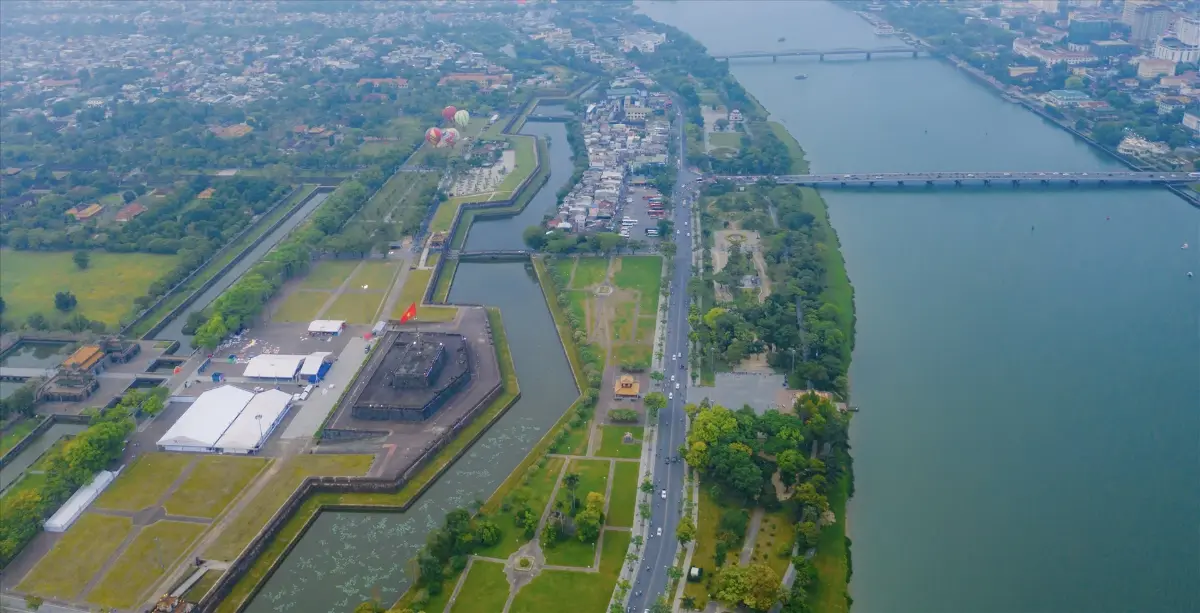
UNESCO-listed fortress within a fortress. The Flag Tower, the Meridian Gate, the Forbidden Purple City ruins, and the Halls of Mandarins. A full day of wonder.

The most romantic of the royal tombs — lakes, pavilions, and a lotus pond. Tu Duc designed it himself to escape his childless grief.
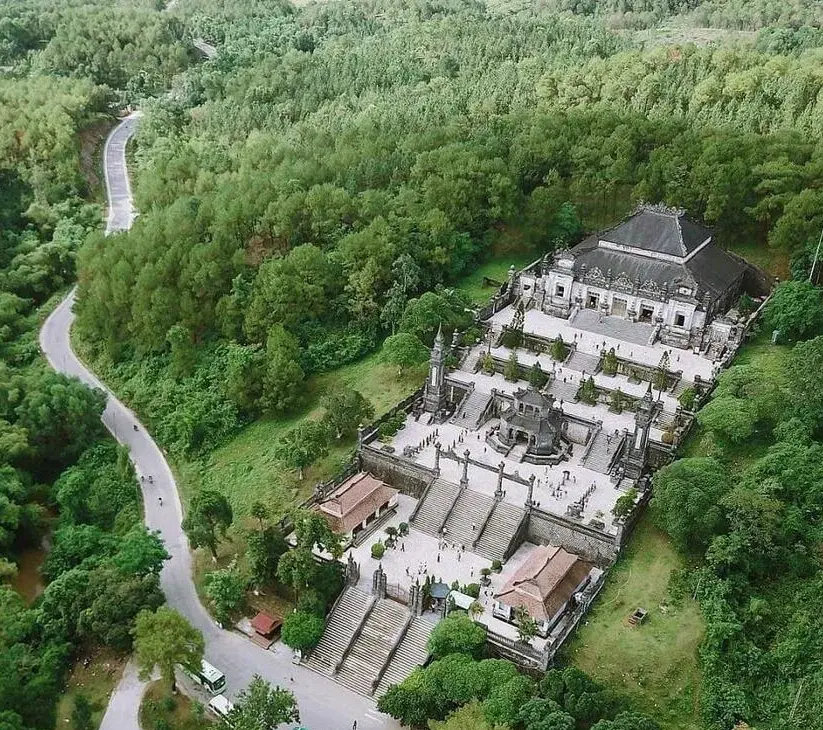
A fusion of Vietnamese, French, and Gothic styles. Blackened concrete, elaborate mosaics, and a golden statue of the emperor. Bizarre. Magnificent.

The iconic seven-story pagoda on the Perfume River. The car that carried a monk to his self-immolation in 1963 is parked in the courtyard. Haunting.
The Royal Tombs — Elegies in Stone
Hue’s royal tombs are not graves. They are philosophical gardens, each one reflecting the personality of the emperor who designed it. Tu Duc’s tomb is melancholy and poetic — lakes, pavilions, and a lotus pond where the emperor would compose poetry while mourning his many dead children. Khai Dinh’s tomb is a fever dream — a dark, European-influenced monument with a golden statue of the emperor seated on a throne. Minh Mang’s tomb is the most Confucian — symmetrical, imposing, and surrounded by pine forests. Gia Long’s tomb is the most remote and wild — scattered across a mountain, half-swallowed by jungle. Visit them in the late afternoon. The golden light transforms the stone into honey. The crowds disappear. You will feel the emperors exhale.
Food Guide — The Taste of Royalty
Hue’s cuisine is unlike any other in Vietnam. It is imperial — delicate, complex, and achingly beautiful. The emperors demanded small, elegant dishes. Their chefs obliged. Today, you can eat like a king without a kingdom. The signature dish is bún bò Huế — a spicy, lemongrass-infused beef noodle soup that will wake up your soul. But go deeper: try bánh bèo (steamed rice cakes topped with dried shrimp), bánh nậm (flat rice dumplings), and bánh lọc (tapioca shrimp dumplings). Eat them on small plastic stools. Drink iced tea. Listen to the rain on the tin roof. This is the food of emperors and grandmothers. It is the same thing, really.
| Dish | Taste/Feeling | Where to Find |
|---|---|---|
| Bún Bò Huế | Spicy beef noodle soup with lemongrass and chili. The taste of Hue in a bowl — strong, proud, unforgettable. | Quán Bà Tâm (Đông Ba Market) |
| Bánh Bèo | Tiny steamed rice cakes with dried shrimp and crispy pork skin. Eat them in one bite. Order 20. | Bánh Bèo Bà Đức (District 1) |
| Bánh Nậm | Flat rice dumplings wrapped in banana leaves. Silky. Subtle. Addictive. | Street stalls near the Citadel |
| Bánh Lọc | Tapioca dumplings with shrimp and pork. Chewy. Glossy. Perfect with fish sauce. | Bánh Lọc Bà Hoa (Kim Long) |
| Cơm Hến | Baby clam rice — tiny clams, rice, peanuts, and herbs. A humble dish. A local obsession. | Hàng Me Alley night market |
Itinerary Templates for the Imperial Traveler
2-Day Pilgrimage: Day 1 – Imperial Citadel (morning), Thien Mu Pagoda (afternoon dragon boat), Dong Ba Market (evening). Day 2 – Tu Duc Tomb (morning), Khai Dinh Tomb (afternoon), then sunset on the Perfume River.
3-Day Immersion: Add Minh Mang Tomb, a royal vegetarian cooking class (Hue is famous for Buddhist vegetarian cuisine), and a cyclo tour of the Citadel’s outer walls at dusk.
4-Day Slow Linger: Add a day trip to the abandoned royal palace of Ho Quyen (the royal tiger arena), a perfume-making workshop, and an evening of nhã nhạc (royal court music — UNESCO Intangible Heritage).
Already have a finalized Vietnam itinerary from another operator? Send it to us, and we’ll unlock 5–12% additional value — upgrades, extra nights, or direct cost reduction. Post-tour payment, zero risk.
Submit Your Hue Deal →Practical Wisdom for the Chic Traveler
Getting there: Fly to Phu Bai Airport (15 minutes from the city center) or take the scenic train from Hanoi/Da Nang — the Hai Van Pass is breathtaking. Getting around: Cyclo inside the Citadel, private car for the tombs, dragon boat for the Perfume River. Dress code: Cover shoulders and knees for pagodas and tombs. The heat is intense — wear linen, carry water, and embrace the slow pace. Best photography: The Forbidden Purple City ruins at golden hour, the lotus ponds at Tu Duc’s tomb, and the dragon staircase at Thien Mu Pagoda. Local tip: Buy a combo ticket for the Citadel + tombs — it saves money and includes access to lesser-known sites like the Nine Cannons and the Royal Library.