Indochine Chic
Luxury travel experiences crafted with elegance and authenticity.

Vietnam’s royal citadel – where 13 Nguyen emperors ruled from behind golden lacquer, stone dragons, and the secret walls of the Forbidden Purple City
Words by Indochine Chic · 12 min read · updated for 2026
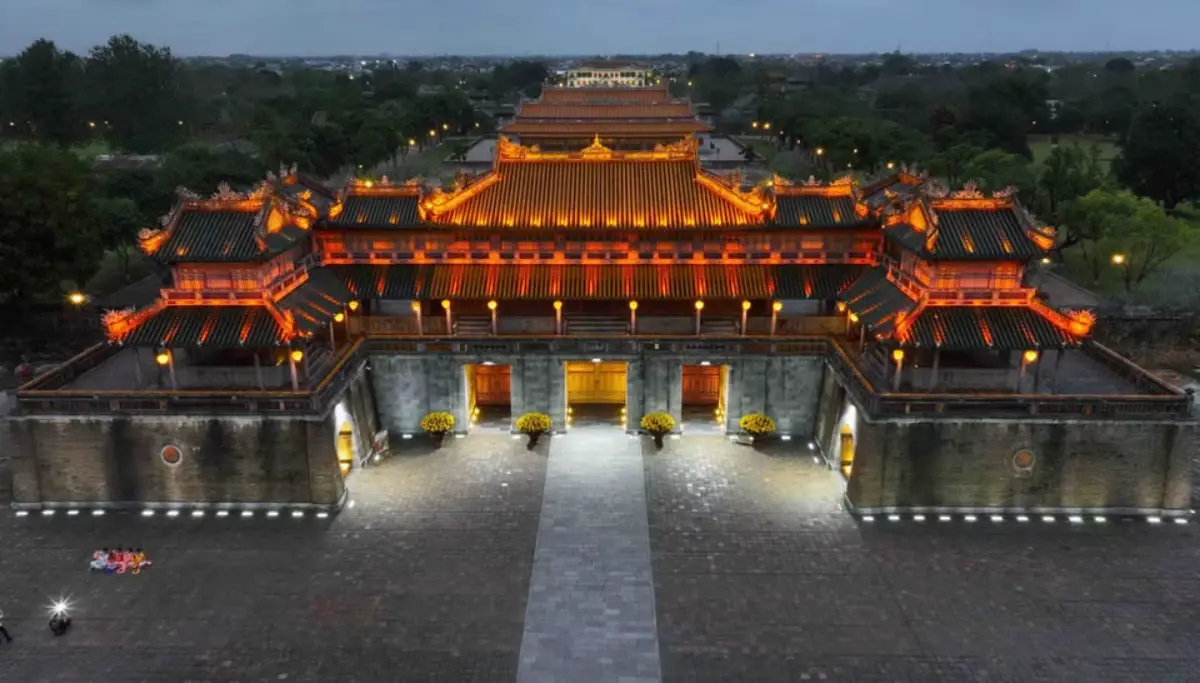
There are places where history feels alive. Where the stones remember the footsteps of emperors. Where you can stand at the very spot where Vietnam’s last king abdicated, handing his sword to revolutionaries. The Hue Imperial City is such a place. For 143 years, the Nguyen Dynasty ruled Vietnam from behind these 10-kilometer walls. Emperors were enthroned in the Thai Hoa Palace. Concubines lived in hidden pavilions within the Forbidden Purple City. Mandarins debated the fate of the nation under wooden roofs adorned with dragons and clouds. Today, UNESCO has preserved what remains – and what remains is extraordinary. This guide focuses entirely on the Imperial Citadel itself: every gate, palace, garden, and secret chamber where Vietnam’s emperors lived and ruled. The royal tombs are separate monuments; you will find links to them in the sidebar.
| Category | Quick Answer |
|---|---|
| Location | Hue City, central Vietnam (north bank of the Perfume River) |
| UNESCO Status | World Heritage Site since 1993 (Complex of Hue Monuments) |
| Total Area of Citadel | 520 hectares (including Imperial City and Forbidden Purple City) |
| Entrance Fee (2026) | 200,000 VND (approx. $8.00 USD) |
| Opening Hours | Daily 7:00 AM – 5:30 PM (summer) / 7:00 AM – 5:00 PM (winter) |
| Recommended Visit Time | 3-4 hours (full morning or afternoon) |
| Best Time to Visit | February – August (dry season) |
| Number of Nguyen Emperors | 13, from Gia Long (1802) to Bao Dai (1945) |

The Hue Imperial City is not a single structure but three concentric enclosures, each with its own purpose and degree of exclusivity.
The outermost wall, stretching 10 kilometers, was built to protect the entire imperial establishment. It is surrounded by a moat that once teemed with crocodiles. The wall has ten gates, each facing a different direction according to feng shui principles. The Flag Tower (Ky Dai), standing 37 meters high, is the first landmark you will see – a symbol of Hue’s resilience, rebuilt after being destroyed in the 1968 Tet Offensive.
Inside the Capital Citadel lies the Imperial City – the administrative heart of the Nguyen Dynasty. This is where the emperor’s mandarins worked, where ceremonies were held, and where justice was administered. The Ngo Mon Gate (Meridian Gate) is its centerpiece and the main entrance for visitors today.
The innermost sanctuary, accessible only to the emperor, his family, concubines, and trusted servants. The name comes from the color purple, which was reserved for royalty. Anyone else who entered risked execution. Within these walls, the emperor slept, read poetry, entertained guests, and escaped the burdens of rule. Much of the Forbidden Purple City was destroyed during the 1968 Tet Offensive, but restoration continues – and you can now walk through reconstructed pavilions and gardens.

The Ngo Mon Gate (Meridian Gate) is the most iconic structure in the Imperial City. Built in 1833 under Emperor Minh Mang, it faces south – the direction of the emperor. The gate has five entrances. The central passage, with its stone dragons, was reserved exclusively for the emperor. Flanking passages were for mandarins and royal elephants. The outer two were for soldiers and commoners.
Above the gate rises the Ngu Phung Pavilion (Five Phoenix Pavilion), a two-story wooden structure where the emperor would appear before his people on ceremonial occasions – coronations, New Year celebrations, and the reception of foreign envoys. From this balcony, Emperor Bao Dai announced his abdication on August 30, 1945, ending 143 years of Nguyen rule. You can climb to the second floor for panoramic views of the Flag Tower, the Perfume River, and the courtyards below. The climb is steep, but the view is worth every step.

Passing through the Ngo Mon Gate, you enter the great courtyard leading to the Thai Hoa Palace (Palace of Supreme Harmony). This is the most important ceremonial building in the Imperial City – the place where emperors were enthroned and where major court ceremonies took place.
The palace dates from 1805, making it one of the oldest surviving structures in the Citadel. Its name reflects the Confucian ideal of a harmonious realm: when the emperor is just, heaven and earth are in balance. The interior is a masterpiece of Nguyen-era craftsmanship. Eighty carved and gilded wooden columns support the roof. The dragon throne sits on a raised platform, covered in gold lacquer and surrounded by bronze cranes and deer – symbols of longevity and filial piety. Above the throne, a large golden plaque reads “The King’s Seat” in classical Chinese characters.
Unlike many other buildings in the Citadel, the Thai Hoa Palace was not destroyed in 1968. It remains largely original, though careful restoration has preserved its colors and structural integrity. Stand in front of the throne, close your eyes, and imagine the court kneeling before the emperor – the silk robes rustling, the incense burning, the drums sounding his arrival.

Beyond the Imperial City lies the Forbidden Purple City – the heart of the Citadel and the most restricted place in all of Vietnam. Here, the emperor lived with his family, his concubines, and his most trusted servants. No one else was permitted to enter. The area was once filled with dozens of pavilions, gardens, libraries, theaters, and residences – a miniature city within a city.
The Tet Offensive of 1968 devastated the Forbidden Purple City. For months, North Vietnamese and Viet Cong forces held the Citadel against American and South Vietnamese artillery. The battle reduced most of the wooden structures to rubble. For decades, the area remained a haunting field of broken tiles and overgrown foundations.
But restoration is ongoing. Since UNESCO inscribed the site in 1993, the Vietnamese government, with international support, has rebuilt several key structures. The Thai Binh Lau (Peaceful Reading Pavilion) now stands again – a delicate two-story library where the emperor read poetry and received scholars. The Royal Theater (Duyet Thi Duong) has been reconstructed and now hosts performances of Nha Nhac (royal court music), a UNESCO-recognized living heritage. Walking through the Forbidden Purple City today, you see both the scars of war and the determination to recover a lost past. New pavilions rise alongside preserved foundations – a poignant reminder that history is not static.


| Season | Months | Weather | Suitability |
|---|---|---|---|
| Dry Season (Best) | February – August | Warm, sunny, low rainfall | Excellent – ideal for walking tours and golden-hour photography |
| Shoulder | September – October | Occasional rain, still warm | Good – fewer tourists, but pack an umbrella |
| Rainy Season | November – January | Cool, frequent rain, possible flooding | Fair – still possible, but paths may be slippery |
Indochine Chic recommendation: Visit between March and July. The heat is significant (expect 32-38°C), but the sun illuminates the golden roofs beautifully. Arrive at 7:00 AM when the gates open – the temperature is cooler, and you will share the Citadel with only a handful of early birds. Sunset (around 5:00 PM) also offers dramatic light on the Ngo Mon Gate and flag tower.
Most visitors begin at the Ngo Mon Gate, which faces south toward the Perfume River. If you are staying along Le Loi Street or near the Truong Tien Bridge, it is a pleasant 15-20 minute walk. Cyclo drivers will offer you rides from anywhere in the city – agree on a price before you sit down. The Flag Tower is visible from blocks away, so you cannot miss it.

Entrance Fee (2026): 200,000 VND (approximately $8.00 USD) per adult. Children under 1.3 meters: half price. This ticket grants access to the entire Imperial City and Forbidden Purple City. If you plan to visit the royal tombs, combination tickets are available (2-site: 350,000 VND; 3-site: 450,000 VND; 4-site: 520,000 VND).
Opening Hours: Summer (April – October): 7:00 AM – 5:30 PM. Winter (November – March): 7:00 AM – 5:00 PM. Ticket booths close 30 minutes before closing, but you may stay inside until closing time.
Pro tips for your visit:

The Hue Imperial City is not a ruin. It is a living museum – a place where Vietnam’s royal past is being painstakingly restored, room by room, mosaic by mosaic. When you pass through the central passage of the Ngo Mon Gate, the same passage through which Nguyen emperors walked, you are not just a tourist. You are a witness to the resilience of a nation that has survived colonialism, war, and division. The golden lacquer of the Thai Hoa Palace still gleams. The bronze urns still guard the memories of emperors. And amidst the crumbled walls of the Forbidden Purple City, frangipani flowers still bloom – delicate, persistent, beautiful. For anyone who wants to understand Vietnam beyond the chaos of Saigon or the bustle of Hanoi, the Imperial City is essential. It is the soul of the country, waiting for you to walk silently and listen.
— The Indochine Chic Team