

Phú Quốc: Vietnam’s Island Paradise
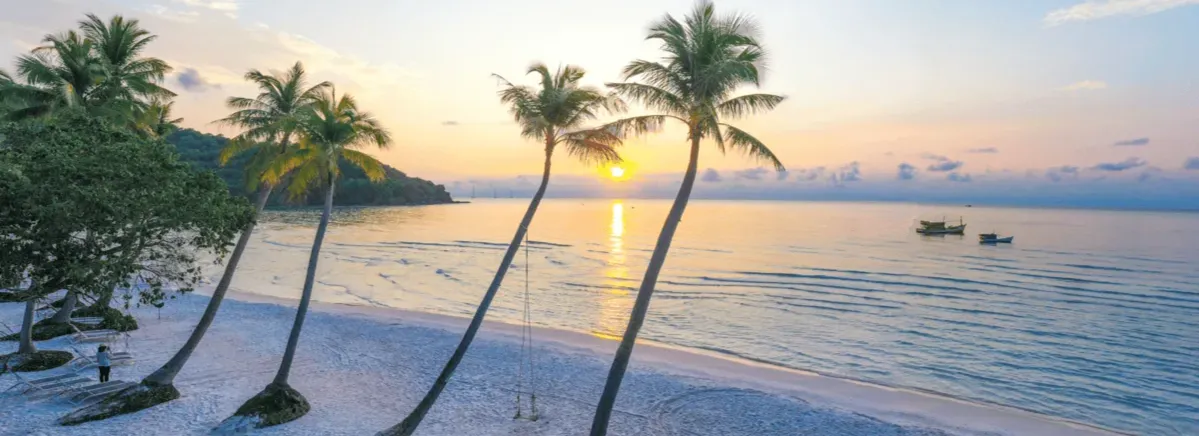
The Island’s Many Shores
150 Kilometers of Coastline
Bãi Dài (Long Beach): Stretching along the northwest coast, this 20‑kilometer strand was named one of the world’s most beautiful unspoiled beaches. Here, the sand is fine, the water clear, and the backdrop is dense forest rising into the hills. It is where you’ll find many of Phú Quốc’s luxury resorts, but also long stretches where you can walk alone.
Bãi Trường (Truong Beach): The island’s longest beach at 20 kilometers, hugging the southwest coast. It is the most developed, with a string of resorts, restaurants, and the island’s main tourist infrastructure. Yet the water remains remarkably clear, and the sunsets over the Gulf are unforgettable.
Hòn Móng Tay (Fingernail Island): A tiny island off Phú Quốc’s southern tip, reachable by boat. It preserves the pristine beauty that once defined all of Phú Quốc — no development, just white sand, coconut palms, and a coral reef that rewards snorkelers with a kaleidoscope of marine life.
Sunset at Dinh Cậu
The Island’s Spiritual Heart
On a rocky promontory at the edge of Dương Đông Town, Dinh Cậu Temple and Lighthouse stands as Phú Quốc’s most recognizable symbol. The temple, built in 1937, honors the sea goddess (Thủy Long Thần Nữ) who protects fishermen. Every evening, as the sun begins its descent, visitors climb to the lighthouse platform to watch the light shift over the harbor — the fishing boats returning, the water turning gold, the island settling into evening. It is a ritual that has become essential to the Phú Quốc experience.
Phú Quốc’s Wild Side
More Than Half the Island
More than half of Phú Quốc is protected as Phú Quốc National Park — a rugged landscape of dense tropical forest, mountain streams, and a rich diversity of flora and fauna. Covering the northern third of the island, the park offers trekking trails through jungle, waterfalls like Suối Tranh (a three‑tier cascade 7 kilometers from town), and the chance to spot species like the silver langur, slow loris, and the endemic Phú Quốc palm civet. The park’s headquarters can arrange guides; wandering alone is not recommended, as the forest is dense and trails are not always clearly marked.
Beyond the Beach: Pepper, Fish Sauce & Pearls
The Island’s True Treasures
Phú Quốc is famous for three things beyond its beaches: pepper, fish sauce, and pearls. Pepper farms dot the island’s interior, the vines trained on wooden poles, the black, white, and red peppercorns prized around the world. Fish sauce (nước mắm) — the dark, umami‑rich essence of Vietnamese cooking — is made here in wooden barrels that have fermented for years, and a visit to one of the island’s traditional fish sauce factories offers a lesson in culinary history. Pearl farms, particularly on the southern end of the island, cultivate the lustrous gems that give Phú Quốc its nickname. Visiting these farms offers a glimpse of the patience and skill required to grow a pearl, and an opportunity to purchase one to take home.
The Night Market
A Feast for the Senses
Every evening, Dương Đông’s center transforms. The Phú Quốc Night Market is a sensory overload of the best kind: rows of seafood stalls where you select your dinner from tanks of live crab, shrimp, lobster, and the island’s famous sea urchins; vendors grilling squid and scallops over charcoal; stalls selling pearls, souvenirs, and tropical fruit. It is the social heart of the island, where locals and visitors mingle, where the air is thick with the scent of garlic and fish sauce, and where the simple pleasure of a seafood dinner at a plastic table becomes a memorable evening.
The Rhythm of the Island
When to Go
Dry Season (November–April): The best time to visit — blue skies, warm sunshine, calm seas. January to April are particularly ideal, with temperatures around 28°C and the waters at their clearest for snorkeling and diving.
Rainy Season (May–October): The island receives heavy rainfall, especially from July to September. While many travelers avoid this period, it is also when the island is at its quietest, the landscape at its most lush. The northern beaches (Bãi Dài) and southern beaches (Bãi Sao) offer some shelter from the winds. For those willing to risk a shower or two, the low‑season prices and uncrowded beaches can be a compelling trade‑off.
Phu Quoc Tour Packages
Island Discovery: A 3‑day exploration — Bãi Dài, the national park, Dinh Cậu sunset, and a pearl farm visit.
Snorkeling & Island Hopping: Boat tours to the An Thới archipelago, Fingernail Island, and the coral reefs of the south.
Beach Resort Stay: For those seeking pure relaxation — a stay at one of the island’s luxury resorts, with spa treatments and sunset dinners.
Combined Journey: Pair Phú Quốc with Ho Chi Minh City and the Mekong Delta for a complete Southern Vietnam itinerary.
The Essence of Phú Quốc — Phú Quốc is a place of contrasts: the luxury resort and the fishing village, the international airport and the dirt road that leads to a hidden beach, the bright lights of the night market and the quiet of a forest trail. It has become easier to reach, more developed, but it has not lost its essential character. The island remains what it has always been — a place where the sea is the central fact of life, where the sunset is a daily celebration, and where travelers can find both adventure and the simple peace of a beach with nothing but the sound of waves.
Frequently Asked Questions
A minimum of 3 days allows you to experience the island’s best beaches, visit the national park, and take a snorkeling trip. For a relaxing beach holiday, 4–5 days is ideal.
The dry season (November–April) offers the best weather. March–April is particularly ideal — calm seas, clear skies, and fewer crowds than the peak December–January period.
By air to Phú Quốc International Airport (PQC), with direct flights from Hanoi, Ho Chi Minh City, and increasingly international destinations (Thailand, Malaysia, South Korea). By ferry from Hà Tiên or Rạch Giá on the mainland.
Fresh seafood — especially grilled squid, sea urchin, and crab. Also try Phú Quốc fish sauce (nước mắm) and the local pepper. The night market is the best place for a seafood feast.
Swimwear, lightweight clothing, sunscreen, insect repellent, a hat, and a light jacket for the evening. For trekking in the national park, sturdy shoes and long pants.
Yes. The beaches are calm, there are family‑friendly resorts, and activities like snorkeling, island hopping, and the VinWonders theme park (if you choose) cater to all ages.