Laos: The Serene Kingdom
Luang Prabang: The Spiritual Capital
A Sanctuary of Temples and Tradition
At the confluence of the Mekong and Nam Khan rivers, Luang Prabang is the most beautifully preserved city in Southeast Asia. Its 33 golden temples, French colonial villas, and the daily procession of saffron‑robed monks have earned it UNESCO recognition. Wat Xieng Thong, the Temple of the Golden City, is the spiritual heart of the city. Mount Phousi rises at its center, offering panoramic views. The tak bat alms‑giving ceremony at dawn is a ritual that connects the living city to its Buddhist traditions. A few days in Luang Prabang is a meditation on beauty and devotion.
Vientiane: The Riverside Capital
A Capital of Contrasts
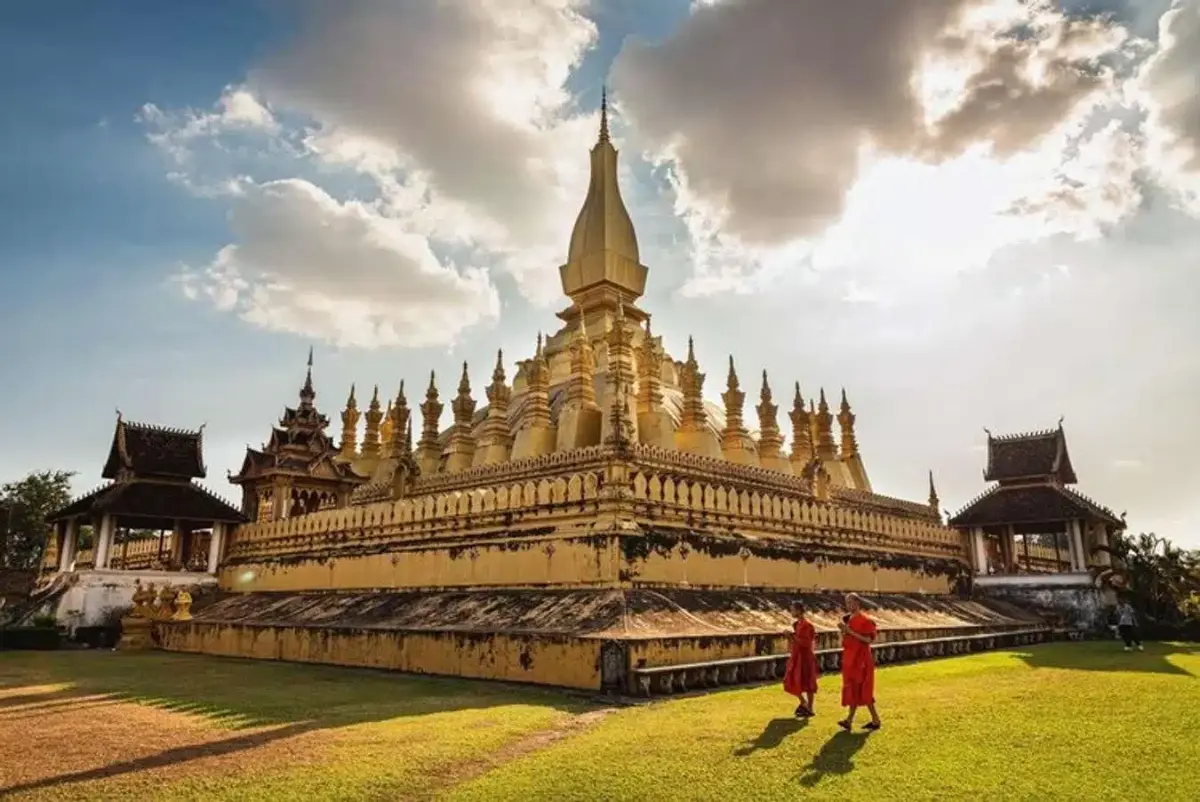
Vientiane, the capital, is a city of wide boulevards and quiet temples. The Pha That Luang (Great Stupa) is the national symbol, a golden monument that rises from the flat plains. Wat Si Saket, with its thousands of Buddha images, is the oldest surviving temple in the city. The Patuxai Victory Monument, reminiscent of the Arc de Triomphe, offers views of the city. Along the Mekong riverfront, the evening promenade is the social heart of the capital, where locals gather to watch the sunset.
Vang Vieng: Karst Mountains & Rivers
A Landscape of Limestone
Once known for its party scene, Vang Vieng has transformed into an adventure destination. The limestone karsts that rise from the Nam Song River create a landscape of extraordinary beauty. Visitors can kayak through caves, hike to viewpoints, and explore the Blue Lagoon — a series of turquoise pools fed by underground streams. The view from Phangern Mountain is one of the most photographed in Laos.
The Plain of Jars: A Mystery of the Highlands
Thousands of Stone Jars
In the mountains of Xieng Khuang, thousands of stone jars are scattered across the landscape. Dating back 2,500 years, the Plain of Jars is one of Southeast Asia’s most mysterious archaeological sites. The jars, some weighing several tons, were likely used for burial rituals, but their exact purpose remains unknown. The site is a UNESCO World Heritage Site, and the surrounding hills are a landscape of rolling green and scattered stone.
The Bolaven Plateau: Coffee & Waterfalls
The Coffee Highlands
In southern Laos, the Bolaven Plateau rises to 1,200 meters, its cool climate ideal for coffee cultivation. The region is known for its waterfalls — Tad Fane, Tad Yuang, and Tad Lo — which plunge through the jungle. Visitors can stay at coffee plantations, trek through the hills, and visit the villages of the Laven, Alak, and Katu ethnic groups.
Si Phan Don: The 4,000 Islands
Where the Mekong Becomes an Archipelago
In the far south, the Mekong River spreads into a labyrinth of channels, creating the Si Phan Don (4,000 Islands). Don Det and Don Khon are the most visited islands, connected by a colonial‑era bridge. Here, life moves at the slow pace of the river. Visitors can kayak, bike, and search for the rare Irrawaddy dolphins that swim in the deep pools near the Cambodian border.
Laos Tour Packages
Northern Laos (5–7 Days): Luang Prabang, Vang Vieng, and the Plain of Jars — temples, karsts, and ancient jars.
Southern Laos (5–7 Days): Pakse, the Bolaven Plateau, and Si Phan Don — waterfalls, coffee, and the Mekong islands.
Complete Laos (10–14 Days): From Luang Prabang to the 4,000 Islands, a journey through the heart of the country.
Mekong River Journey: A slow boat from Huay Xai to Luang Prabang, with stops at riverside villages.
The Essence of Laos — Laos is a country that teaches patience. Its roads are slow, its rivers gentle, its people unhurried. It is a place where the sound of temple bells marks the hours, where the coffee is strong, and where the landscape is as varied as any in Southeast Asia. To travel Laos is to enter a world that has resisted the rush of modernity, to find beauty in simplicity, and to discover a nation that remains, in its quiet way, one of the most rewarding destinations on the continent.
Frequently Asked Questions
A minimum of 7–10 days allows you to explore Luang Prabang, Vientiane, and one other region. For a comprehensive journey, 2 weeks is ideal.
The dry season (November–April) offers the most comfortable weather. The rainy season (May–October) is lush and green, with fewer tourists.
By air to Vientiane (VTE) or Luang Prabang (LPQ). By train on the Laos‑China Railway from Kunming, China, or by bus from Vietnam, Thailand, or Cambodia.
Lightweight clothing, modest dress for temples, a light jacket for the mountains, comfortable walking shoes, and insect repellent.
Laap (minced meat salad), mok pa (steamed fish), khao soi (noodle soup), sticky rice, and Lao coffee from the Bolaven Plateau.
Yes. Laos is generally very safe. UXO (unexploded ordnance) remains a risk in some areas; stick to established paths.