Indochine Chic
Luxury travel experiences crafted with elegance and authenticity.

An In-Depth Analysis of Vietnam’s Most Unique Indigenous Religion – From a Single Symbol to a Mass Movement, A 100-Year Journey of Expansion
Words by Indochine Chic · 16 min read · updated for 2026
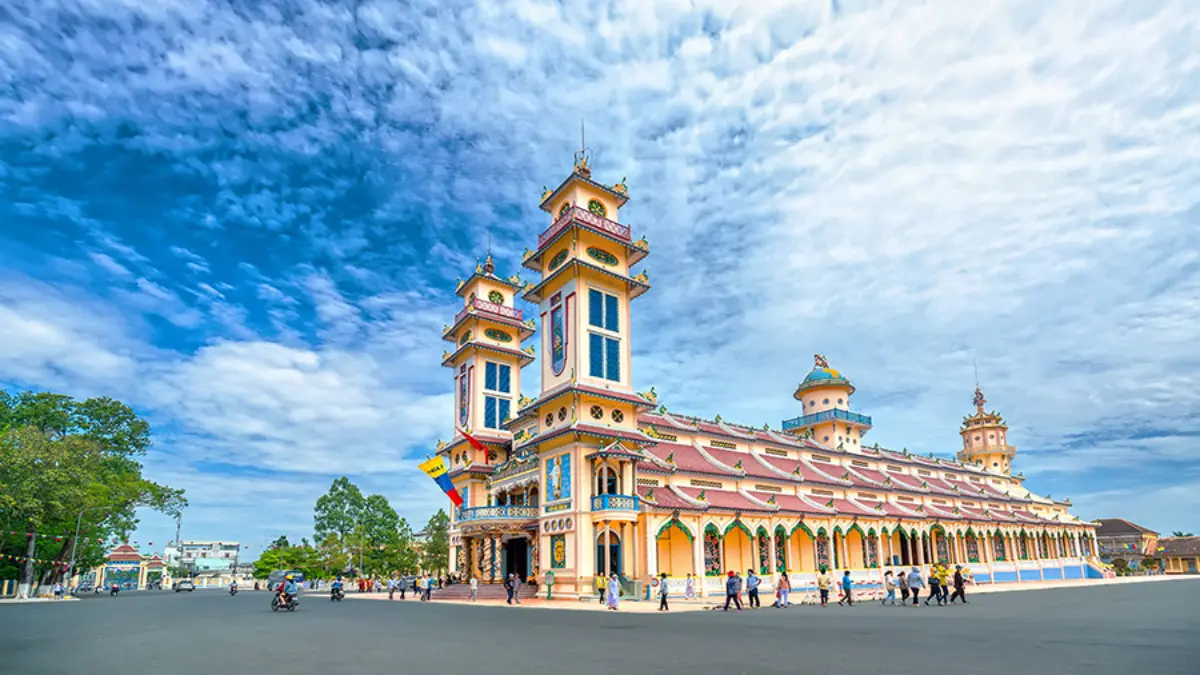
Among the many religions present in Vietnam, one stands completely apart. It is not Buddhism from India. It is not Catholicism from the West. It is not Islam from the Middle East. It is Caodaism (Dao Cao Dai) – a purely Vietnamese religion that appeared in 1926 in Tay Ninh and, within less than a century, attracted millions of followers, built thousands of holy temples, and became an icon of cultural and spiritual fusion. So what made Caodaism successful? How did a new religion, born in the turbulent context of a colonial society, grow so quickly and sustainably? This article conducts an in-depth analysis of the key factors behind Caodaism’s success: its unique theology, its tight organizational structure, its ability to adapt to Vietnamese psychology, its historical context, and the exceptional individuals who transformed this religion from a small group into a global phenomenon.
| Category | Information |
|---|---|
| Official Name | Dai Dao Tam Ky Pho Do (The Great Way of the Third Era of Universal Salvation) |
| Year Founded | 1926 (officially inaugurated on November 19, 1926) |
| Founder / Creator | The Jade Emperor (according to doctrine) – through intermediaries: Ngo Van Chieu, Le Van Trung, Pham Cong Tac |
| Total Followers (Global) | Approximately 4 to 6 million people |
| Central Administrative Center | Tay Ninh Holy See (Long Thanh Bac Commune, Hoa Thanh District, Tay Ninh Province) |
| Symbol | The Divine Eye (Thien Nhan) – The Eye of God |
| Core Theology | Three Religions Share One Source (Confucianism – Buddhism – Taoism), Five Branches Return to Unity |
| Organization | Three Palaces: Bat Quai Dai (invisible), Cuu Trung Dai (visible), Hiep Thien Dai (mediator) |
| Main Areas of Influence | Vietnam (especially the South), overseas Vietnamese communities (USA, Australia, Canada, Europe) |

In the early 20th century, Vietnam was under French colonial rule. Traditional Confucian values were declining. Buddhism and folk beliefs were heavily impacted. The people, especially in the South, lived in poverty, uncertainty, and longed for something new – a new faith, a new purpose, a release from the deadlock of the present.
This was fertile ground for new religious and spiritual movements. The practice of spirit-writing (cau co) – communicating with the spiritual realm through a planchette – flourished in Saigon, Cho Lon, and surrounding provinces. Many people turned to spirit-writing to find answers to their questions, seek comfort, and connect with an invisible world they believed to be real. Caodaism was born in this social context as an answer to the great question of the era: how to heal the shattered faith, how to create a religion grand and inclusive enough to contain all the spiritual aspirations of the Southern people.
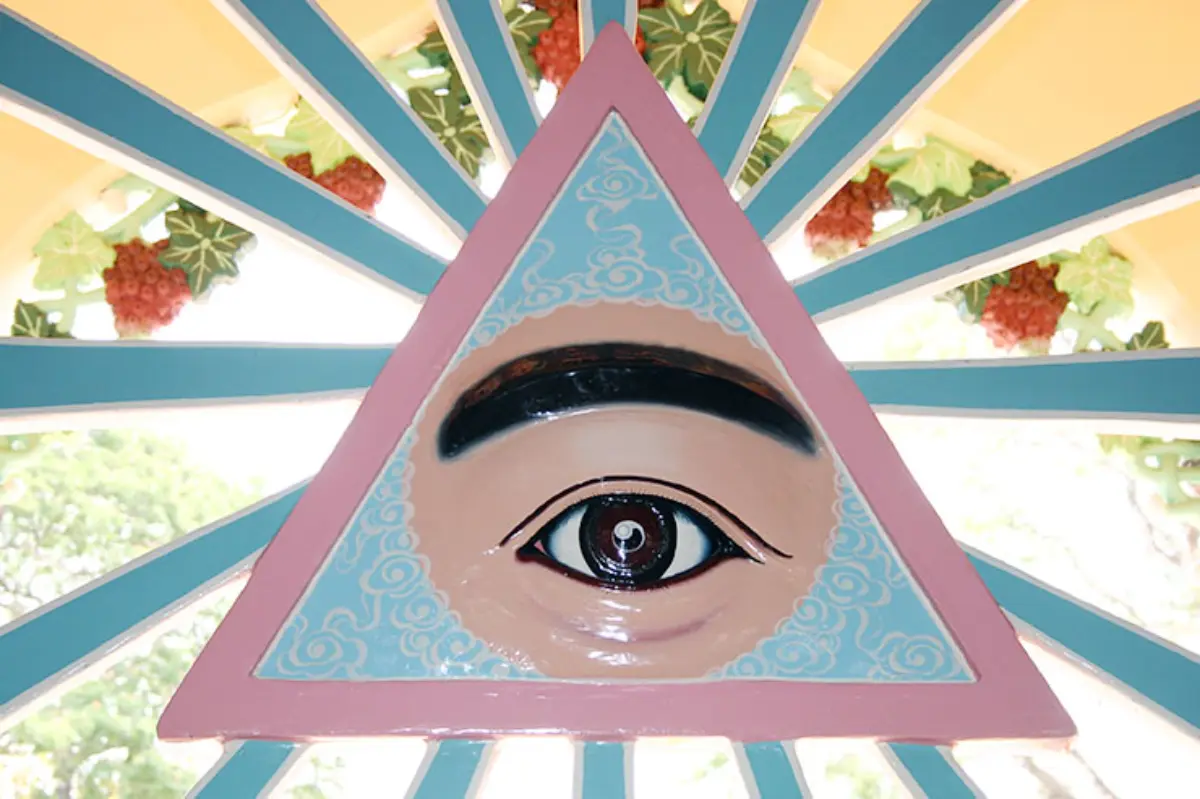
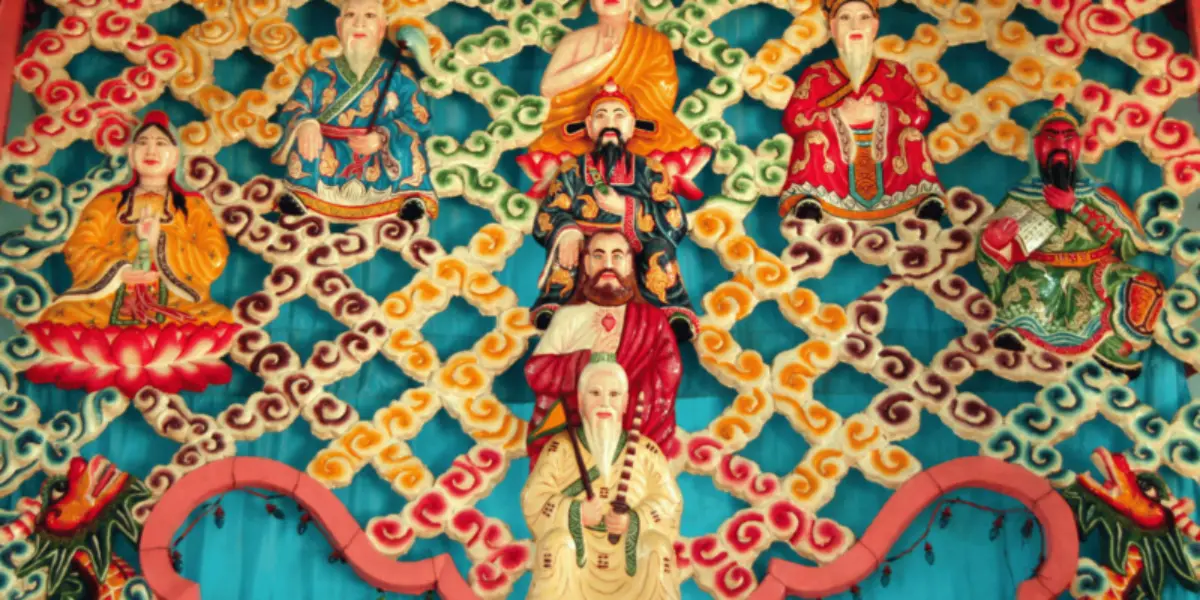
Instead of declaring itself the only true religion, Caodaism declared that all the world’s major religions share a single source (God) and that all the founders (Buddha, Jesus, Confucius, Laozi, Moses, and others) were emissaries of the Supreme Being in different eras. This delivered a radically new and appealing message: harmony, not conflict. The synthesis of Confucianism, Buddhism, Taoism, Christianity, and others created a banquet of ideas from which every social stratum could find something suited to them.
Caodaism divides the history of God’s salvation into three great periods (Tam Ky Pho Do). The Third Era – the present era – is the final era before the end of the world and its recreation. And this time, the Jade Emperor Himself has come to found the religion to save humanity. This message created a sense of urgency: if you do not follow Caodaism in this era, you will miss the final chance for salvation. This powerfully drove conversion and missionary work.
Instead of worshipping statues, Caodaism reveres a single symbol: the Divine Eye (Thien Nhan). The Divine Eye is at once simple and sacred, transcending all distinctions of ethnicity, culture, and religion. It reminds followers of God’s constant presence and the necessity of living righteously. From an artistic and philosophical perspective, the Divine Eye is an extraordinarily successful symbol – easy to recognize and easy to impress upon the heart.
What made Caodaism most different was its use of spirit-writing (co but). Followers believe that God Himself directly communicates through seances, teaching doctrine, issuing holy messages, and guiding the church’s organization. In the early period, spirit-writing created a direct channel of communication between humanity and the divine, satisfying intense spiritual needs while also resolving disagreements and charting the new religion’s development.
For a religion to survive and develop sustainably, it needs a strong organization. Caodaism built an extremely rigorous and forward-looking structure.
| Palace | Function | Political Analogy | Head |
|---|---|---|---|
| Bat Quai Dai | Legislative – the invisible realm governed by God and the saints | The Soul of the Way | The Supreme Being |
| Cuu Trung Dai | Executive – the visible realm that governs followers and the organization | The Body of the Way | The Pope (Giao tong) on earth |
| Hiep Thien Dai | Judicial – the intermediary between the invisible and visible, in charge of spirit-writing | The Bridge between Heaven and Humanity | The Protector of the Law (Ho phap) |
This model not only ensures the smooth functioning of the church apparatus but also creates a mechanism of checks and balances, preventing any individual or group from abusing power.
The Tay Ninh Holy See, built between 1931 and 1955, is the administrative and spiritual center of Caodaism. Its gigantic, unique architecture, incorporating symbols from many religions, became an emblem of authority and unity for the entire religion. The presence of such a center of power helped to strengthen lay believers’ faith and assert the religion’s status in relation to the government and other religions.
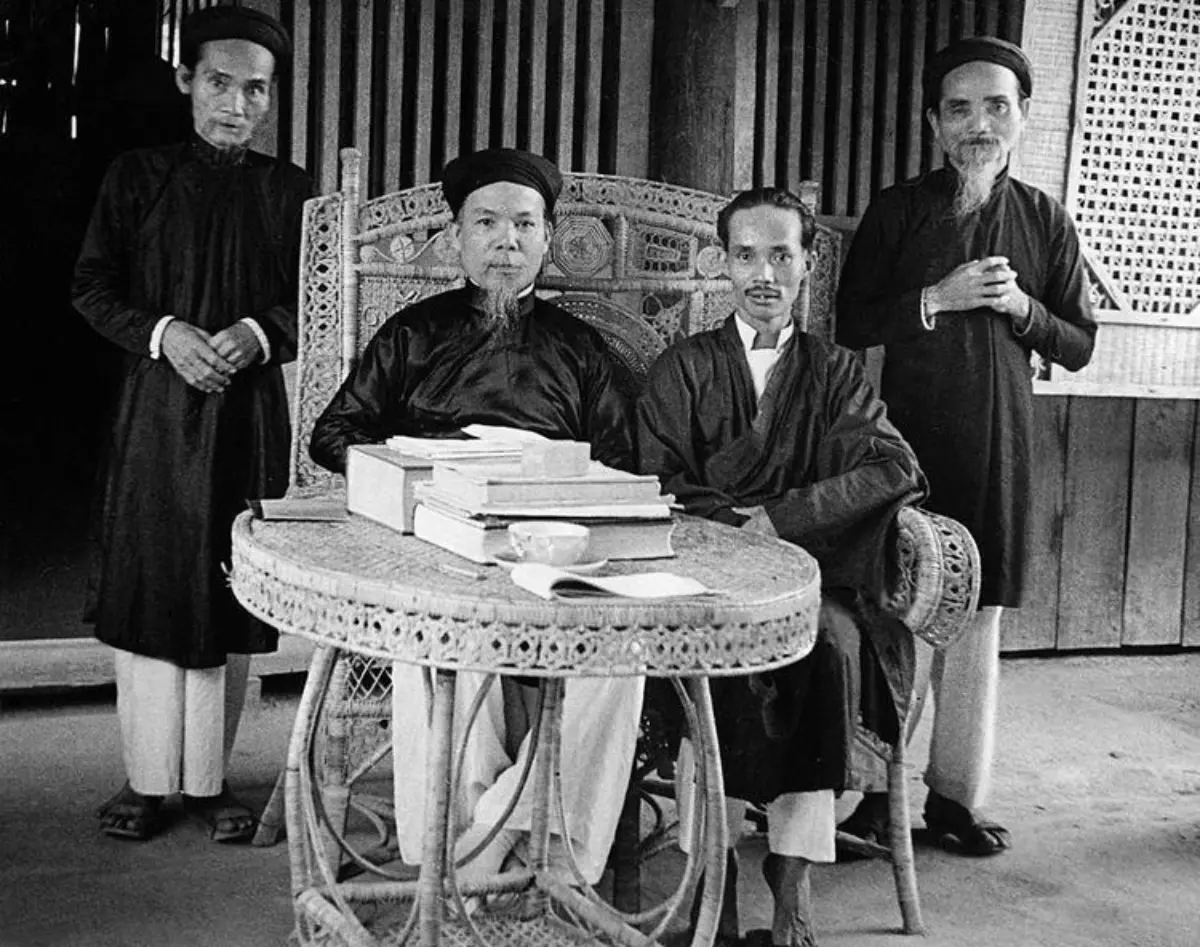
An upright, contemplative civil servant, Ngo Van Chieu was the first person accepted as a disciple by the Supreme Being through spirit-writing (1921). He played the role of a pioneer, laying the spiritual foundation for the religion.
One of the most important figures, Le Van Trung was a member of the Colonial Council of Cochinchina, a distinguished intellectual of great prestige and organizational experience. He submitted the Declaration of Founding to the French authorities in 1926, organized the inaugural ceremony, and acted as the on-earth Pope during the tumultuous early years. He offers a powerful example of personal transformation: from a depressed opium smoker into a clear-headed, upright religious leader.
The youngest among the founding group, Pham Cong Tac later became the Protector of the Law (Ho phap). He was an outstanding writer, a brilliant organizer, and one of the main mediums for the most important spirit-writing seances. His works and messages had a profound influence on Caodaist theology and thought.
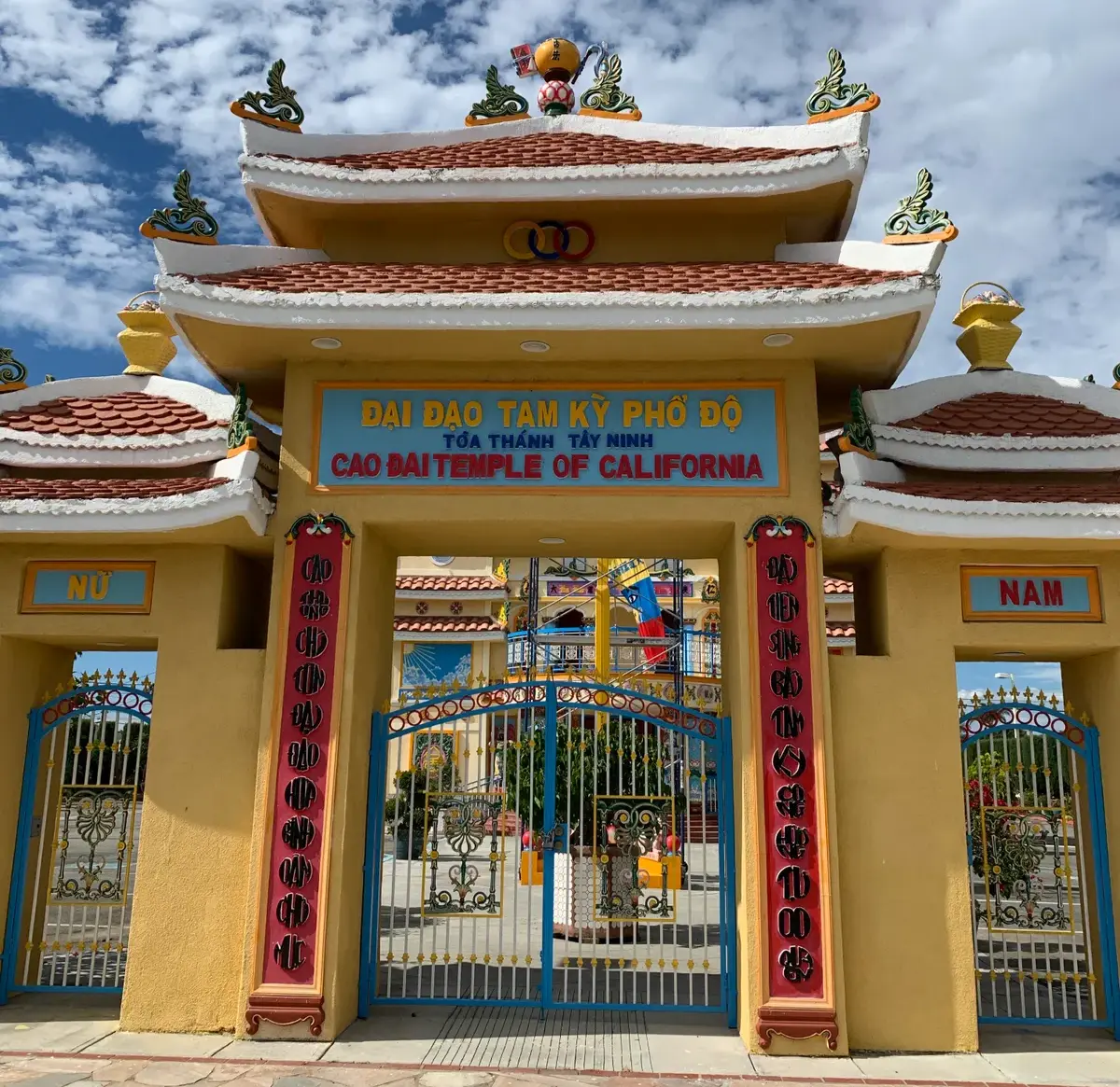
After 1975, Caodaism faced severe difficulties in Vietnam. Yet the religion spread across the world with the Vietnamese diaspora. Today, the overseas Caodaist community thrives, with hundreds of holy temples in the United States, Australia, Canada, France, and Germany. The spirit of inclusiveness, the unified theology, and the adaptable Divine Eye symbol make it easily embraced by different cultures. Caodaism has truly become a global religion, fulfilling its mission of “Universal Salvation in the Third Era” – saving sentient beings across all borders.
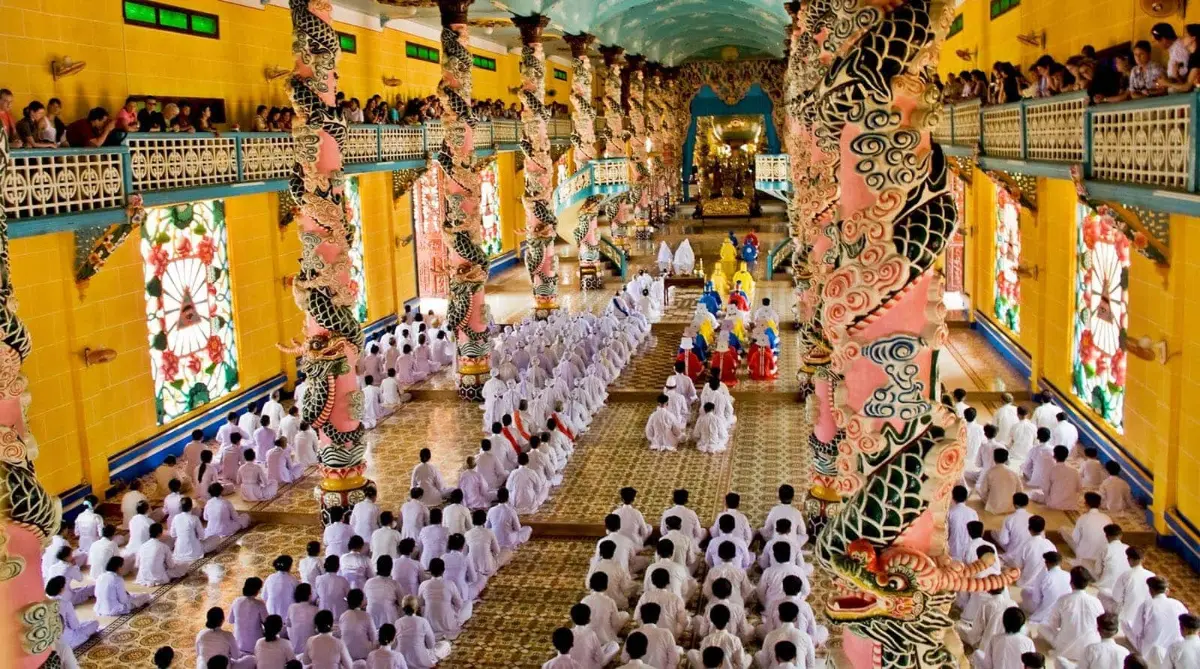
Caodaism succeeded not by a miracle, but through the harmonious combination of many factors: distinctive inclusive theology, simple symbols (the Divine Eye), a far-sighted tight organization (Three Palaces model), visionary leadership (Le Van Trung and Pham Cong Tac), a favorable historical context, and adaptive capacity for global spread.
Caodaism is more than a religion. It is a cultural phenomenon, a symbol of Vietnamese creativity and boldness in receiving and transforming the world’s great religious and cultural values to create a unique identity. The story of Caodaism’s success offers a valuable lesson in how a new ideology can touch the hearts and minds of millions.
— The Indochine Chic Team