Indochine Chic
Luxury travel experiences crafted with elegance and authenticity.

Throughout history, the women of Indochina have been celebrated for their grace, elegance, and quiet strength. Yet beneath this shared beauty lies a distinctive difference – revealed in the curve of the waist and what locals poetically call the “dangerous triangle.”
Words by Indochine Chic · 10 min read · updated for 2026
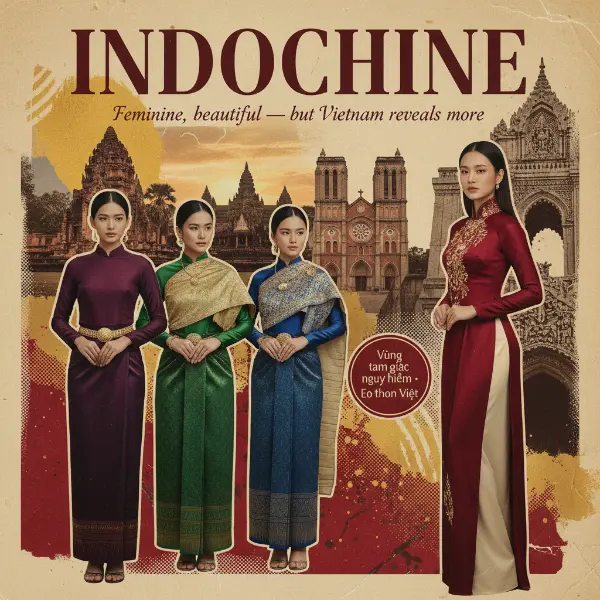
Throughout history, the women of Indochina — Vietnam, Laos, Cambodia, and Thailand — have been celebrated for their grace, elegance, and quiet strength. Draped in silk, walking with poise beneath conical hats or folded shoulder cloths, they embody a timeless femininity that has inspired poets, painters, and travelers for centuries. Yet beneath this shared beauty lies a distinctive difference. And according to many connoisseurs of Southeast Asian aesthetics, it is the Vietnamese woman who holds a more alluring edge — revealed in the curve of her waist and what locals poetically call the “dangerous triangle” (tam giác nguy hiểm).
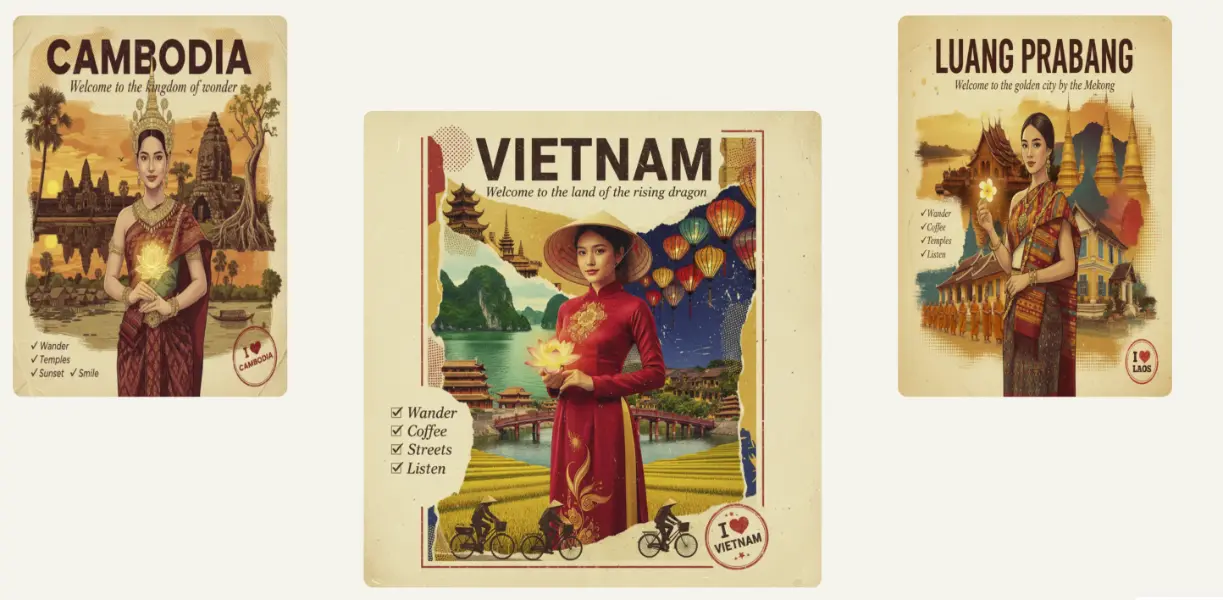
At first glance, the women of Indochina share deep similarities. Whether in Luang Prabang, Phnom Penh, Bangkok, or Hanoi, one sees the same soft gestures, the same long silk dresses, the same hair let down or tied gracefully. Traditional attire across these cultures emphasizes modesty, fluidity, and a vertical silhouette — the Lao sinh, the Cambodian sampot, the Thai chut thai, and the Vietnamese áo dài.
In all these, the body is mostly covered. The waist is hinted at, but never fully shown. Seduction, in these cultures, is a whisper — not a shout.
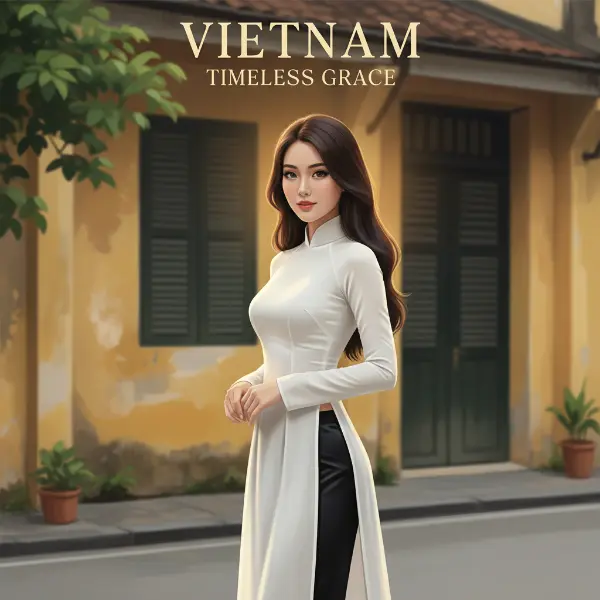
Then comes the Vietnamese woman in her áo dài.
At first glance, the áo dài is similarly modest — a long tunic split at the sides, worn over loose white pants. But here is where Vietnamese genius reveals itself. Unlike its Indochinese sisters, the áo dài is tailored to fit like a second skin. It hugs the curves without clinging. And crucially, the side slits begin high — sometimes at the waist — revealing a narrow strip of bare skin above the hip.
That strip — not too wide, not too exposed — is what the Vietnamese call “vùng tam giác nguy hiểm” — the dangerous triangle.
It is the subtle, almost hidden triangle of skin between the waistline and the hip bone, visible only when the woman walks or turns. It is not nudity. It is suggestion. It is restraint made sexy.
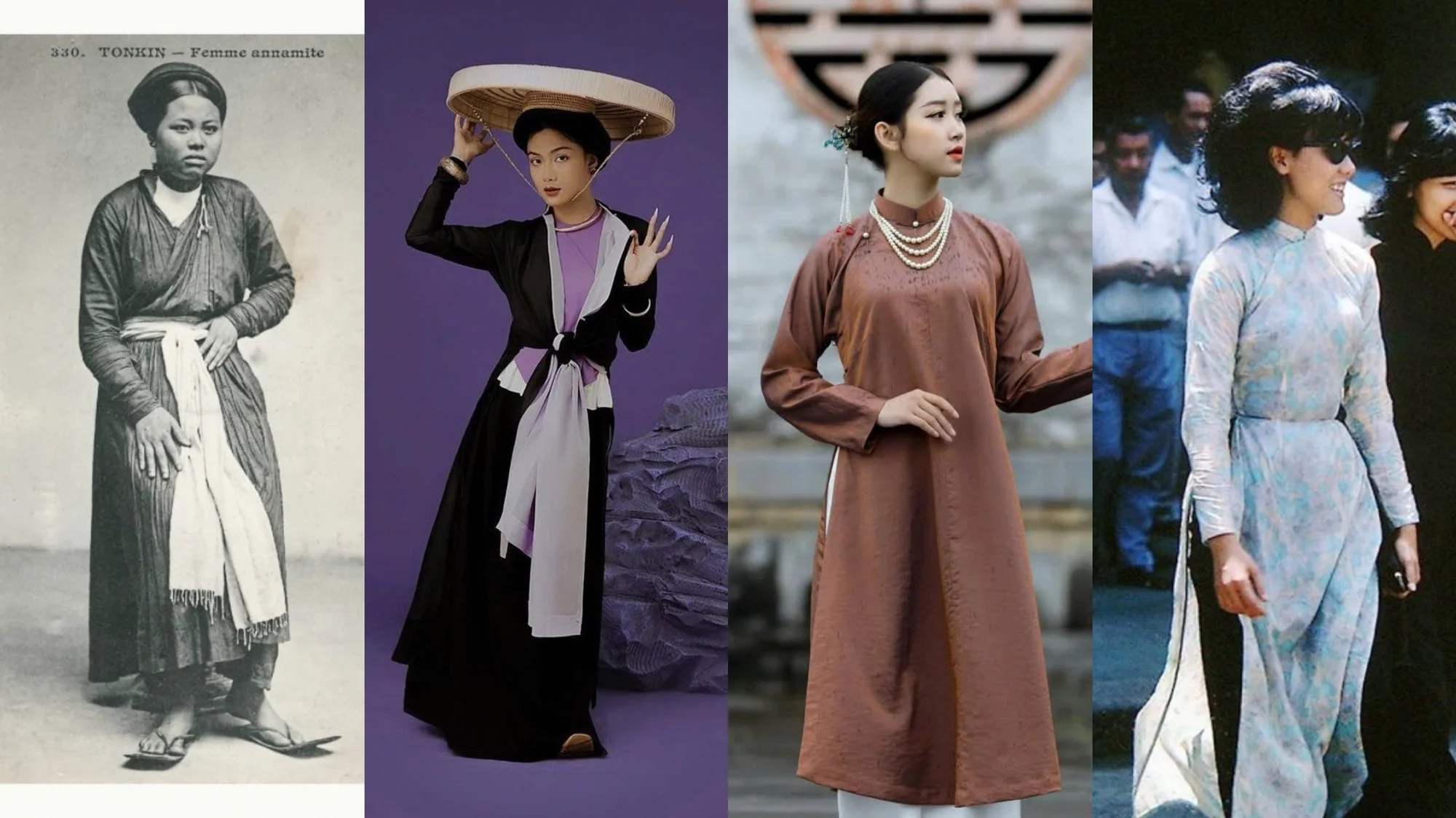
The áo dài has a rich and fascinating history that spans over 300 years. Its earliest predecessor appeared in the 18th century as a five-paneled dress called áo ngũ thân, worn by both men and women. The modern áo dài began to take shape in the 1930s when artist Cat Tuong (also known as Le Mur) redesigned the traditional dress, tightening the fit and creating the flowing tunic we recognize today.
Throughout the 20th century, the áo dài evolved further. In the 1950s and 1960s, Saigon designers introduced the raglan sleeve (a continuous sleeve from shoulder to underarm), which remains the standard today. The dress became a symbol of Vietnamese femininity, elegance, and national identity — worn by schoolgirls, office workers, and brides alike.
During the Vietnam War, the áo dài was sometimes seen as a symbol of the old regime, but after the war, it experienced a quiet revival. Today, the áo dài is proudly worn during Tết (Lunar New Year), weddings, graduation ceremonies, and by flight attendants, hotel staff, and students. Modern designers continue to innovate, introducing variations with higher slits, shorter lengths, and even cropped versions — always preserving the iconic silhouette.
The “dangerous triangle” is not a modern invention. It has been a subtle feature of the áo dài for generations — a whispered secret of Vietnamese femininity passed down through time.
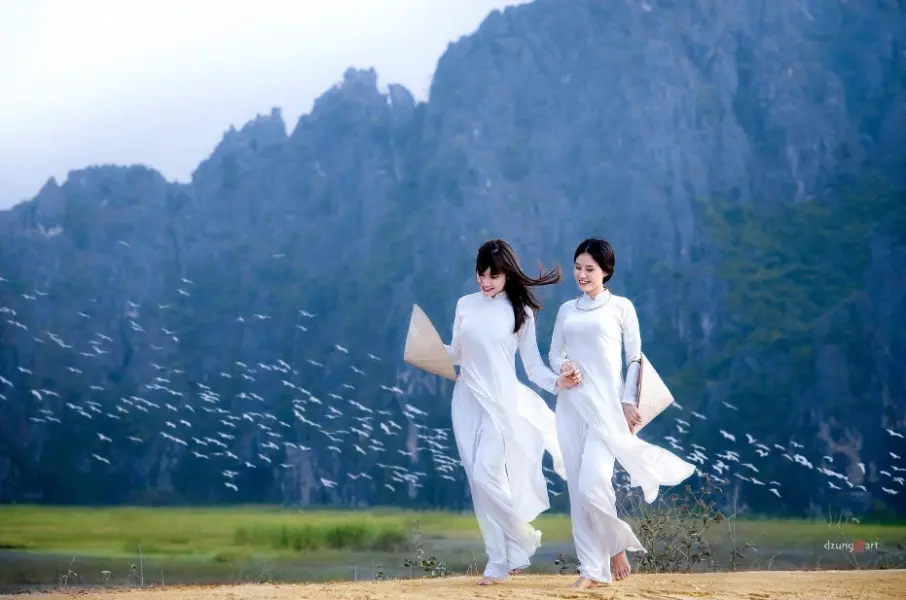
The name is playful but precise. The “dangerous triangle” is dangerous because it is:
Men have written poems about it. Travelers have scribbled sketches. And Vietnamese women themselves smile knowingly when the topic arises — because they know it is their secret weapon.
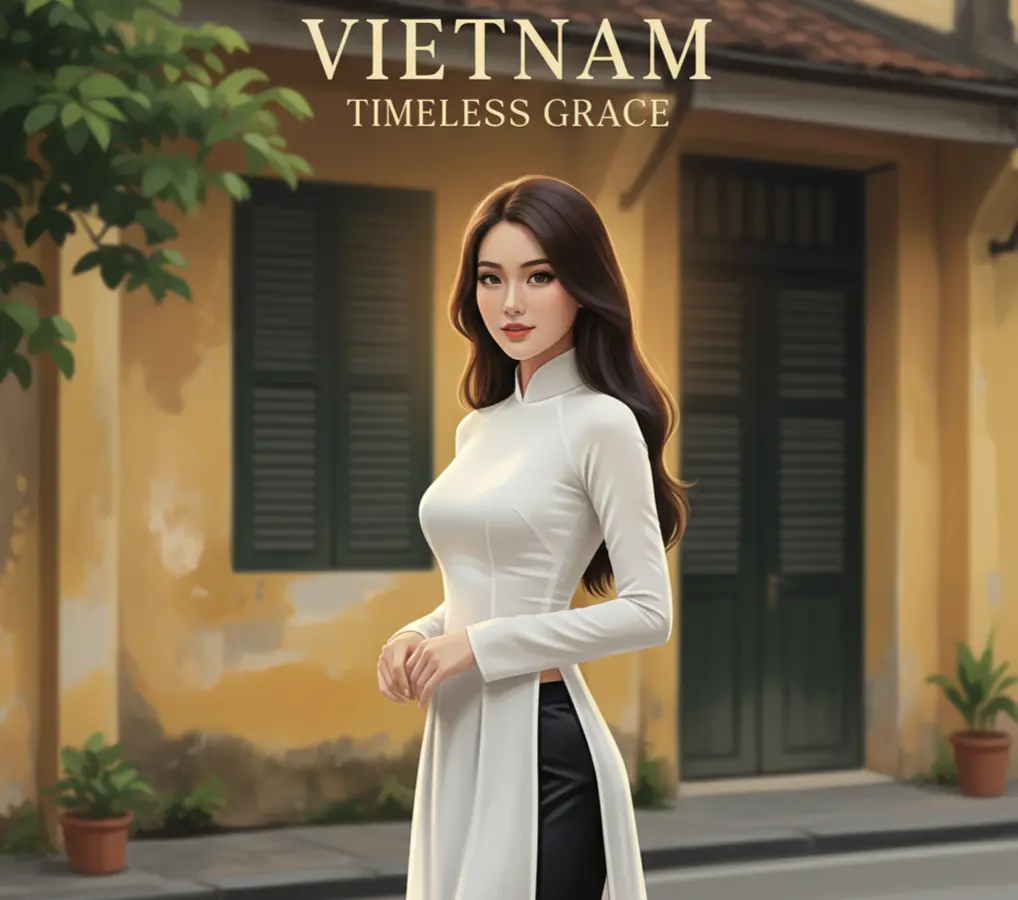
Beyond the triangle, the Vietnamese woman’s thin waist (eo thon) is celebrated in folk songs, proverbs, and modern media. A famous Vietnamese saying goes:
While Lao, Cambodian, and Thai beauties are celebrated for their graceful shoulders, long necks, and serene faces, Vietnamese beauty places a special emphasis on the waist. It is the hourglass ideal, but with an Indochinese twist — delicate, not exaggerated.
| Feature | Laos / Cambodia / Thailand | Vietnam |
|---|---|---|
| Traditional dress | Long, flowing, wrapped | Fitted, split at sides |
| Waist emphasis | Subtle, hidden | Pronounced, celebrated |
| Skin shown | }Arms, neck, feet | }Waist-side triangle (dangerous triangle) |
| Aesthetic mood | }Serene, royal, spiritual | }Elegant, sharp, subtly seductive |
| Signature line | }Soft and slow | }Lean and quick |
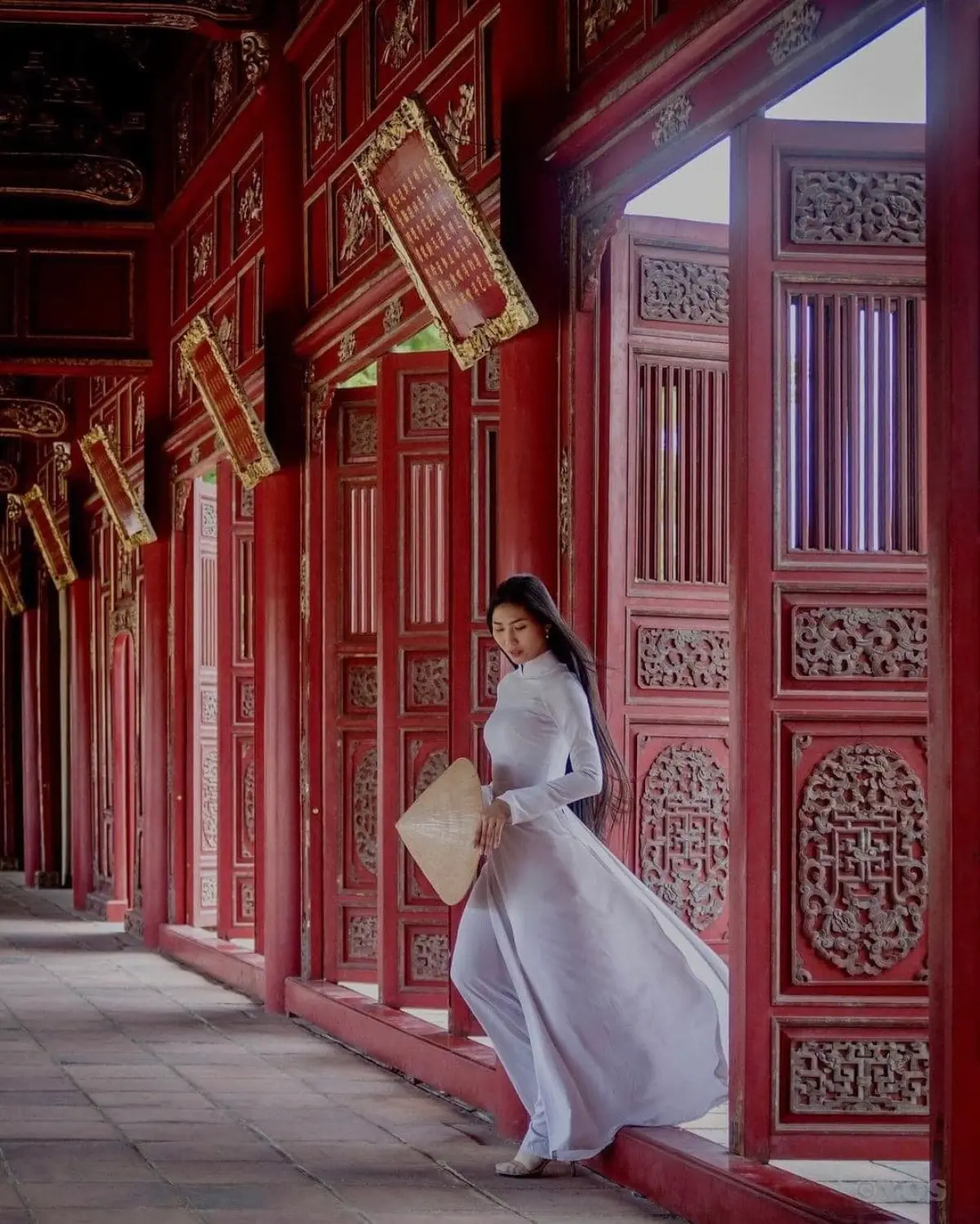
Today, young Vietnamese women are reclaiming the áo dài not as a relic, but as a statement. On Instagram, TikTok, and in Saigon’s fashion weeks, the áo dài appears with higher slits, bolder cuts, and even crop-top variations — always protecting the “dangerous triangle” as a symbol of controlled power.
Meanwhile, Lao, Cambodian, and Thai designers are also innovating, but their dresses remain more wrapped, more draped, less fitted. Each is beautiful. Each is feminine. But the áo dài — with its dangerous triangle — remains uniquely, unmistakably Vietnamese.
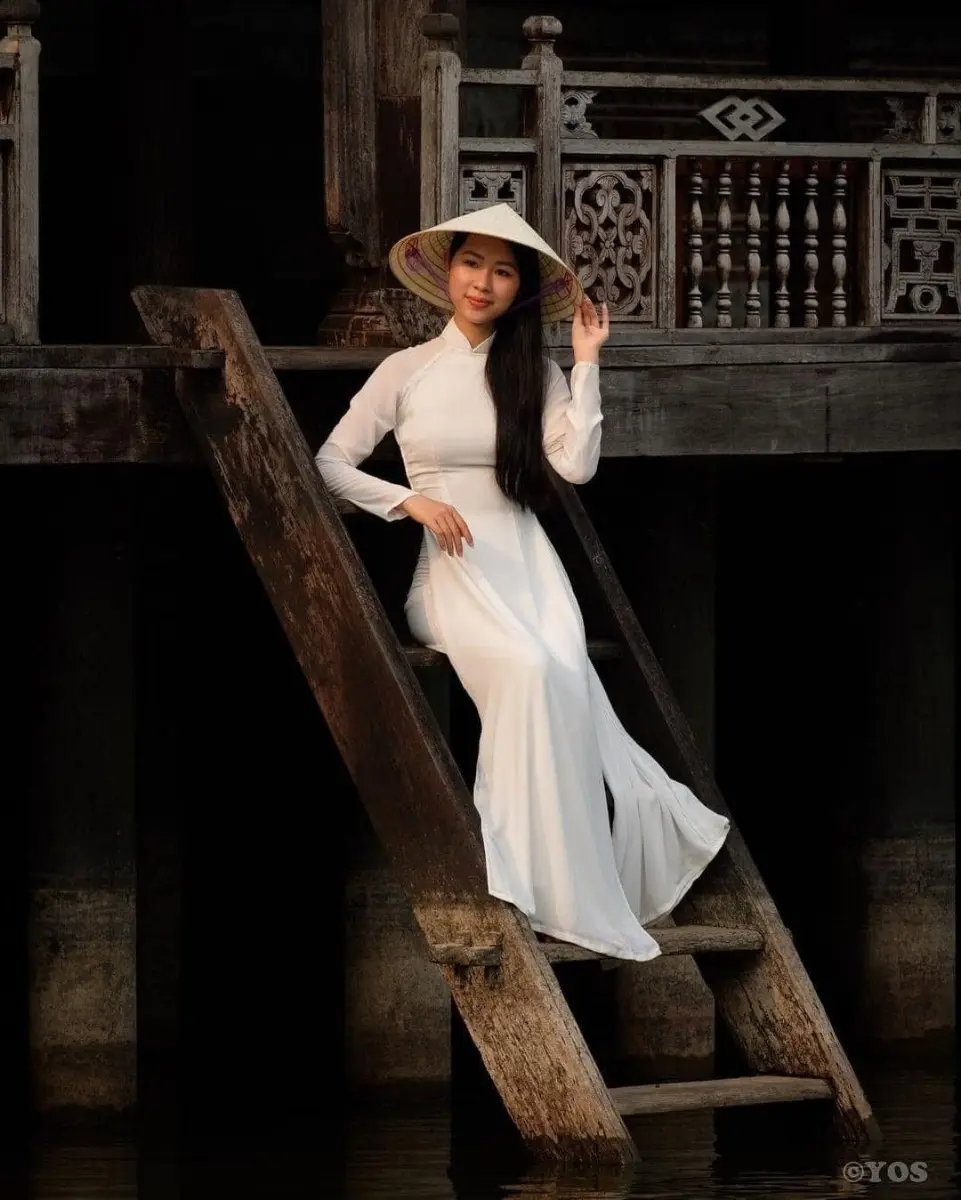
The women of Indochina share a common soul: graceful, resilient, and deeply feminine. But within that shared beauty, Vietnam has carved its own legend.
It is not about more skin. It is not about being bolder. It is about being smarter — using a single triangle of light to outshine an entire region.
As one Saigon poet once wrote:
And that triangle — small, subtle, and powerful — is what makes Vietnam’s feminine beauty truly dangerous.
— The Indochine Chic Team