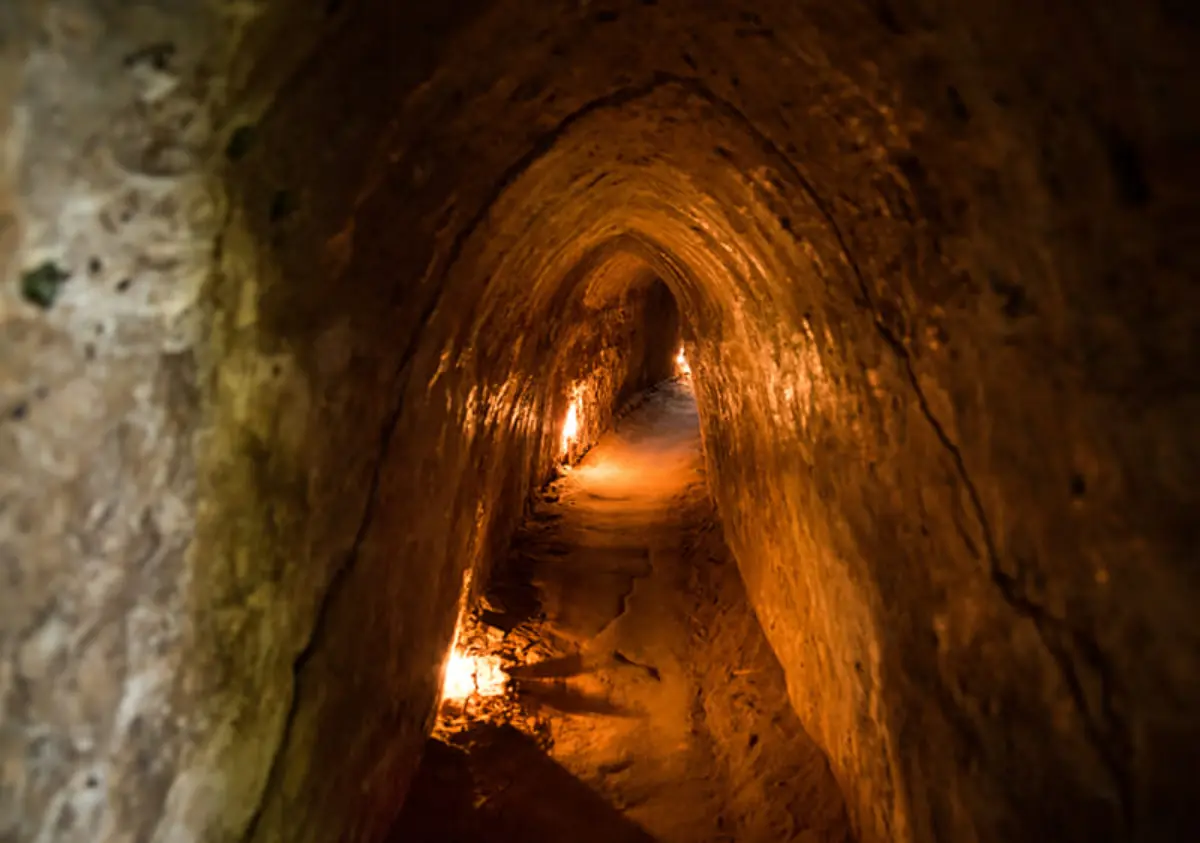
Beneath an ordinary residential home in Ho Chi Minh City lies one of the Vietnam War’s most fascinating hidden secrets — the Secret Bunker B6, also known as the Secret Weapon Bunker. This underground command center, preserved exactly as it was during the war, offers visitors a rare glimpse into the clandestine world of wartime intelligence and strategy.
While thousands of tourists visit the Reunification Palace and War Remnants Museum each day, few discover this genuine hidden historical site. The narrow entrance, concealed beneath what appears to be an ordinary house, once hid a cache of weapons destined for the 1968 Tet Offensive. Today, it stands as a powerful testament to wartime ingenuity and determination.
Unlike crowded tourist attractions, Secret Bunker B6 remains a genuine hidden historical site. Most visitors to Ho Chi Minh City never discover it, making your visit feel like uncovering a secret.
Hidden beneath an ordinary residential house, the bunker has been preserved with remarkable authenticity — exactly as it was during the war years.
The narrow entrance concealed a cache of weapons destined for the 1968 Tet Offensive. The bunker illustrates the remarkable resourcefulness of wartime operations.
While the War Remnants Museum provides broad historical context, the Secret Weapon Bunker offers an intimate, visceral understanding of wartime operations.
Typically quieter than major attractions, the bunker allows for contemplative exploration without crowds or queues.
The Secret Weapon Bunker was constructed in the mid-1960s as an emergency command center for the South Vietnamese government. Built to withstand aerial bombardment, the bunker could accommodate up to 100 military and government officials during crisis situations. The facility included communication rooms, map rooms, sleeping quarters, and a command center.
The narrow entrance to what many know as the Secret Weapon Bunker once concealed a hidden cache of weapons destined for the 1968 Tet Offensive. This startling discovery illustrates the remarkable ingenuity and determination of those who operated from this underground facility.
On April 30, 1975, as North Vietnamese tanks approached the palace gates, the bunker served as the last command post for President Duong Van Minh’s government. It was from this underground facility that Minh announced the unconditional surrender just before noon. The bunker was never used again.
Construction Year: Mid-1960s, during the escalation of American involvement in Vietnam.
Depth: Approximately 6 meters (20 feet) below ground level.
Capacity: Designed to accommodate 80-100 personnel.
Last Day of Operation: April 30, 1975 — the Fall of Saigon.
Discovery for Tourism: The bunker was opened to the public in the late 1990s after extensive restoration.
Located in District 1, Ho Chi Minh City. The entrance is discreet — look for the sign marking “Secret Bunker B6” or “Secret Weapon Bunker.” The site is accessible by taxi, ride-share (Grab), or as part of a private tour.
Allow 30-45 minutes to properly explore the bunker. Combine with a full tour of the Reunification Palace (1-1.5 hours) for a comprehensive historical experience.
Weekday mornings (8:00-10:00 AM) offer the quietest experience with fewer visitors. The bunker is air-conditioned and comfortable year-round, making it an excellent choice during Saigon’s hot afternoons.
The bunker is accessed via stairs with narrow passages. Visitors with mobility concerns may find the underground tunnels challenging. The main areas are well-lit with handrails.
Photography is permitted throughout the bunker. Flash may be helpful in darker areas. The preserved equipment and original signage make for compelling documentary-style images.
After exploring the Secret Weapon Bunker, relax at one of District 1’s excellent cafés. L’Usine, The Workshop Coffee, and Cafe Runam are all within walking distance — perfect for reflecting on your visit.
Just minutes away. The palace above the bunker offers context for the underground command center. The helicopter landing pad and war room are must-sees.
A 10-minute drive. The museum provides broader historical context for the Vietnam War, complementing the intimate experience of the bunker.
A peaceful green escape in District 1. Perfect for a post-bunker walk to process the historical weight of your visit.
Adjacent to District 1, District 3 offers excellent cafés, local restaurants, and quieter streets for a relaxed lunch after your morning exploration.
District 1 and District 3 offer excellent Vietnamese dining options — from street food stalls to upscale restaurants serving traditional pho and banh mi.
The Reverie Saigon, Park Hyatt Saigon, and Sofitel Saigon Plaza are all within easy reach, perfect for post-tour relaxation or a luxurious stay.
For a truly immersive experience, book a private historian guide through Indochine Chic. Our guides specialize in the Vietnam War era and can provide detailed context about the Secret Weapon Bunker’s role in the final days of the war. Private tours allow you to explore at your own pace and ask questions that group tours cannot accommodate.
Combine Secret Bunker B6 with the Reunification Palace and War Remnants Museum for a comprehensive half-day historical tour. Indochine Chic can arrange seamless private transfers, expert guides, and lunch at a colonial-era restaurant, creating a full morning of meaningful exploration.
We recommend visiting Secret Bunker B6 in the morning, followed by a private guided tour of the Reunification Palace, then lunch at a nearby French-colonial restaurant before an afternoon at the War Remnants Museum. This creates a powerful and comprehensive understanding of Saigon’s wartime history.
Yes. Both names refer to the same underground facility. “Secret Weapon Bunker” is an alternate name used in many travel guides, referring to the weapons cache discovered at the site.
Yes, but younger children may find the narrow tunnels intimidating. Older children and teenagers interested in history will find the experience educational and engaging.
The entrance is discreet — look for signage indicating “Secret Bunker B6” or “Secret Weapon Bunker.” Your ride-share driver or taxi may not know the exact location, so having the address saved is recommended.
Yes, photography is permitted throughout. Flash may be helpful in darker areas. The preserved equipment and original signage make for compelling documentary-style images.
Yes. Unlike many historic sites in Vietnam, the bunker is air-conditioned, making it a comfortable stop even during the hottest months (April-May).
Plan 30-45 minutes for the bunker alone. Combined with the Reunification Palace tour, allow 2-2.5 hours total.
Let our specialists craft a private historical tour that includes Secret Bunker B6, the Reunification Palace, and the War Remnants Museum — with expert guides who bring Vietnam’s complex history to life.

The ultimate crown jewel of classic French colonial elegance. Nostalgic white facades, timeless ironwork, and cinematic grandeur embody the peak of Indochine luxury.

Timeless Art Deco elegance sitting proudly on the banks of the Perfume River facing the ancient Imperial Citadel.

An architectural sanctuary layout directly on the pristine coast. Unrivaled luxury villas and soul-stirring cultural spas.

A pristine architectural heritage sanctuary dating back to 1930. Bask in old-world Saigon charm with opulent crystal chandeliers and nostalgic French-Indochine design lines.