Heritage Hotels
Stay inside history within colonial mansions, converted royal residences, and boutique heritage gems across Indochina’s most beautiful cities.
Explore Hotels →Standing proudly in the heart of Ho Chi Minh City’s District 1, the Notre-Dame Cathedral Basilica of Saigon — affectionately known as the Red Church (Nhà thờ Đức Bà) — is one of Vietnam’s most treasured architectural landmarks. For over 140 years, its twin bell towers have dominated the city’s skyline, a striking testament to French colonial ambition and Catholic devotion in Southeast Asia.
Built entirely from bricks imported from Marseille, France, the cathedral has weathered tropical storms, monsoons, and over a century of turbulent history without ever needing plastering — a miracle of 19th-century engineering. Today, it remains an active place of worship, a beloved symbol of Saigon, and an essential stop for any traveler exploring the city’s French colonial heritage.
Whether you’re a history enthusiast, an architecture lover, or a spiritual pilgrim, the Red Church offers a moment of peace amidst the city’s frenetic energy — a place where history is carved in stone and brick, and where prayers have been whispered for generations.
Built: 1863–1880
Architect: Jules Bourard
Height: 58m (190ft) twin towers
Bricks: Imported from Marseille, France
Status: Basilica (since 1962)
Location: Paris Square, District 1
Capacity: 1,200 worshippers

Constructed between 1863 and 1880, the Notre-Dame Cathedral is a masterpiece of Romanesque revival architecture. Every single brick was shipped from Marseille, France, chosen for their exceptional quality and distinctive dusty rose color. Remarkably, after more than 140 years in Saigon’s tropical heat and monsoon rains, the bricks have never faded nor needed plastering — they remain as vibrant as the day they were laid.
The cathedral’s twin bell towers rise 58 meters (190 feet) above Paris Square, housing six bronze bells cast in France. The central clock, still wound by hand, has kept perfect time since 1887. The facade features a large rose window, pointed arched entrances, and statues of saints carved from French stone.
In front of the cathedral stands a serene white marble statue of the Virgin Mary, installed in 1959, which according to local legend once shed tears in 2005, drawing thousands of pilgrims.
Architectural highlights: The nave spans 91 meters in length and 35 meters in width, with a vaulted ceiling that reaches 21 meters at its highest point. The stained-glass windows, originally crafted in Chartres, France, depict biblical scenes in brilliant colors — though many were damaged during the Vietnam War and have since been replaced.
Style: Romanesque Revival
Length: 91 meters
Width: 35 meters
Vault Height: 21 meters
Towers: 58 meters (twin)
Bells: 6 bronze bells from France
Clock: Hand-wound since 1887
Bricks: Never plastered — original Marseille brick

Stepping inside the cathedral, visitors are greeted by a soaring nave, pointed Gothic arches, and an atmosphere of profound tranquility. The main altar is carved from white marble, while the Stations of the Cross and other religious statuary reflect the finest 19th-century French craftsmanship.
Explore Interior →The stained-glass windows, originally crafted in Chartres, France, depict biblical scenes in brilliant colors. Though many were damaged during the Vietnam War and have since been replaced, they remain a breathtaking feature of the cathedral’s interior.
View the Windows →The historic pipe organ, installed in 1885, still resonates through the sanctuary during Sunday masses. The 9:30 AM High Mass on Sunday is the most atmospheric time to experience the organ’s full majesty.
Mass Times →The cathedral was commissioned by the French colonial government shortly after their conquest of Saigon in 1859. Construction began in 1863 under Bishop Lefèvre, with the design by architect Jules Bourard. The building was completed in 1880 and consecrated in 1885 under the name “Saigon Notre-Dame Cathedral.”
Throughout the French colonial period, the cathedral served as the spiritual center of Saigon’s Catholic community, which included French officials, wealthy Vietnamese converts, and European merchants. During the Vietnam War, the cathedral remained a sanctuary of peace amidst the chaos.
In 1962, Pope John XXIII elevated the church to the status of a basilica, granting it the title “Notre-Dame Cathedral Basilica of Saigon.” Following the Fall of Saigon in 1975, the cathedral’s future was uncertain, but it continued to operate as a place of worship.
In recent years, the Vietnamese government has recognized the cathedral as a national historical and cultural heritage site, ensuring its preservation for generations to come.
1859: French conquest of Saigon begins
1863: Construction begins under Bishop Lefèvre
1880: Cathedral completed
1885: Consecrated as Saigon Notre-Dame
1959: Virgin Mary statue installed
1962: Elevated to Basilica by Pope John XXIII
1975: Fall of Saigon; cathedral survives
2005: “Weeping Virgin” phenomenon
2026: National heritage site and top attraction

On October 7, 2005, thousands of witnesses reported seeing tears streaming from the eyes of the Virgin Mary statue in front of the cathedral. The phenomenon drew massive crowds and was investigated by both church and government officials. To this day, the statue remains a powerful symbol of faith for Vietnamese Catholics.
Read Full Story →Today, the statue is a pilgrimage site for Vietnamese Catholics. Visitors leave flowers and prayers at its base, and many report feeling a deep sense of peace and spiritual connection at this sacred spot.
Join a Pilgrimage Tour →Monday–Saturday: 5:30 AM and 5:30 PM
Sunday: 5:30 AM, 8:00 AM, 9:30 AM,(High Mass with organ), 4:00 PM, 5:30 PM, 07:00 PM
Daily 8:00 AM – 11:00 AM and 2:00 PM – 5:00 PM (for visitors). The cathedral is closed during mass times for non-worshippers.
Plan Your Visit →Modest attire required — shoulders and knees must be covered. No shorts, sleeveless shirts, or hats inside. Security may deny entry to those not dressed appropriately.
Dress Code Guide →Best lighting: Early morning (8:00-9:00 AM) or golden hour (4:00-5:00 PM). The cathedral is also beautifully illuminated after sunset. Tripods are not permitted inside.
Photography Guide →Address: Paris Square (Cong Xa Paris), District 1. A 5-minute walk from Ben Thanh Market and a 10-minute walk from the Saigon Opera House.
Transport Guide →Combine your visit with the Saigon Central Post Office (adjacent), Book Street, and the Saigon Opera House — all within a 5-minute walk.
Heritage Walk Route →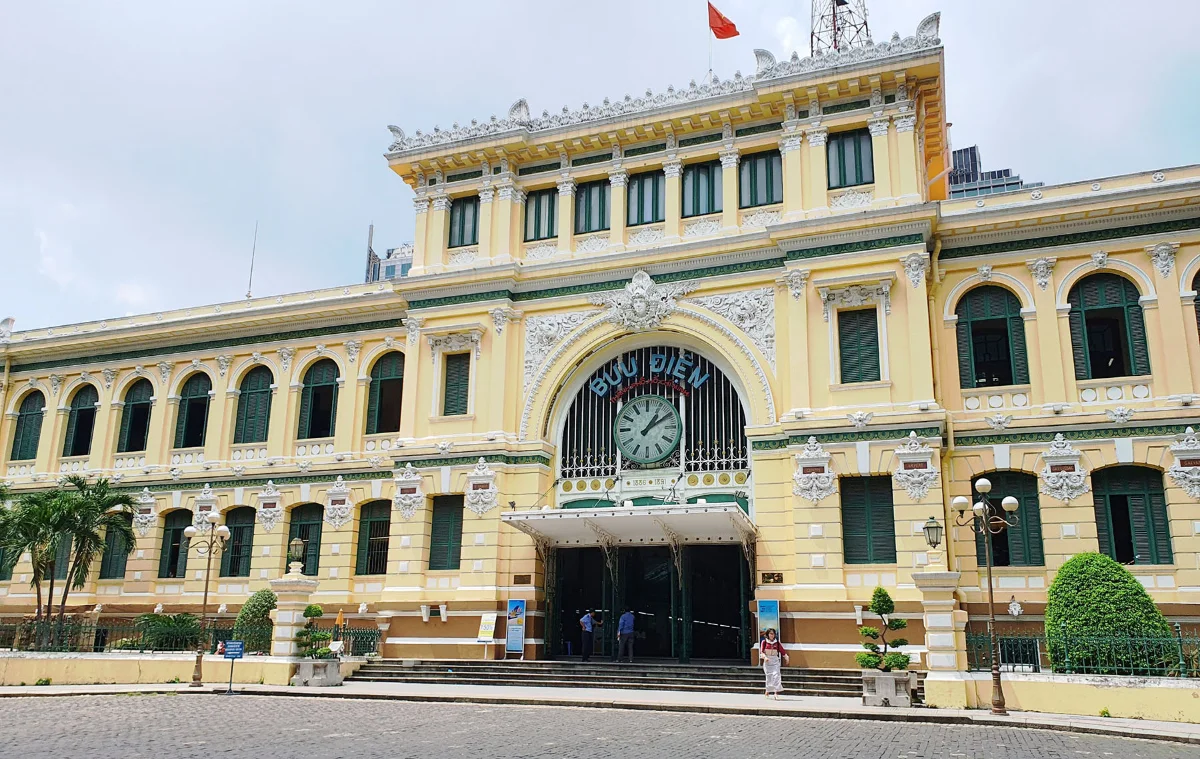
The Notre-Dame Cathedral sits at the heart of Saigon’s most iconic heritage triangle, along with the Saigon Central Post Office and Book Street. A perfect morning itinerary:
8:00 AM: Begin at the cathedral to photograph the facade in morning light. The red bricks glow beautifully in the soft morning sun.
9:00 AM: Cross Paris Square to explore the Saigon Central Post Office, designed by Gustave Eiffel. Don’t miss the original hand-painted maps inside.
10:00 AM: Walk through the adjacent Book Street (Đường Sách), a pedestrian-only literary haven with cafes, bookstores, and shaded seating areas.
11:00 AM: Enjoy Vietnamese coffee at Cong Caphe (opposite the post office) or traditional phở at Phở Hòa Pasteur nearby.
This entire loop takes less than 10 minutes of walking and offers some of Saigon’s most beautiful colonial architecture.
Notre-Dame Cathedral: 1880
Central Post Office: 1891
Book Street: 2016 (pedestrianized)
Distance: All within 200 meters
Best time: 8:00 AM – 11:00 AM
Yes, admission is free. Donations are welcome and help with the cathedral’s maintenance and preservation efforts.
Modest attire is required. Shoulders and knees must be covered. No shorts, sleeveless shirts, or hats inside the cathedral.
Dress Code Guide →Yes. Masses are held daily in Vietnamese, with occasional services in English and French. The 9:30 AM Sunday High Mass features the historic pipe organ.
Mass Times →The best lighting is early morning (8:00-9:00 AM) for the facade, or during the golden hour (4:00-5:00 PM). The cathedral is also beautifully illuminated after sunset.
Photography Guide →The cathedral is located at Paris Square (Cong Xa Paris), District 1. It’s a 5-minute walk from Ben Thanh Market and a 10-minute walk from the Saigon Opera House.
Transport Guide →Yes, there is a ramp at the main entrance. However, the historic layout means some areas have limited accessibility. Staff are available to assist.
The Notre-Dame Cathedral is more than a beautiful building — it is a living symbol of Saigon’s complex history. Built by French colonizers, it now stands as a beloved Vietnamese landmark, embraced by the local community regardless of religious background.
For the people of Ho Chi Minh City, the cathedral represents resilience, beauty, and the enduring power of faith. It has survived wars, political upheaval, and the relentless march of time, emerging as a testament to the city’s ability to transform and adapt.
For travelers, a visit to the Red Church offers a moment of peace amidst the city’s frenetic energy. It is a place where history is carved in stone and brick, where prayers have been whispered for over 140 years, and where the soul of Saigon feels closest to the surface.
“In a city of constant motion, the twin towers of Notre-Dame stand as anchors of eternity. The red bricks from Marseille have witnessed empires rise and fall, wars begin and end, and a nation transform itself. Yet they remain unchanged — a quiet reminder that some things endure, and that beauty, once built with love, is forever.”
— Indochine CHIC City Guide
Chic Indochine — The Art of Refined Exploration
Words by Andy Nguyen. Last updated June 2026.
Explore the living legacy of Indochina through our curated editorial collection of heritage guides, hotels, and experiences.
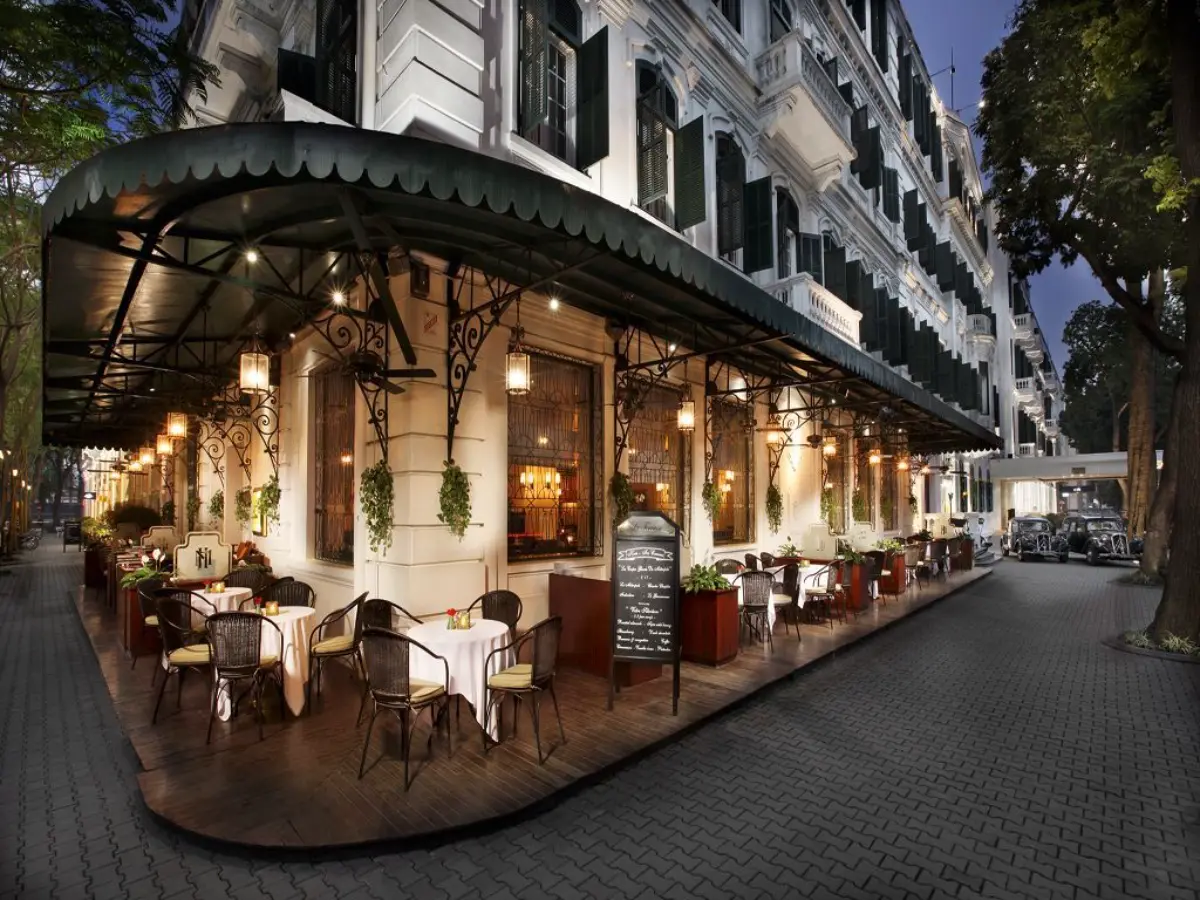
The ultimate crown jewel of classic French colonial elegance. Nostalgic white facades, timeless ironwork, and cinematic grandeur embody the peak of Indochine luxury.

Timeless Art Deco elegance sitting proudly on the banks of the Perfume River facing the ancient Imperial Citadel.

An architectural sanctuary layout directly on the pristine coast. Unrivaled luxury villas and soul-stirring cultural spas.

A pristine architectural heritage sanctuary dating back to 1930. Bask in old-world Saigon charm with opulent crystal chandeliers and nostalgic French-Indochine design lines.