Indochine Chic
Luxury travel experiences crafted with elegance and authenticity.

A Positive, Philosophical, and Life-Affirming Guide for Travelers Curious About Vietnam’s Socialist-Oriented Market Economy
Words by Indochine Chic · 12 min read · updated for 2026

Vietnam is a country of stunning contrasts. Ancient temples stand beside gleaming skyscrapers. Floating markets on the Mekong Delta coexist with luxury cruise ships in Halong Bay. And yes, there are people who are very wealthy alongside people who live in modest circumstances. Many foreign visitors, upon learning that Vietnam is a socialist country led by the Communist Party, ask a natural question: “Why are there rich people and poor people here?” It is a fair question. And it deserves an honest, thoughtful answer — one that reflects reality without cynicism, and positivity without denial. This article offers a positive, philosophical, and life-affirming explanation of Vietnam’s unique economic model, why inequality exists everywhere, and what can be learned from the Vietnamese approach to life, work, and community.
| Aspect | Current Reality |
|---|---|
| Economic System | Socialist-oriented market economy |
| GDP Growth (2025) | Approximately 7-8% (among world’s fastest) |
| Poverty Rate | Reduced from over 58% in 1990s to under 3% today |
| Wealth Distribution | Growing middle class; some inequality as in all developing economies |
| Official Policy | “Wealth is encouraged through honest labor; poverty is addressed through social programs” |
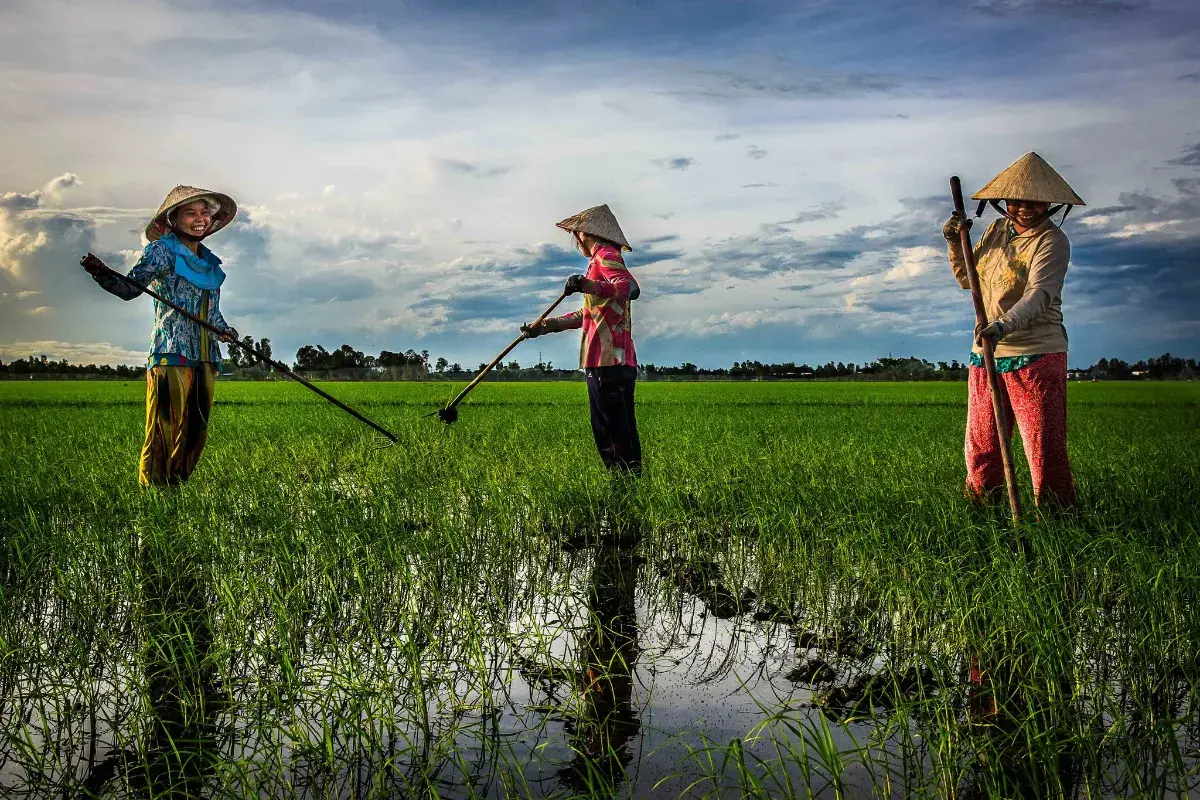
Before discussing Vietnam specifically, let us step back. Every society in human history has had differences in wealth, status, and opportunity. In nature, some trees grow taller and receive more sunlight. Some fish swim faster and catch more food. In sports, some athletes train harder and win medals. In business, some entrepreneurs take risks and build successful companies. These differences are not injustices. They are the natural outcome of variation in effort, talent, luck, and circumstance. The measure of a good society is not whether differences exist. It is whether everyone has a fair chance to improve their situation.
Vietnam does not follow the old Soviet model of state ownership of everything. Nor does it follow pure capitalism. It has created a third way: the socialist-oriented market economy. This system was introduced in 1986 under Đổi Mới (Renovation). The result? Vietnam moved from one of the poorest countries in the world to a lower-middle-income nation in just one generation.
| Feature | How It Works in Vietnam |
|---|---|
| Private ownership | Citizens can own businesses, land-use rights, homes, and assets |
| Market competition | Businesses compete freely in most sectors |
| State guidance | The state steers strategic sectors (energy, banking, infrastructure) |
| Social safety net | Programs exist to help the poor, disabled, and elderly |
| Redistribution | Through taxes and social programs, some wealth flows from richer to poorer regions |

Between 1990 and 2020, Vietnam reduced its poverty rate from over 58% to under 3%. That is more than 40 million people lifted out of extreme poverty.
| Year | Poverty Rate | Note |
|---|---|---|
| 1990 | ~58% | Post-war reconstruction era |
| 2000 | ~35% | Early Đổi Mới benefits |
| 2010 | ~15% | Strong growth period |
| 2020 | ~3% | Near-universal basic living standards |
| 2025 | <3% | Continued improvement |
No other country has achieved such rapid poverty reduction in peacetime. Vietnam’s model is studied by development economists worldwide.
As poverty fell, the middle class expanded. Today, over 20% of Vietnamese are considered middle class — with discretionary income for travel, education, and consumer goods. By 2030, that number is expected to reach 40%. These new middle-class families are not “the rich.” They are teachers, engineers, small business owners, and skilled workers who have improved their lives through education and hard work.
Vietnam’s constitution guarantees the right to work, start a business, and own property. Citizens are not trapped in their circumstances. A farmer’s child can become a doctor. A street vendor can open a restaurant. A factory worker can save and start a small trading business. These upward mobility stories are real and common.
| Pure Capitalism | Vietnam’s Model |
|---|---|
| Minimal state intervention | Strategic state guidance in key sectors |
| Wealth as individual achievement | Wealth balanced with social responsibility |
| Limited safety net | Universal health insurance and social programs |
| Winner-takes-all mentality | Emphasis on inclusive growth |
Vietnam has consciously avoided the extremes of both Soviet-style communism (which led to stagnation) and Western-style neoliberalism (which often ignores inequality). The Vietnamese model is pragmatic, flexible, and designed for local conditions. As Vietnamese leaders often say: “We do not copy any model. We learn from all models and create our own.”

Next time you travel through Vietnam and notice a shiny new Mercedes next to a bicycle, or a modern mall beside a traditional market, do not see contradiction. See a country in motion. See the grandmother selling phở who sent all four children to university. See the young tech worker who grew up in a thatched hut without electricity. See the fisherman who now owns a motorboat, not just a rowboat.
Vietnam’s story is not about rich versus poor. It is about movement, possibility, and hope. The question is not “why are there rich people and poor people?” The question is “are conditions improving for everyone?” And the answer, in Vietnam, is a clear yes.
So come with open eyes. See beyond the contrasts. And take home not just beautiful photos, but a deeper understanding of how a nation can grow — not by erasing differences, but by offering everyone a fair chance to rise.
Cảm ơn bạn đã quan tâm đến Việt Nam. Thank you for caring about Vietnam.
— The Indochine Chic Team