INDCHINE CHIC · SAIGON ARCHITECTURAL GUIDE
Indochine Chic Buildings in Ho Chi Minh City
Full List of 19 Colonial Masterpieces
From Notre-Dame Cathedral to the Central Post Office — the complete guide to Saigon’s French colonial architectural treasures. Every building includes Why It Is Chic, Insider Tip, and Address.

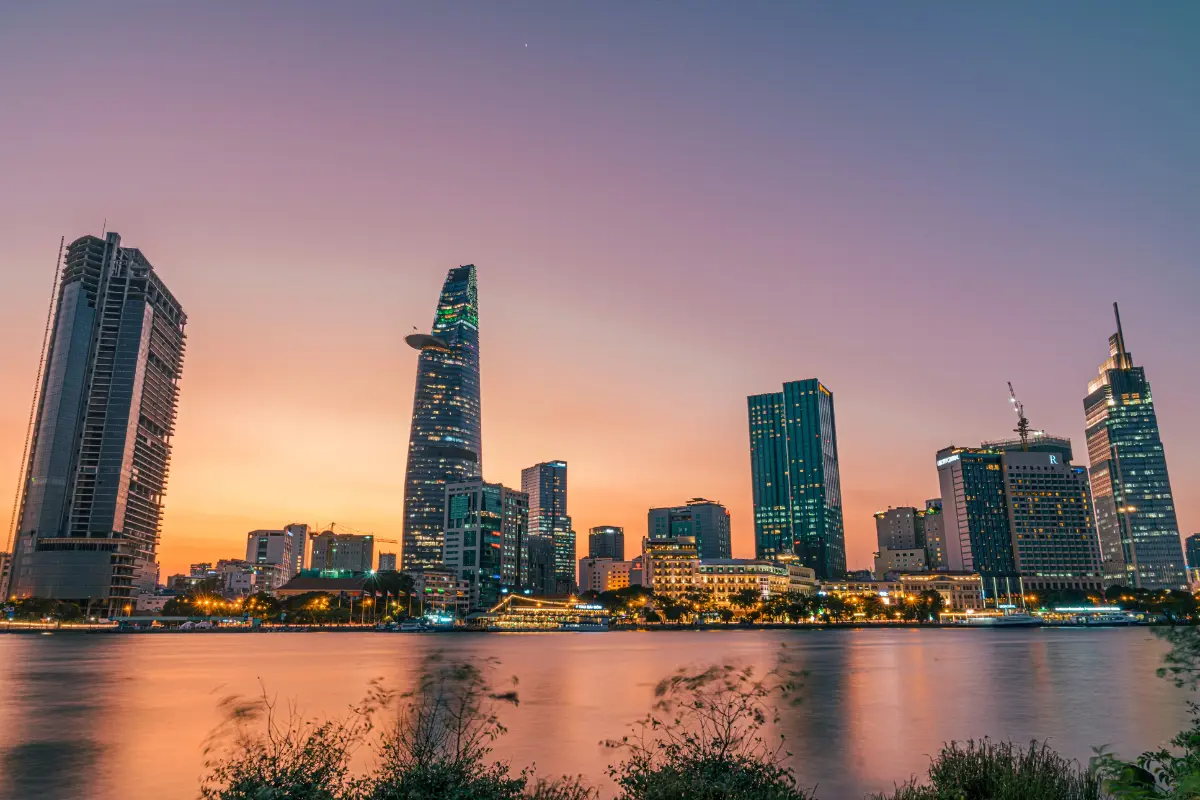
Saigon’s Indochine heritage — the Pearl of the Orient’s finest colonial architecture.
Saigon was the Paris of the Orient — a city of wide boulevards, tropical gardens, and elegant yellow villas. Today, 19 magnificent Indochine buildings remain, each a testament to a bygone era of elegance. This guide documents every one, with insider tips to enhance your visit.
Saigon’s Indochine Architectural Heritage
Ho Chi Minh City (still lovingly called Saigon by locals) was the commercial capital of French Indochina. Unlike Hanoi’s more restrained elegance, Saigon’s colonial architecture is flamboyant, ambitious, and distinctly tropical. Wide boulevards, ornate facades, and a confident European flair characterize the 19 surviving masterpieces listed here.
Each entry includes: English name (Vietnamese original), year completed, architectural style, historical description, Why It Is Chic (what makes it architecturally or culturally significant), Insider Tip (best time to visit, photography advice, hidden details), and the full street address.
Saigon
Notre-Dame Cathedral Basilica of Saigon
(Nhà thờ Đức Bà Sài Gòn)
1880 · Romanesque / Neo-Gothic
All red bricks were imported from Marseille. Twin bell towers rise 58 meters. Stained glass from Chartres, France.
Why It Is Chic: The red bricks have retained their vibrant color for over 140 years. There is no air conditioning — the 6-meter-high arched windows and 1.5-meter-thick walls naturally cool the interior. The statue of the Virgin Mary in front is said to have shed tears in 2005, drawing pilgrims from across Vietnam.
Insider Tip: Sunday morning mass at 9:30 AM includes a choir singing in Latin — a transcendent experience regardless of faith. The square is best photographed at 8 AM before tour buses arrive. The cathedral is free to enter, but donations appreciated.
Address: 1 Công xã Paris, Bến Nghé, District 1, Ho Chi Minh City
Saigon
Saigon Central Post Office
(Bưu điện Trung tâm Sài Gòn)
1891 · Gothic / Renaissance
Designed by Gustave Eiffel. Features a 50-meter arched ceiling, antique telephone booths, and two enormous maps of Saigon painted in 1892.
Why It Is Chic: The soaring arched ceiling and original ironwork are engineering marvels. The two hand-painted maps — one of Saigon and one of Cambodia — are masterpieces of 19th-century cartography. Remarkably, this is a working post office, not a museum — the magic is in its living function.
Insider Tip: Buy a stamp and send a postcard home — the cancellation mark is a souvenir featuring the building’s image. The best light for photography is 9-11 AM when sunlight streams through the arched windows. Free entry.
Address: 2 Công xã Paris, Bến Nghé, District 1, Ho Chi Minh City
Saigon
Ho Chi Minh City Hall (Hôtel de Ville)
(Trụ sở UBND TP.HCM / Dinh Xã Tây)
1908 · French Colonial
Former Hôtel de Ville (City Hall). One of Saigon’s most photographed facades. Illuminated at night with a statue of Uncle Ho in front.
Why It Is Chic: The ornate facade with its central clock, mansard roof, and sculptural details rivals any European city hall. The allegorical figures carved into the pediment represent Agriculture, Commerce, and Industry. The juxtaposition of the colonial building with the statue of Ho Chi Minh creates a fascinating historical conversation.
Insider Tip: Photograph at night when the building is dramatically illuminated. The best angle is from the statue of Ho Chi Minh looking up. The building is not open to the public, but the square in front is a popular gathering spot.
Address: 86 Lê Thánh Tôn Street, Bến Nghé, District 1, Ho Chi Minh City
Saigon
Saigon Opera House (Opéra de Saigon)
(Nhà hát Thành phố)
1900 · Beaux-Arts / Flamboyant
Smaller than Hanoi but more ornate, with floral reliefs, arched windows, and a curving staircase. Now hosts the AO Show.
Why It Is Chic: The facade is a riot of ornamentation — garlands, masks, and sculptural figures that embody the Belle Époque’s love of excess. The interior’s original chandeliers and marble staircase remain.
Insider Tip: The AO Show (contemporary circus) performs regularly — tickets from $25. If not attending a show, the exterior is beautifully illuminated at night. The small plaza in front offers excellent photo opportunities at sunset.
Address: 7 Công trường Lam Sơn, Bến Nghé, District 1, Ho Chi Minh City
Saigon
Ho Chi Minh City Museum (Gia Long Palace)
(Bảo tàng Thành phố Hồ Chí Minh / Dinh Gia Long)
1885 · French Colonial
Former Gia Long Palace. Elegant neoclassical villa with wrought-iron gates and shaded gardens.
Why It Is Chic: The building’s symmetry and proportion are classical perfection. The wrought-iron gates are original and feature the French imperial eagle. The palace served as the residence of the Governor of Cochinchina.
Insider Tip: The museum’s garden cafe is a hidden gem — coffee under frangipani trees for $2. Entry is approximately $1.50. The building is most beautiful at 4 PM when the afternoon sun warms the yellow facade.
Address: 65 Lý Tự Trọng Street, Bến Nghé, District 1, Ho Chi Minh City
Saigon
Ho Chi Minh City Fine Arts Museum
(Bảo tàng Mỹ thuật TP.HCM / Dinh thự Chú Hỏa)
1929 · Art Deco / Colonial
A stunning Art Deco villa built by a wealthy Chinese-Vietnamese merchant. Houses Vietnam’s finest collection of modern and contemporary art.
Why It Is Chic: This building is a masterpiece of tropical Art Deco — sweeping staircases, stained glass ceilings, and elaborate wrought-iron balconies designed to catch sea breezes. The merchant spared no expense, importing Italian marble and French tiles.
Insider Tip: Don’t miss the third floor, which houses an exquisite collection of lacquer paintings. Entry approximately $1.50. The stained glass ceiling is best viewed at midday.
Address: 97A Phó Đức Chính Street, Nguyễn Thái Bình, District 1, Ho Chi Minh City
Saigon
Museum of Vietnamese History
(Bảo tàng Lịch sử TP.HCM)
1929 · Indochine / Orientalist
Blends French Beaux-Arts symmetry with Vietnamese pagoda motifs — curved roofs, wooden brackets, and dragon decorations.
Why It Is Chic: A perfect fusion of East and West — the building’s symmetrical French layout is crowned with Vietnamese-style curved roofs and dragon finials. It is one of the earliest examples of “Indochine Style” architecture.
Insider Tip: The garden courtyard is planted with frangipani and lotus — a quiet oasis. The museum’s collection of Cham sculpture is world-class. Entry approximately $1.50.
Address: 2 Nguyễn Bỉnh Khiêm Street, Bến Nghé, District 1, Ho Chi Minh City
Saigon
Ho Chi Minh City People’s Court
(Tòa án Nhân dân TP.HCM)
1885 · French Colonial
Former Palace of Justice. Imposing neoclassical facade with Corinthian columns. Still functioning as the city’s courthouse.
Why It Is Chic: The Corinthian columns and triangular pediment evoke ancient Roman temples, reinforcing the authority of colonial justice. The building’s scale — it occupies an entire city block — was designed to intimidate and impress.
Insider Tip: The building is not open to the public, but the exterior is worth photographing from the corner of Lý Tự Trọng and Nam Kỳ Khởi Nghĩa streets. The morning light (8-9 AM) hits the facade perfectly.
Address: 131 Nam Kỳ Khởi Nghĩa Street, Bến Nghé, District 1, Ho Chi Minh City
Saigon
Continental Hotel Saigon
(Khách sạn Continental Saigon)
1880 · French Colonial
Where Graham Greene wrote “The Quiet American.” Green shutters, wrought-iron balconies, and the legendary Café de la Musique unchanged since 1880.
Why It Is Chic: This is the most literary hotel in Southeast Asia. Graham Greene sat in the café every morning, chain-smoking and observing the street life that would appear in his novel. The hotel’s facade has changed almost nothing in 140 years.
Insider Tip: Order a “Saigon Sling” at the Café de la Musique (about $8) and sit on the balcony overlooking the Opera House. Even if not a guest, the café welcomes all. The afternoon light (3-5 PM) is sublime.
Address: 132–134 Đồng Khởi Street, Bến Nghé, District 1, Ho Chi Minh City
Saigon
Majestic Hotel Saigon
(Khách sạn Majestic Saigon)
1925 · French Colonial
Overlooking the Saigon River. Rooftop bar with stunning night views. The first hotel in Saigon with elevators and air conditioning.
Why It Is Chic: The Majestic’s riverfront location and rooftop bar made it the preferred hotel for journalists during the Vietnam War. The facade’s arched windows, wrought-iron balconies, and central clock embody the glamour of 1920s luxury travel.
Insider Tip: Take the elevator to the rooftop bar for sunset views of the Saigon River and Bach Dang Wharf ($5 drink required). The bar’s wooden ceiling fans and wicker furniture are original 1920s pieces.
Address: 1 Đồng Khởi Street, Bến Nghé, District 1, Ho Chi Minh City
Saigon
Grand Hotel Saigon
(Khách sạn Grand Hotel Saigon)
1930 · French Colonial
Located on Đồng Khởi Street. Classic colonial yellow facade with arched windows and a central courtyard.
Why It Is Chic: The Grand Hotel’s facade is one of the most photographed in Saigon — the perfect shade of colonial yellow with crisp white trim. The central courtyard, with its tropical plants and fountain, is a peaceful retreat.
Insider Tip: The hotel’s ground floor cafe is open to the public and offers excellent coffee (about $2.50). The facade is best photographed at 9 AM when the sun is directly on it.
Address: 8 Đồng Khởi Street, Bến Nghé, District 1, Ho Chi Minh City
Saigon
Ben Thanh Market
(Chợ Bến Thành)
1914 · French Colonial
Saigon’s most famous market. The clock tower and arched entrances are iconic symbols of the city.
Why It Is Chic: The clock tower at the main entrance is Saigon’s unofficial landmark — featured on postcards, guidebooks, and souvenirs. The market was designed with a central dome and four arched gateways to maximize natural ventilation.
Insider Tip: Visit at 6 AM before the tourist crowds for the best photography. The market is open from 7 AM to 7 PM. For authentic street food, the night market (6 PM onwards) sets up on the streets surrounding the building.
Address: Lê Lợi Street corner of Quách Thị Trang Square, District 1, Ho Chi Minh City
Saigon
Nha Rong Harbor (Messageries Maritimes Building)
(Bến Nhà Rồng)
1863 · French Colonial
Where young Nguyen Tat Thanh (later Ho Chi Minh) worked as a cook and departed for France in 1911. Now the Ho Chi Minh Museum.
Why It Is Chic: The building’s name means “Dragon House” — named for the two large dragon statues on its facade. It served as the headquarters of the French shipping company Messageries Maritimes. The building’s historical significance makes it a pilgrimage site.
Insider Tip: The museum inside (entry approximately $1) documents Ho Chi Minh’s life. The riverfront promenade offers excellent sunset views. Free to walk the exterior grounds.
Address: 1 Nguyễn Tất Thành Street, District 4, Ho Chi Minh City
Saigon
Le Quy Don High School (Chasseloup-Laubat School)
(Trường THPT Lê Quý Đôn)
1874 · French Colonial
One of Saigon’s oldest high schools. Elegant colonial architecture with a central courtyard.
Why It Is Chic: The school’s imposing facade and shaded courtyard have educated generations of Saigon’s elite. The building’s symmetrical wings, arched windows, and central clock tower embody French educational architecture of the 19th century.
Insider Tip: The school is not open to the public, but the exterior is visible from the street. The best view is from the intersection of Nguyễn Bỉnh Khiêm and Võ Thị Sáu streets.
Address: 5 Nguyễn Bỉnh Khiêm Street, Bến Nghé, District 1, Ho Chi Minh City
Saigon
Nguyen Thi Minh Khai High School (Gia Long School)
(Trường THPT Nguyễn Thị Minh Khai)
1913 · French Colonial
Formerly Lycée Gia Long, the first French high school for girls in Indochina. Beautifully preserved with yellow walls and arched windows.
Why It Is Chic: This school was revolutionary for its time — providing French-language education to Vietnamese girls. The building’s graceful proportions, shaded verandas, and tropical gardens create a distinctly feminine elegance.
Insider Tip: The school’s front gate is best photographed in the morning light (8-9 AM). The surrounding streets are lined with frangipani trees that bloom in May.
Address: 22 Hùng Vương Street, District 5, Ho Chi Minh City
Saigon
University of Medicine and Pharmacy (Old Campus)
(Đại học Y Dược TP.HCM / Cơ sở cũ)
1920s · French Colonial
Former medical school built by the French. Classic colonial architecture with high ceilings and shaded corridors.
Why It Is Chic: The building’s high ceilings (over 4 meters) and wide corridors were designed to combat Saigon’s tropical heat long before air conditioning. The central courtyard’s old trees provide deep shade.
Insider Tip: The old campus is still in use, but the historic building is visible from the street. The best view is from the Hồng Bàng Street entrance.
Address: 217 Hồng Bàng Street, District 5, Ho Chi Minh City
Saigon
Hanh Thong Tay Pagoda (Franco-Vietnamese Architecture)
(Chùa Hạnh Thông Tây)
1920s · Indochine Blend
A unique Buddhist pagoda that incorporates French colonial elements — arched windows and tiled floors alongside traditional Vietnamese altar and roof.
Why It Is Chic: This is one of the rarest architectural hybrids in Vietnam — a functioning Buddhist pagoda built in the style of a French colonial villa. The arched windows and terrazzo floors are distinctly European, while the roof and altar are traditionally Vietnamese.
Insider Tip: The pagoda is still active and welcomes respectful visitors. Morning (7-9 AM) is the best time to visit when the light streams through the arched windows onto the golden altar. Dress modestly.
Address: 313 Âu Cơ Street, Tân Thành, Tân Phú District, Ho Chi Minh City
Saigon
Rainbow Bridge (Messageries Maritimes Bridge)
(Cầu Mống)
1882 · Industrial / Eiffel
An Eiffel-designed steel bridge over the Bến Nghé Canal. One of Saigon’s oldest bridges.
Why It Is Chic: The bridge’s delicate steel lattice work is pure Eiffel — elegant, light, and surprisingly graceful for an industrial structure. The Vietnamese name “Cầu Mống” (Rainbow Bridge) comes from its arched shape.
Insider Tip: The bridge is best photographed from the pedestrian walkway of the adjacent modern bridge at sunset. It is a working bridge, so exercise caution when crossing.
Address: Connects Đoàn Văn Bơ and Nguyễn Tất Thành streets, District 4, Ho Chi Minh City
Saigon
French Consulate General (Former Governor of Cochinchina Palace)
(Tổng lãnh sự quán Pháp / Dinh Thống đốc Nam Kỳ cũ)
1873 · French Colonial
Former Palace of the Governor of Cochinchina. Now the French Consulate General. An elegant neoclassical villa set amid gardens.
Why It Is Chic: This was the most powerful colonial building in all of Cochinchina — the palace from which the French governed southern Vietnam. The neoclassical villa, with its Ionic columns and manicured gardens, has been restored to its original splendor and remains French territory.
Insider Tip: The building is not open to the public (active consulate), but the exterior and gardens are visible from the street. The best view is from the corner of Nguyễn Du and Alexandre de Rhodes streets. Security is present — photograph discreetly.
Address: 27 Nguyễn Du Street, Bến Nghé, District 1, Ho Chi Minh City
Summary: 19 Indochine Buildings of Saigon
Top 5 Must-See: Notre-Dame Cathedral | Central Post Office | City Hall | Saigon Opera House | Continental Hotel
Best Walking Route: Start at Notre-Dame Cathedral (8 AM) → cross to Central Post Office → walk north on Đồng Khởi Street to City Hall → continue to Opera House → end at Continental Hotel for coffee. Total distance: 1.5 km, about 2 hours with stops.
Photography Tips: Golden hour (4:30-5:30 PM) on Đồng Khởi Street. For cathedral and post office, 8 AM avoids crowds. City Hall is best photographed at night.
Chicly yours, The Indochine Chic Team
*All information verified April 2026. Entry fees noted. Many buildings are active government, religious, or educational sites — dress respectfully and ask before photographing interiors.*
Indochine Chic Buildings in Ho Chi Minh City — Full list of 19 colonial masterpieces with Why It Is Chic, Insider Tips, and Addresses. · © 2026 Indochine Chic — Journey into elegance.