Grand Indochina · Heritage Collection
Grand Indochina
Heritage Collection
Curated Journeys Through Vietnam, Laos & Cambodia’s Ancient World
“Where Ancient Kingdoms Still Whisper”
Before modern borders divided this land into three nations, powerful kingdoms rose along great rivers, sacred mountains, and fertile plains. They left behind not ruins, but resonances.
“This is not tourism. This is a pilgrimage through one of Asia’s great civilisational landscapes.”
From the ancient citadel of Luy Lâu — where Buddhism first touched Vietnamese soil — to the cosmic temples of Angkor, from the imperial legacy of Huế to the golden monasteries of Luang Prabang, these journeys reveal the enduring spirit of Indochina.
There is a kind of travel that collects postcards, and there is a kind that collects understanding. Heritage travel asks more of you — patience, curiosity, a willingness to sit with complexity. In return, it offers genuine connection with civilisations that continue to breathe.
Indochina is not a museum. It is a living manuscript. Here, a 12th‑century Khmer lintel stands beside a busy market. A grandmother in Hội An still wraps bánh lá in the same pattern as her great‑grandmother did during the Nguyễn dynasty. In Luang Prabang, monks who chant Pali scriptures walk past French colonial shutters.
Why Heritage Travel Matters
There is a kind of travel that collects postcards, and there is a kind that collects understanding. Heritage travel asks more of you — patience, curiosity, a willingness to sit with complexity. In return, it offers genuine connection with civilisations that continue to breathe. Indochina is not a museum. It is a living manuscript.
Here, a 12th‑century Khmer lintel stands beside a busy market. A grandmother in Hội An still wraps bánh lá in the same pattern as her great‑grandmother did during the Nguyễn dynasty. In Luang Prabang, monks who chant Pali scriptures walk past French colonial shutters.
The Civilizations of Indochina
Early Kingdoms
Đông Sơn and Funan
Bronze drums and first trading empires, circa 1000 BCE to 6th century. The Mekong Delta’s Óc Eo once received envoys from China and India.
Great Empires
Khmer · Đại Việt · Champa · Lan Xang
From Angkor’s cosmic metropolis to the Confucian citadels of Đại Việt, the brick towers of Champa, and the “Million Elephants” kingdom of Laos.
Mandala World
Overlapping Spheres
Indochina was shaped not by fixed borders but by fluid power — a conversation of civilisations, not a clash.
— A Living Manuscript —
The Three Kingdoms
Vietnam · Cambodia · Laos
Each nation a distinct chapter in the Indochina story

Vietnam’s Ancient Heritage
Ancient Capitals and Sacred Landscapes
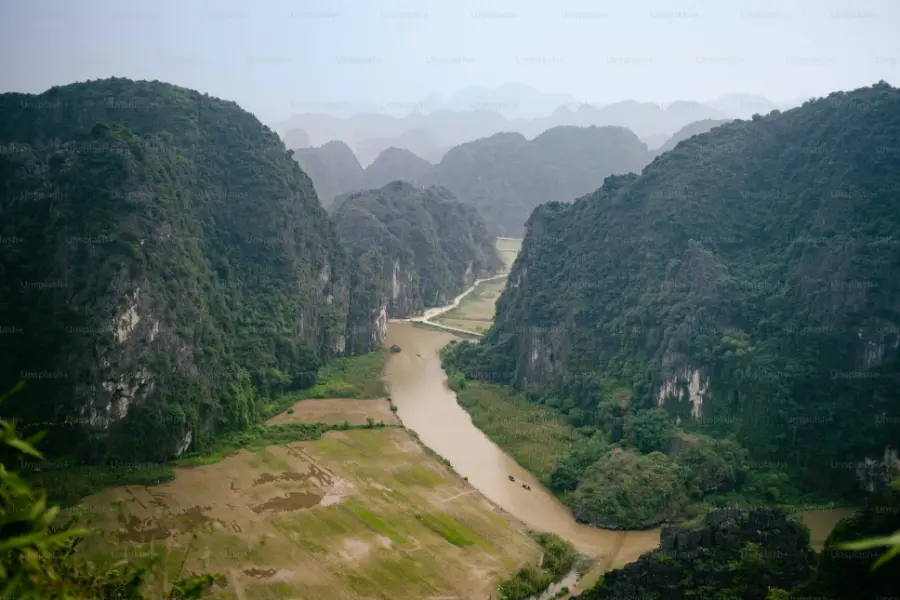
Cổ Loa — the spiral citadel of the Thục dynasty. Luy Lâu — the birthplace of Vietnamese Buddhism. Hoa Lư — Vietnam’s first independent capital amid Ninh Bình’s karsts.
- Cổ Loa · Spiral citadel
- Luy Lâu · Birthplace of Buddhism
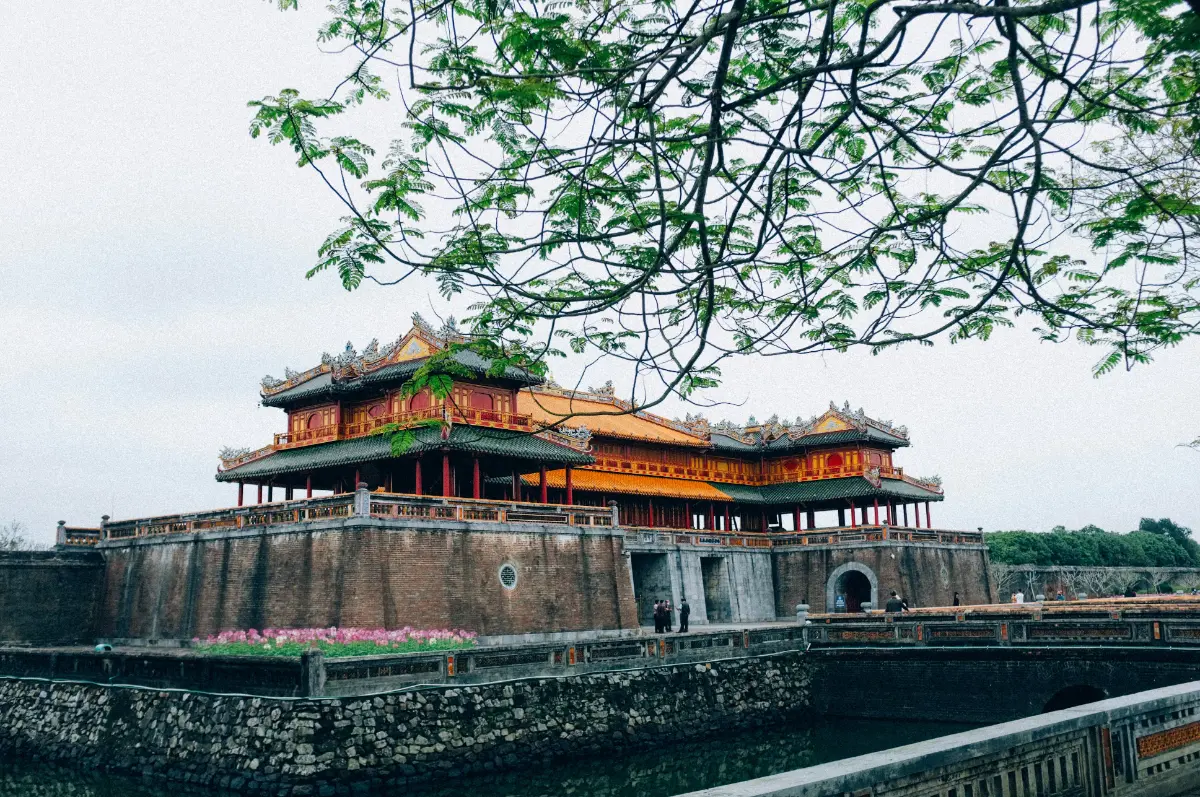
- Imperial Huế · Purple Forbidden City
- Hội An · Ancient trading port
- Mỹ Sơn · Cham towers
Cambodia — Legacy of the Khmer Empire
Universe in Stone
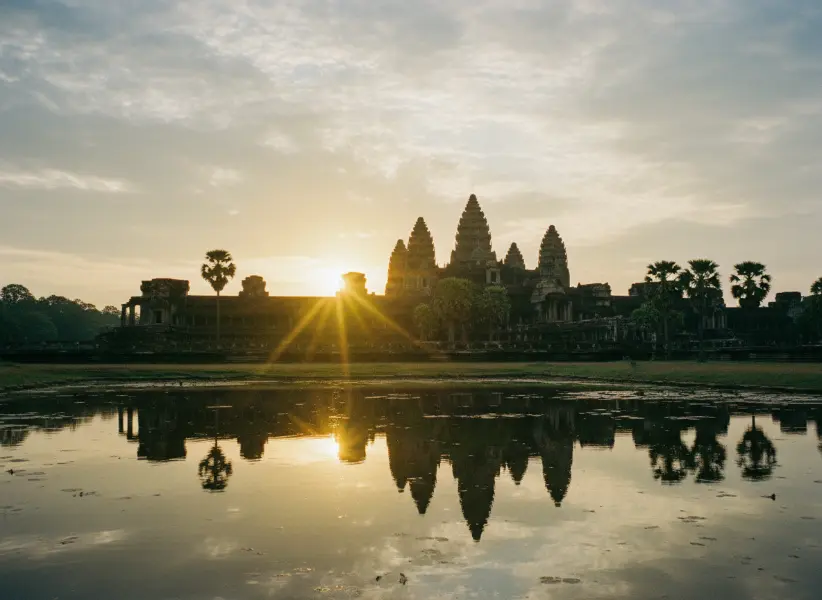
Angkor Wat — the largest religious monument on earth. Angkor Thom and Bayon’s 216 stone faces. The jungle cathedral of Ta Prohm.
- Angkor Wat · Sunrise over five towers
- Bayon · Faces of the bodhisattva
- Ta Prohm · Jungle strangler figs
- Koh Ker · Pyramid temple
- Phnom Penh · National Museum
Laos — Soul of the Mekong Kingdom
The Golden City
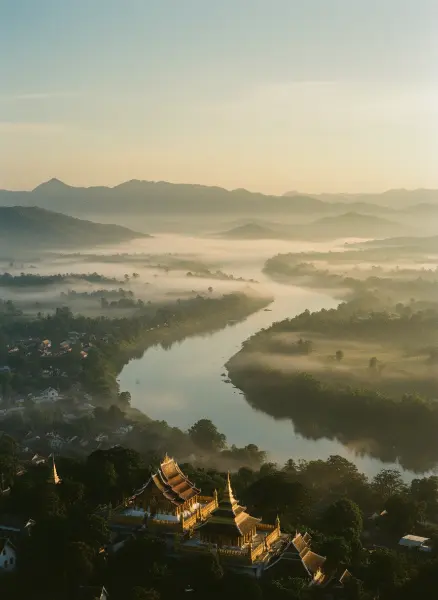
Luang Prabang: UNESCO World Heritage — thirty-three wats, French colonial villas, and the daily tak bat alms ceremony at dawn.
- Luang Prabang · Golden City
- Tak Bat · Dawn alms ceremony
- Wat Phou · Pre-Angkorian temple
- Kuang Si Falls · Turquoise cascades
- Plain of Jars · Ancient mystery
The Sacred Geography of Indochina
Mekong, Tonle Sap, Perfume River — rivers as spiritual arteries from the Tibetan plateau to the delta, nurturing empires and pilgrimage routes. Sacred mountains: Phnom Kulen (birthplace of the Khmer empire), Yên Tử (home to Vietnamese Zen Buddhism), Wat Phou’s lingam-shaped peak. Hindu-Buddhist syncretism — living heritage.
Living Heritage: Traditions and Taste
Intangible treasures: Quan Họ folk singing, Huế royal court music (Nhã nhạc), Apsara dance resurrected from the Khmer Rouge era, water puppetry. Culinary civilisations: Huế imperial cuisine, fish amok with Angkorian roots, Lao laap — flavours encoded with history.
Signature Heritage Journeys
Curated Expeditions Across Indochina
10 to 21 days of profound discovery — temples, citadels, and Mekong spirituality

10 Days · Vietnam Heritage
Vietnam Heritage
Hanoi to Hoa Lư to Huế to Hội An, exploring Thăng Long citadel, royal tombs, ancient towns.
Explore Journey →
14 Days · Cambodia & Angkor
Cambodia and Angkor
Siem Reap including Angkor Thom, Ta Prohm, Banteay Srei, then Koh Ker, Sambor Prei Kuk.
Explore Journey →12 Days · Laos Discovery
Laos Discovery
Luang Prabang to Pak Ou to Vientiane, then Wat Phou and the Bolaven Plateau coffee heritage.
Explore Journey →
21 Days · Grand Indochina
Grand Indochina
Vietnam, Cambodia, and Laos — the full arc of temples, citadels, and Mekong spirituality.
Explore Journey →Heritage Hotels
Sleeping Within History
Each stay continues the story

Sofitel Legend Metropole Hanoi · 1901 · Graham Greene’s hideaway

Raffles Grand Hotel d’Angkor · 1932 · Where Jacqueline Kennedy walked

La Résidence Phou Vao · Luang Prabang · Former governor’s hilltop residence

Azera La Residence Huế · Art deco on the Perfume River
When to Travel: Seasons of Discovery
November – February
Peak Season
Cool and dry — Angkor at sunrise, Luang Prabang mist, ideal for heritage walks. The golden light over the Mekong is unforgettable.
March – May
Hot Season
Higher altitudes and sunrise visits. Quieter Angkor, blooming rice paddies, and dramatic skies. Perfect for early morning temple explorations.
June – October
Green Season
Emerald landscapes, waterfalls at full flow, fewer travellers — sacred solitude. The jungles are lush and the photography is sublime.
Who This Journey Is For
Cultural explorers, history enthusiasts, heritage collectors, photographers, scholars — and luxury travellers who want refined accommodation and meaning. We do not promise to show you everything. We promise to show you what matters.
“Pack light. Bring curiosity. Leave time for silence.”
The Indochine Chic Difference
We work with historians who read Khmer and Chăm inscriptions, local storytellers, heritage specialists from UNESCO and the École française d’Extrême‑Orient. Slow travel — three nights minimum per site — authentic encounters, ethical village stays, and intellectual immersion. This is not a product. It is a philosophy.
The Indochine Chic Difference
Heritage Travel, Reimagined
Scholars & Storytellers
Historians who read Khmer and Chăm inscriptions, local guides, UNESCO specialists.
Slow Travel
Three nights minimum per site — authentic encounters and ethical village stays.
Intellectual Immersion
Not a product. A philosophy. Access to sites beyond ordinary tourism.
Rooted in the Land
Words by our editorial team, guided by scholars, rooted in Indochina.
Explore Related Collections
Deeper Into Indochina




“`html
Feature Hotels of Vietnam | Luxury Stays – Indochine Chic


“`
Luxury Stays
Feature Hotels of Vietnam
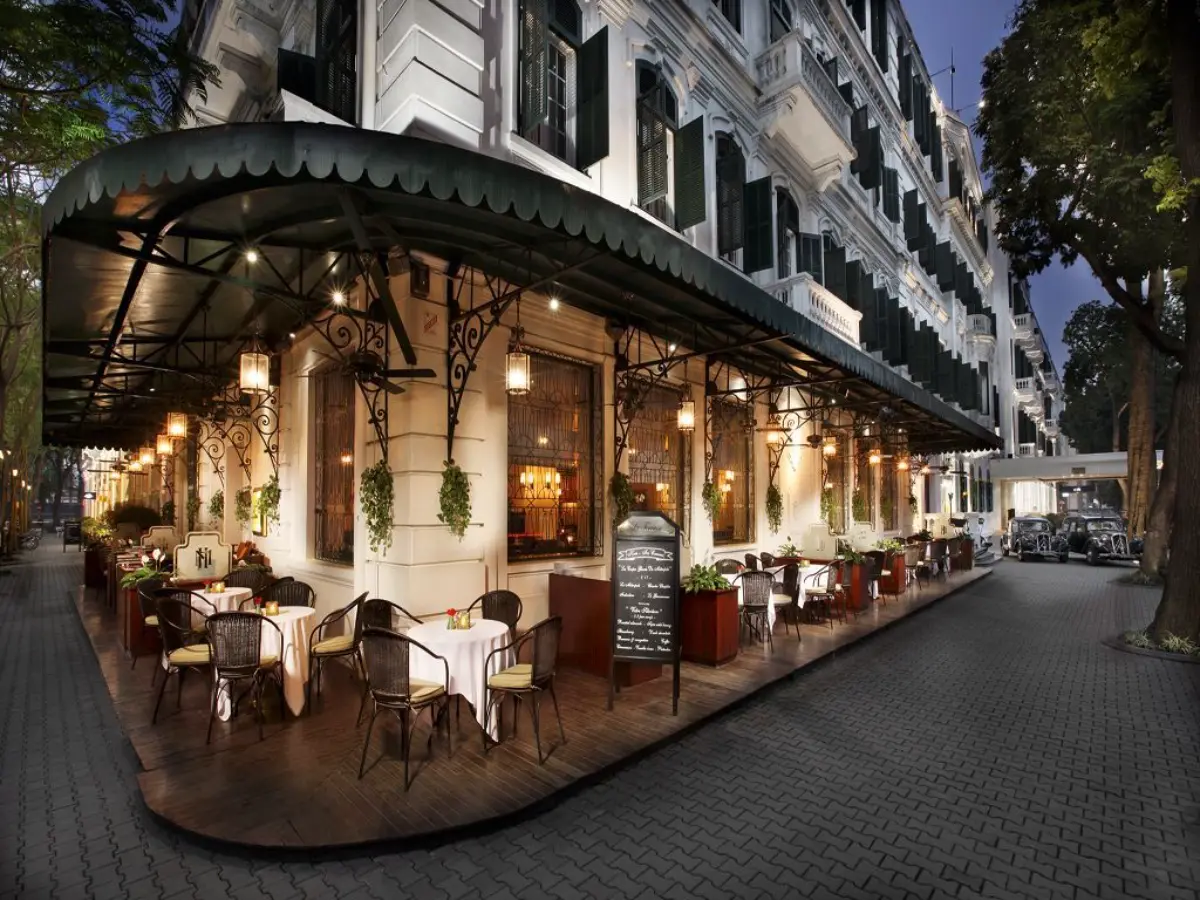
Hanoi
Metropole Hotel
The ultimate crown jewel of classic French colonial elegance. Nostalgic white facades, timeless ironwork, and cinematic grandeur embody the peak of Indochine luxury.

Hue
Azerai La Residence
Timeless Art Deco elegance sitting proudly on the banks of the Perfume River facing the ancient Imperial Citadel.

Hoi An
Four Seasons The Nam Hai
An architectural sanctuary layout directly on the pristine coast. Unrivaled luxury villas and soul-stirring cultural spas.

Ho Chi Minh City
Park Hyatt Saigon
A pristine architectural heritage sanctuary dating back to 1930. Bask in old-world Saigon charm with opulent crystal chandeliers and nostalgic French-Indochine design lines.