COMPREHENSIVE 2026 MASTER EDITION · 25 MIN READ
The Comprehensive Guide
to Indochina
An Exhaustive Slow-Travel Manual Detailing Cultural Landscapes, Historical Architecture, Regional Logistics, and Cross-Border Itineraries.
Sunset over Halong Bay
Timeless Beauty
Indochina’s natural and cultural heritage — limestone karsts meet ancestral waters.
Introduction


The Timeless Allure of Mainland Southeast Asia
The geographic entity historically referred to as Indochina—encompassing the modern sovereign nations of Vietnam, Laos, and Cambodia—represents one of the earth’s most culturally dense, historically complex, and visually arresting regions. Positioned at the crossroads of ancient Indian and Chinese spheres of civilizational influence, this peninsula has synthesized imperial dynastic traditions, profound Buddhist and Hindu theological philosophies, and a poignant layer of European colonial architecture into a living, breathing contemporary tapestry.
For the modern traveler, traversing this territory is not merely a lesson in changing geography; it is a profound exercise in slow travel. The landscape transitions fluidly from the jagged limestone karsts and emerald terraced rice fields of northern Vietnam to the mountainous, monastery-filled corridors of landlocked Laos, before flattening into the monumental alluvial plains, great lakes, and ancient stone empires of Cambodia. To experience Indochina completely requires an understanding of its history, a respect for its spiritual rhythms, and a mastery of its regional transit networks.

The majestic landscapes of mainland Southeast Asia — a tapestry of cultures and nature
The Indochina Destination Matrix
A bird’s-eye analytical reference detailing macro-climatic tracking windows, suggested baseline investment of time, and primary cultural focus points across the three constitutional nations.
| Geographic Zone | Optimal Weather Window | Recommended Stay | Primary Focus |
|---|---|---|---|
| Northern Vietnam | Sep–Apr (Cool Dry) | 5–7 Nights | Sino-Vietnamese roots, colonial urbanism, karst hydrology |
| Central Vietnam | Feb–May (Dry Transition) | 4–5 Nights | Nguyen imperial courts, Cham relics, silk ports |
| Southern Vietnam | Dec–Apr (Low Humidity) | 4–5 Nights | Economic acceleration, deltaic commerce, war history |
| Northern Laos | Nov–Mar (Mountain Dry) | 4–5 Nights | Theravada monasticism, Lan Xang history, eco-jungle |
| Southern Laos | Dec–May (River Dry) | 3 Nights | Mekong riverine, French railway relics, dolphins |
| Northwest Cambodia | Nov–Mar (Cool Monsoon) | 4–5 Nights | Khmer stone architecture, hydraulic engineering |
| Southern Cambodia | Nov–Apr (Marine Dry) | 3–5 Nights | Marine conservation, island ecosystems |
Chapter 1 — Vietnam: The Serpentine Coast
Extending over 3,000 kilometers from the northern borders with China to the southwestern tips of the Gulf of Thailand, Vietnam resembles a giant S-curve. This unique geographic configuration has engendered three distinct cultural, linguistic, and climatic sub-zones, turning a unified country into three distinct regional encounters.
Hanoi: The Intellectual and Historic Engine
Hanoi, a millennium-old capital established along the Red River, serves as the spiritual heart of Vietnamese identity. The city architecture is an intricate maze of historic pre-colonial structures, 19th-century French civic planning, and contemporary block apartments. The Old Quarter—a lattice of 36 historic merchant streets—features names like Hang Bac (silver) and Hang Gai (hemp). Early morning tai chi by Hoan Kiem Lake and the incense-scented halls of the Temple of Literature (1070) define the capital’s rhythm.

Hanoi Old Quarter — where ancient traditions meet modern energy
Ha Long Bay and Lan Ha Bay: Karst Hydrology
Over 1,600 limestone towers rise from emerald waters in Ha Long Bay, a UNESCO masterpiece. Lan Ha Bay offers a quieter alternative with boutique vessels, sea kayaking through hidden lagoons, and rare Cat Ba langurs. Overnight cruises integrate eco-initiatives and deeper marine conservation zones.

Limestone karsts and luxury boutique cruise in Halong Bay
Hoi An: The Ancient Maritime Preservation Zone
UNESCO-listed Faifo trading port features the Japanese Covered Bridge, Chinese assembly halls, and mustard-yellow long-houses. Renowned for heritage preservation and premium bespoke tailoring with 48-hour lead time.

Mustard-yellow houses and lanterns in Hoi An Ancient Town
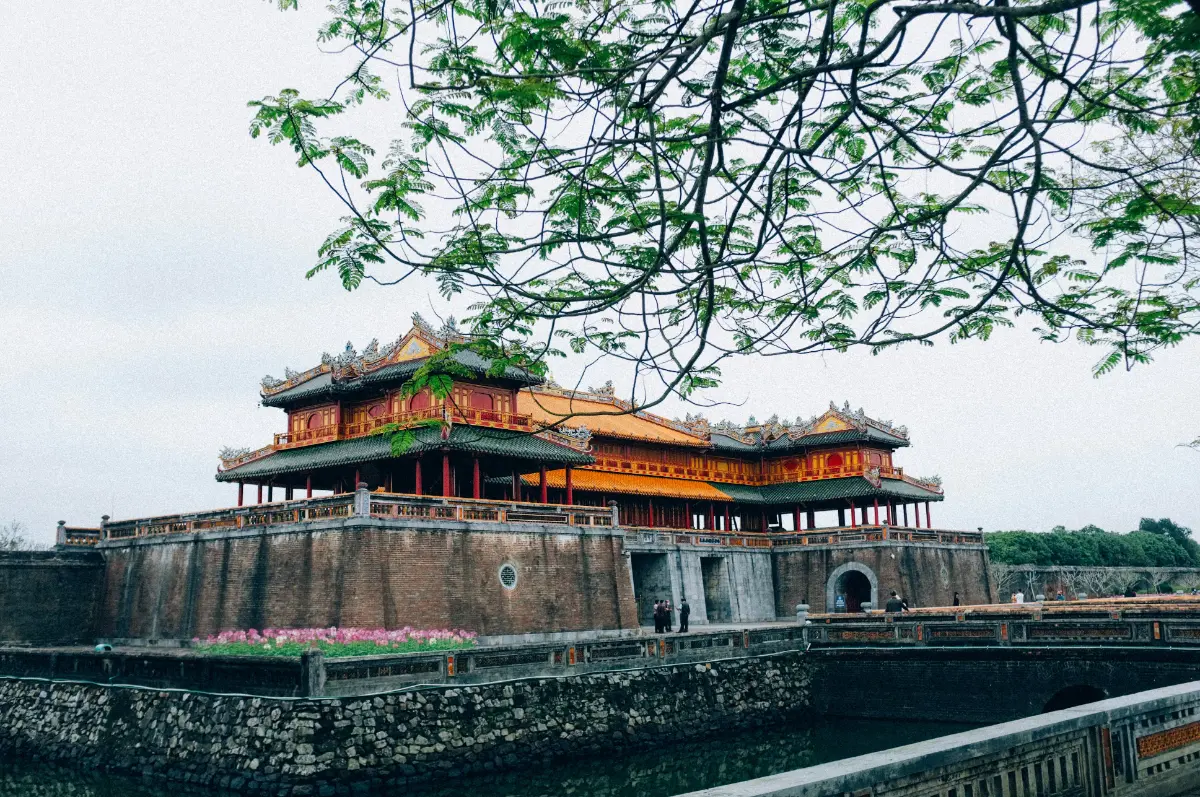
Hue: The Monuments of the Imperial Court
The Nguyen Dynasty seat (1802–1945). Imperial Citadel modeled on Beijing’s Forbidden City, plus royal tombs of Tu Duc (romantic park pavilions) and Khai Dinh (French Art Deco mosaic fusion).
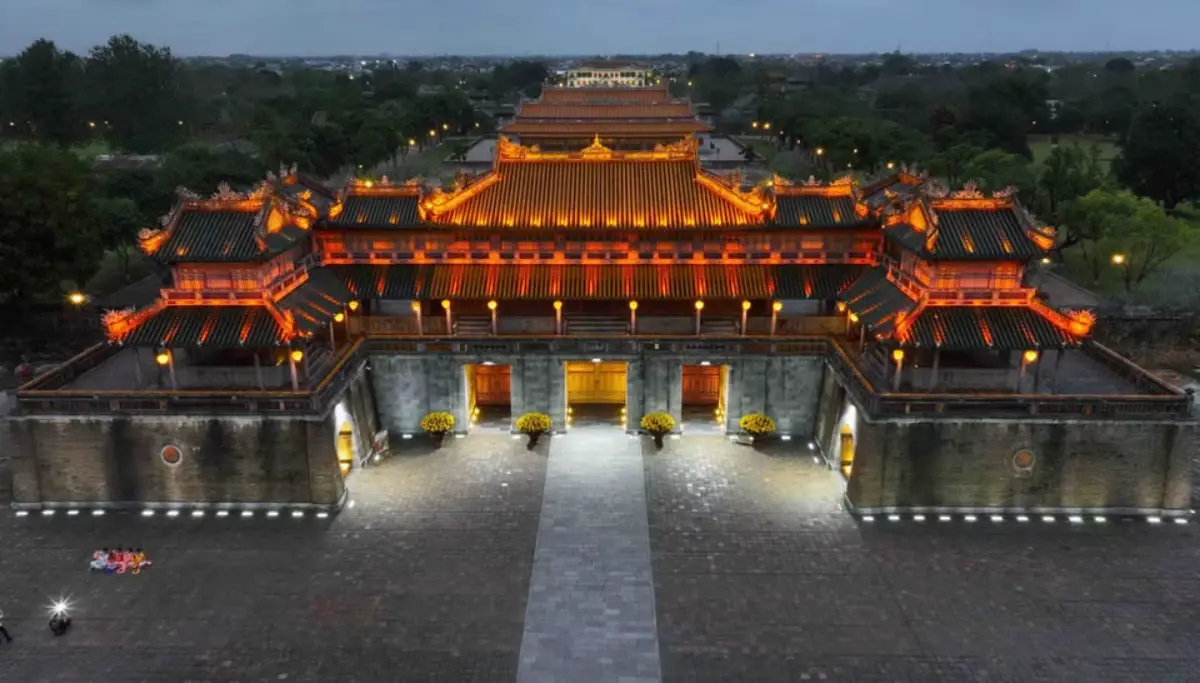
The historic Noon Gate entrance to the Imperial Citadel in Hue
Ho Chi Minh City and the Mekong Delta
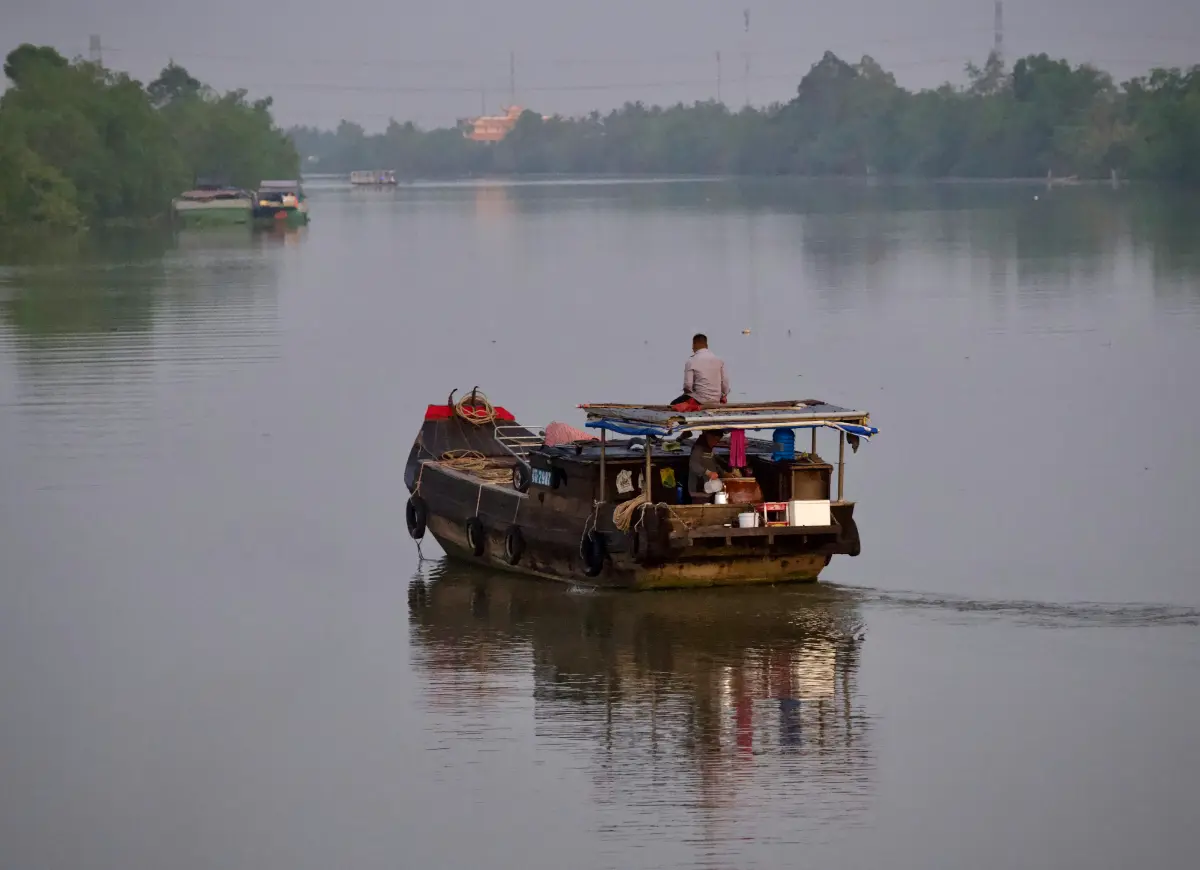
High-energy Saigon: Notre-Dame Basilica, War Remnants Museum, Cu Chi Tunnels. The Mekong Delta’s nine dragon distributaries offer floating markets (Cai Rang), eco-lodges, and sampan canals.
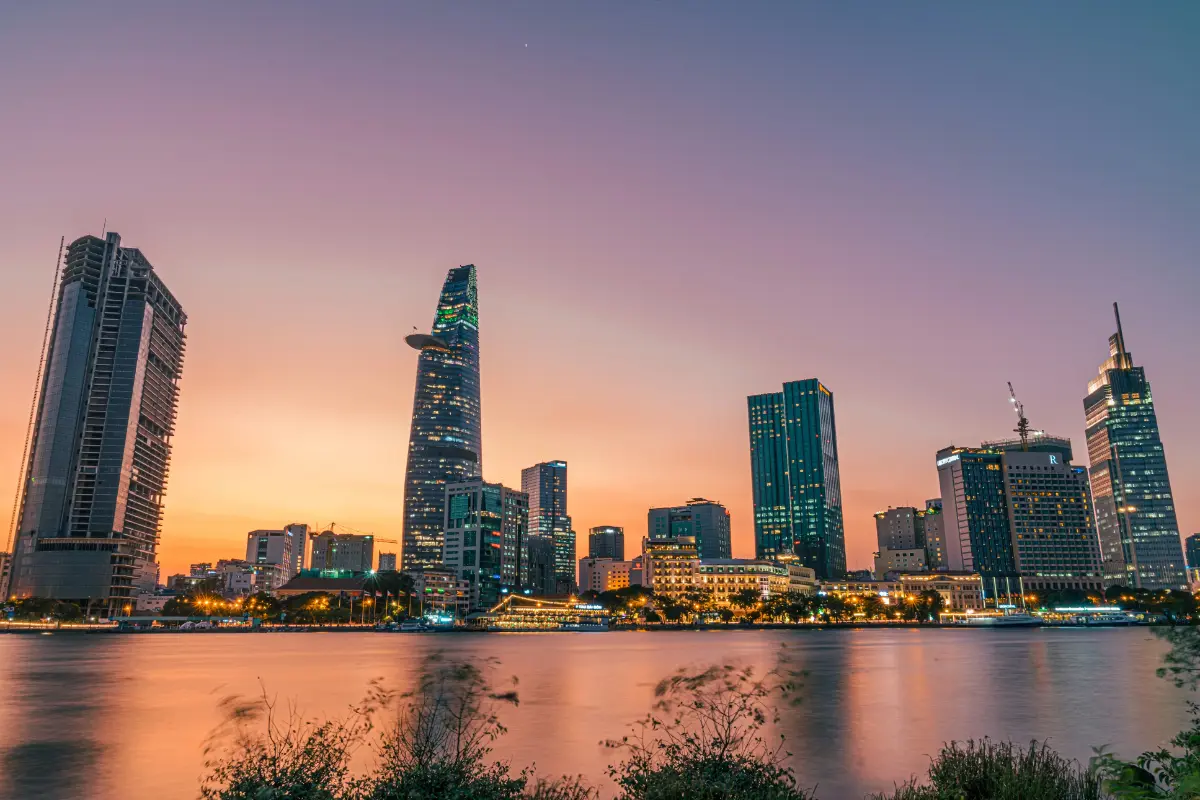
Saigon’s vibrant urban energy meets timeless delta traditions
Chapter 2 — Laos: The Serene Interior
As the sole landlocked nation within the Indochinese peninsula, Laos features a rugged, mountainous terrain blanketed by dense tropical forests and bisected by the powerful currents of the Mekong River.
Luang Prabang: Spiritual Heritage and Monastic Traditions
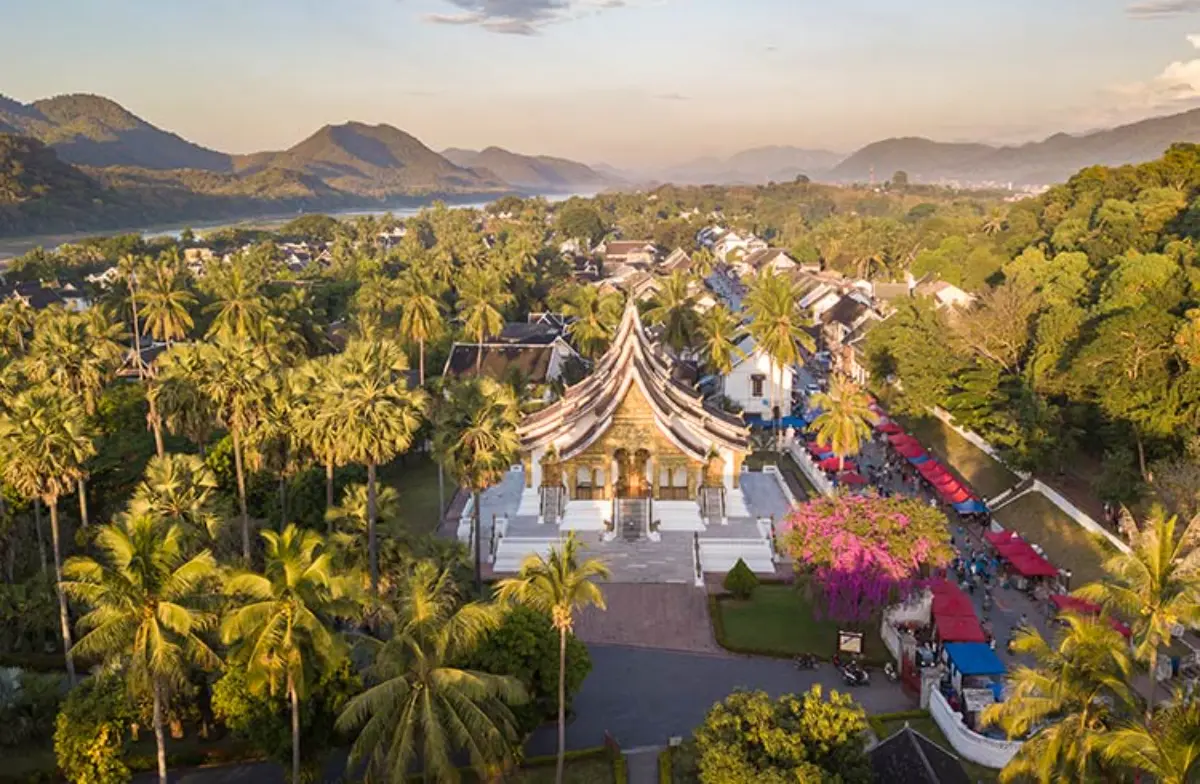
UNESCO town at the confluence of Mekong and Khan rivers. Wat Xieng Thong’s low-sweeping roofs, gold-leaf stenciling, and the daily Tak Bat alms ceremony at dawn. Kuang Si Waterfalls and Pak Ou Caves complete the sacred landscape.

Saffron-robed Buddhist monks during Tak Bat alms ceremony in Luang Prabang
Si Phan Don: The Riverine Archipelago of the Far South
Four Thousand Islands (Don Det, Don Khone). French narrow-gauge railway ruins, Khone Phapheng Falls (largest by volume in Asia), and Irrawaddy dolphin sightings. Slow travel by bicycle and longtail boat.
Chapter 3 — Cambodia: Kingdom of Wonder
Cambodia is defined by the vast Khmer Empire, which dominated mainland Southeast Asia from the 9th to the 15th centuries.
Angkor Archaeological Park
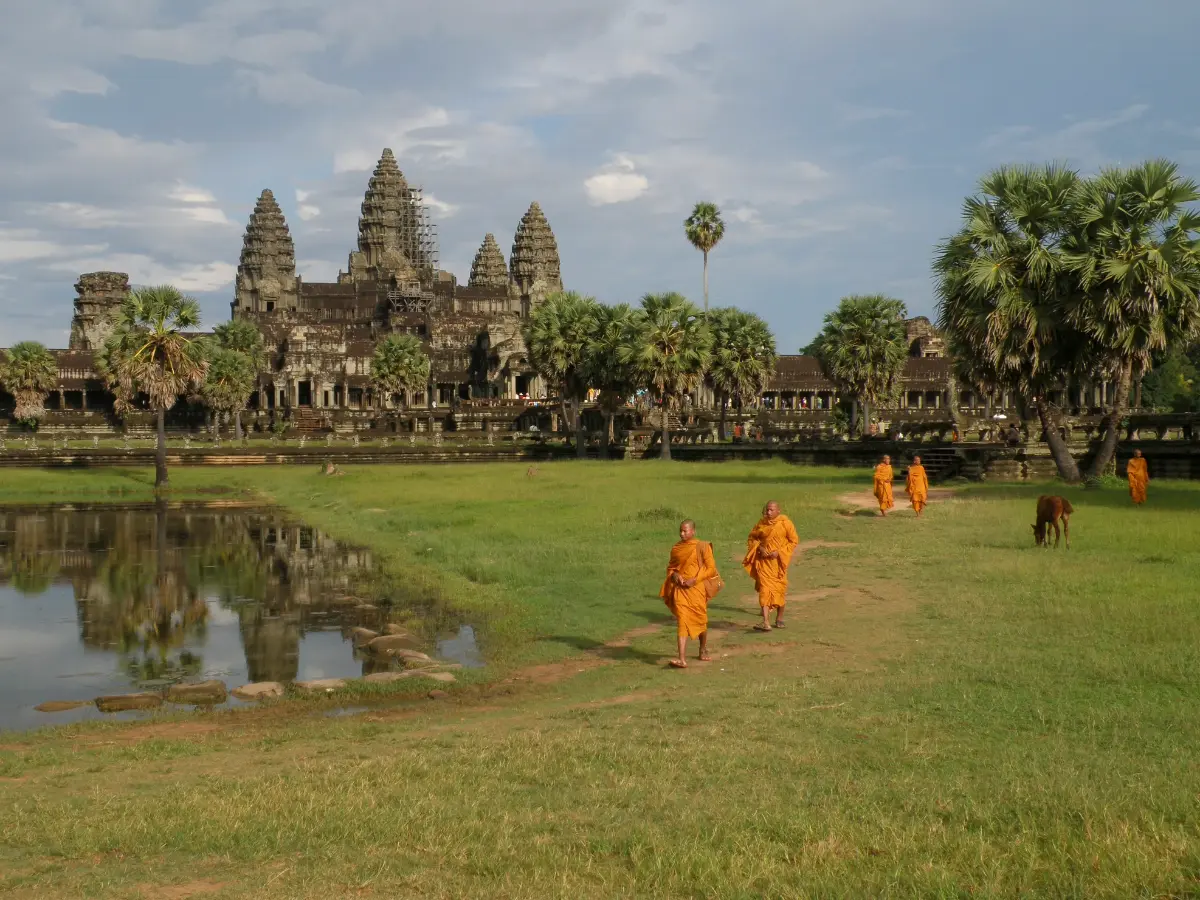
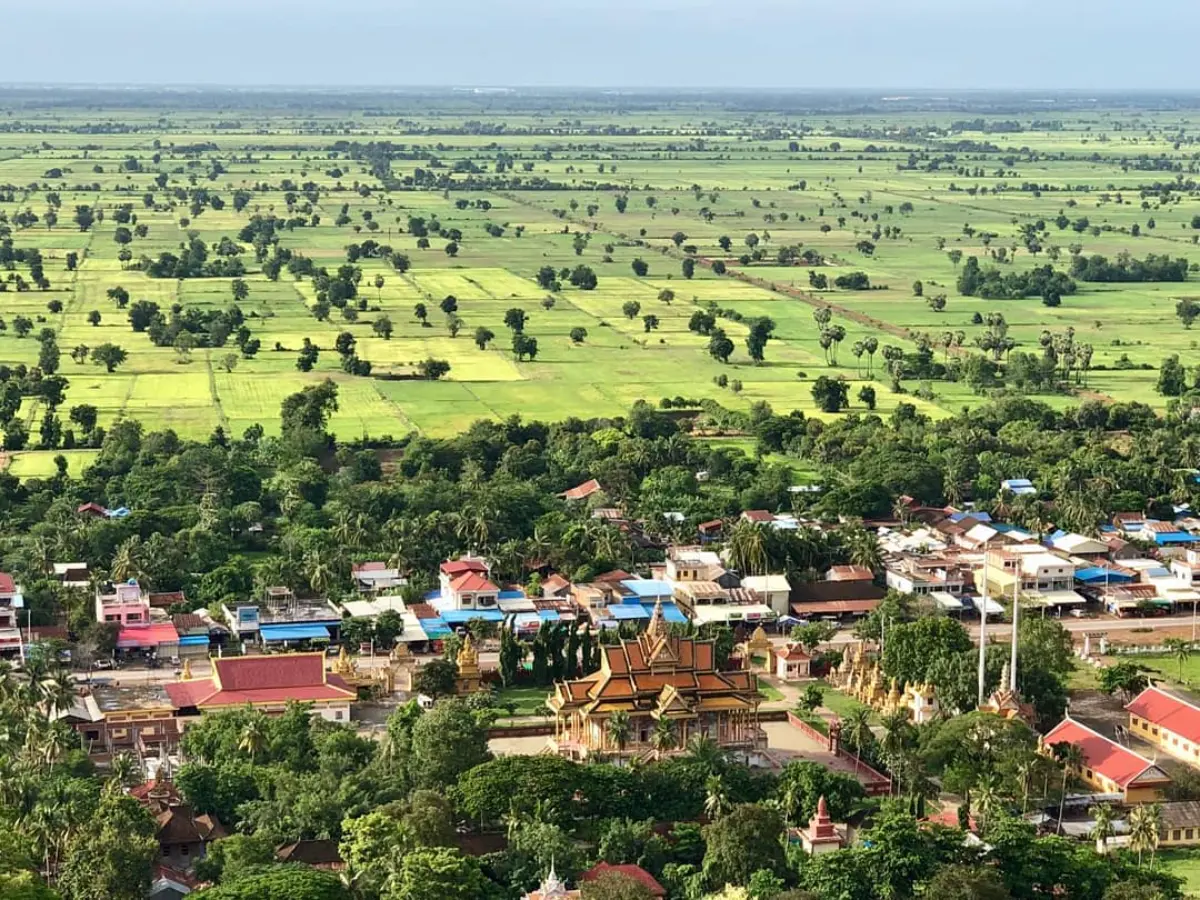
Over 400 square kilometers of Khmer stone masterpieces: Angkor Wat (12th-century cosmic pyramid), Bayon’s 200+ stone faces, Ta Prohm consumed by silk-cotton trees, and Banteay Srei’s pink sandstone carvings. The new Siem Reap Angkor International Airport reduces transit time significantly.
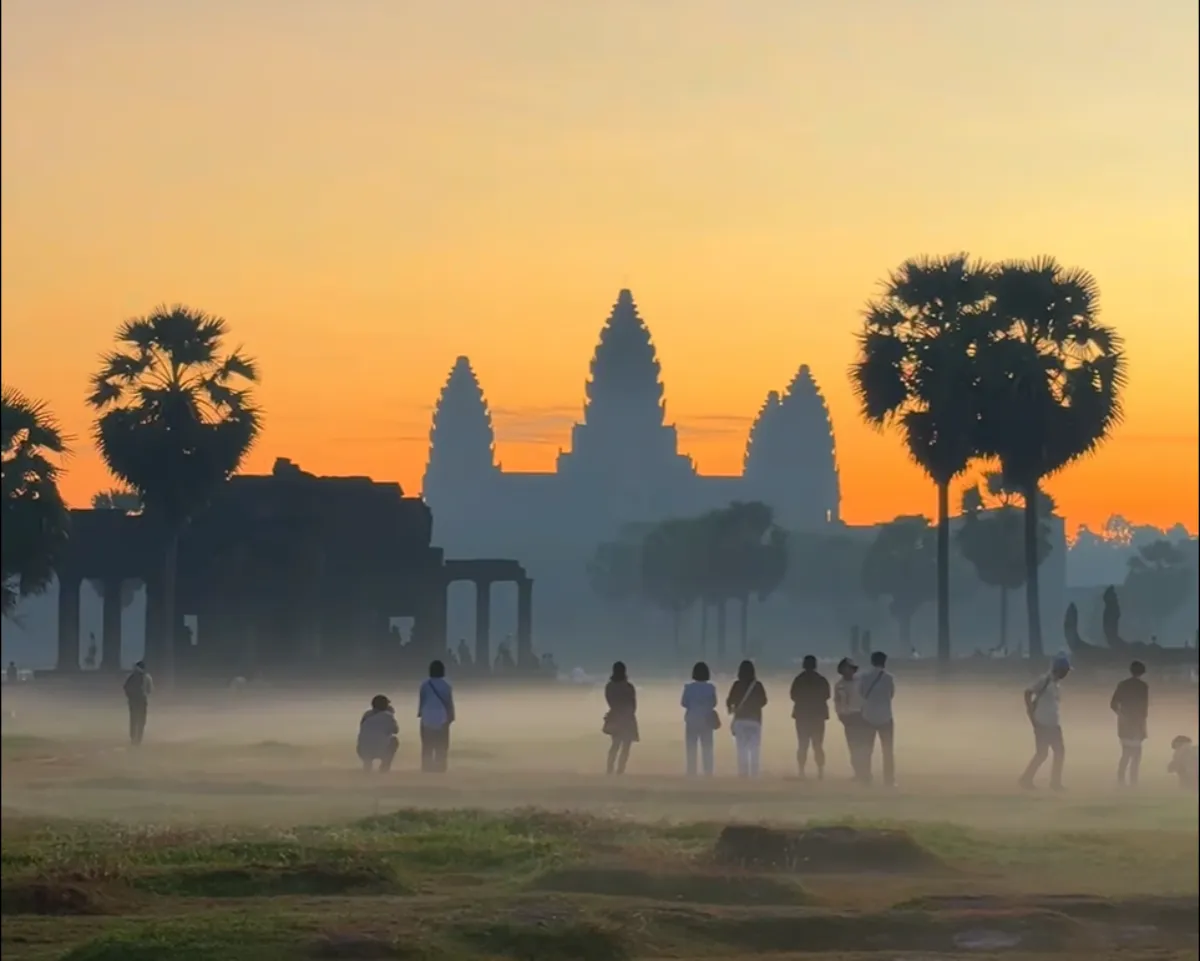
Angkor Wat reflecting at dawn — the pinnacle of Khmer architecture
Phnom Penh and the Southern Islands
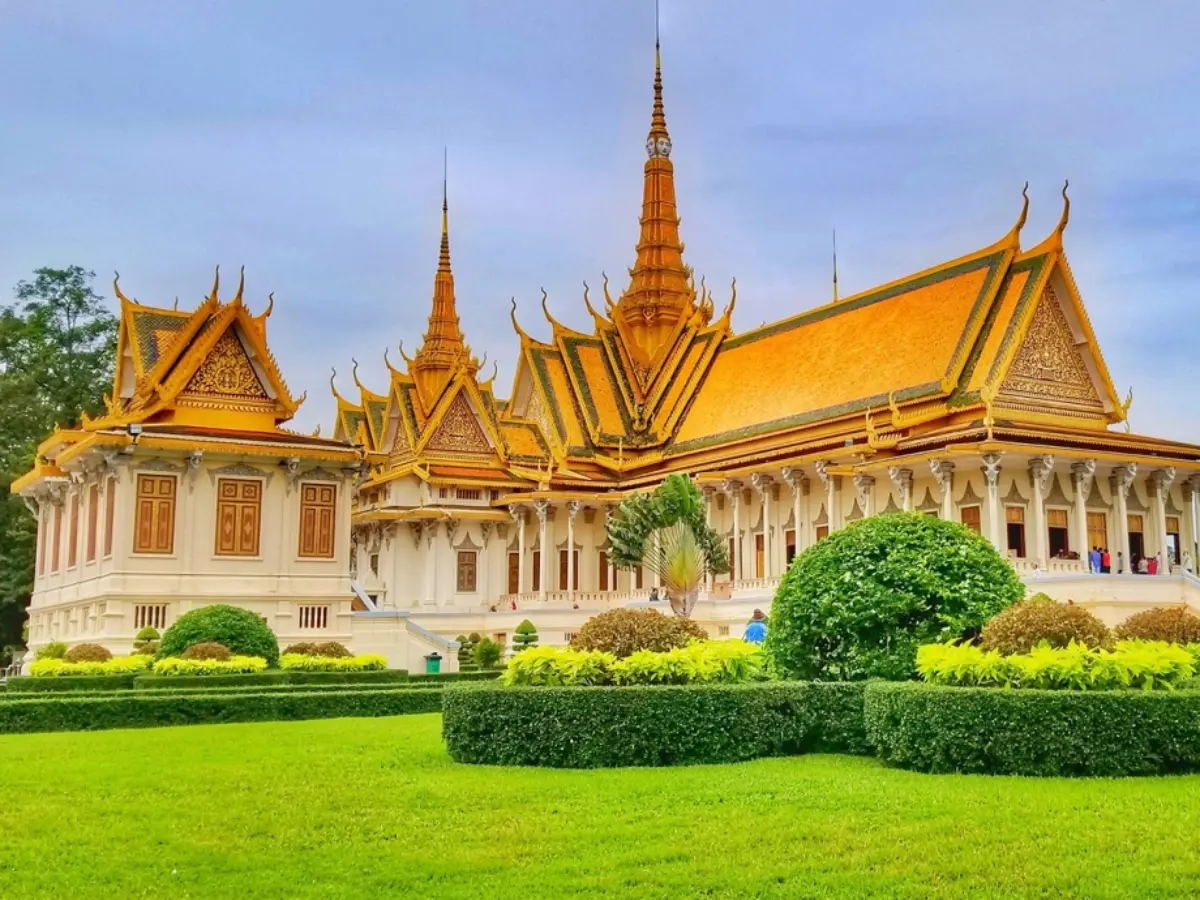
Royal Palace and Silver Pagoda, National Museum of Khmer sculpture, and the reflective Tuol Sleng Genocide Museum (S-21) and Choeung Ek memorial — profound resilience narratives. Koh Rong and Koh Rong Sanloem offer pristine beaches, bioluminescent plankton, and marine conservation.
Signature Encounters
Sapa Mountain Terraces
Northern Vietnam
Trek through high-altitude mist-covered emerald rice valleys while encountering ethnic Black Hmong and Red Dao hillside communities.
Kuang Si Waterfalls
Luang Prabang, Laos
Swim inside multi-tiered crystal-turquoise limestone pools surrounded by dense indigenous teak jungles and bear sanctuaries.
Banteay Srei Preservation
Siem Reap, Cambodia
Marvel at the exquisite, ultra-fine 10th-century pink sandstone bas-relief carvings dedicated to the Hindu deity Shiva.
14-Day Cross-Border Blueprint
Phase One: Vietnam & Laos
Days 1-2: HanoiCultural immersion across the Old Quarter & Temple of Literature.
Days 3-4: Lan Ha BayOvernight luxury maritime cruise navigating untouched karst corridors.
Days 5-6: Luang PrabangDirect flight cross-border connection; witness dawn Tak Bat alms rituals.
Day 7: Transfer to Siem ReapRegional aviation link into Cambodia.
Phase Two: Cambodia & South Vietnam
Days 8-9: AngkorMonumental stone temples of Angkor Wat, Bayon, Ta Prohm.
Day 10: Phnom PenhExplore the Royal Palace architecture and riverfront esplanades.
Days 11-13: Ho Chi Minh & DeltaNavigate the high-energy metropolis and the canals of the Mekong.
Day 14: DepartureFinal morning exploration prior to international connections.
Seamless Flights 2026
Direct aviation pathways: Da Nang to Luang Prabang and Siem Reap to Hanoi, removing obsolete multi-leg transit setups.
Extended E-Visas
Vietnam’s optimized digital portal grants standard 90-day multiple-entry e-visas, simplifying complex long-form multi-country regional planning.
Modern Gateways
The new Siem Reap Angkor International Airport (SAI) handles immigration swiftly and routes tourists directly down high-speed highways to the temple zone.




“`html
Feature Hotels of Vietnam | Luxury Stays – Indochine Chic


“`
Luxury Stays
Feature Hotels of Vietnam
Hanoi
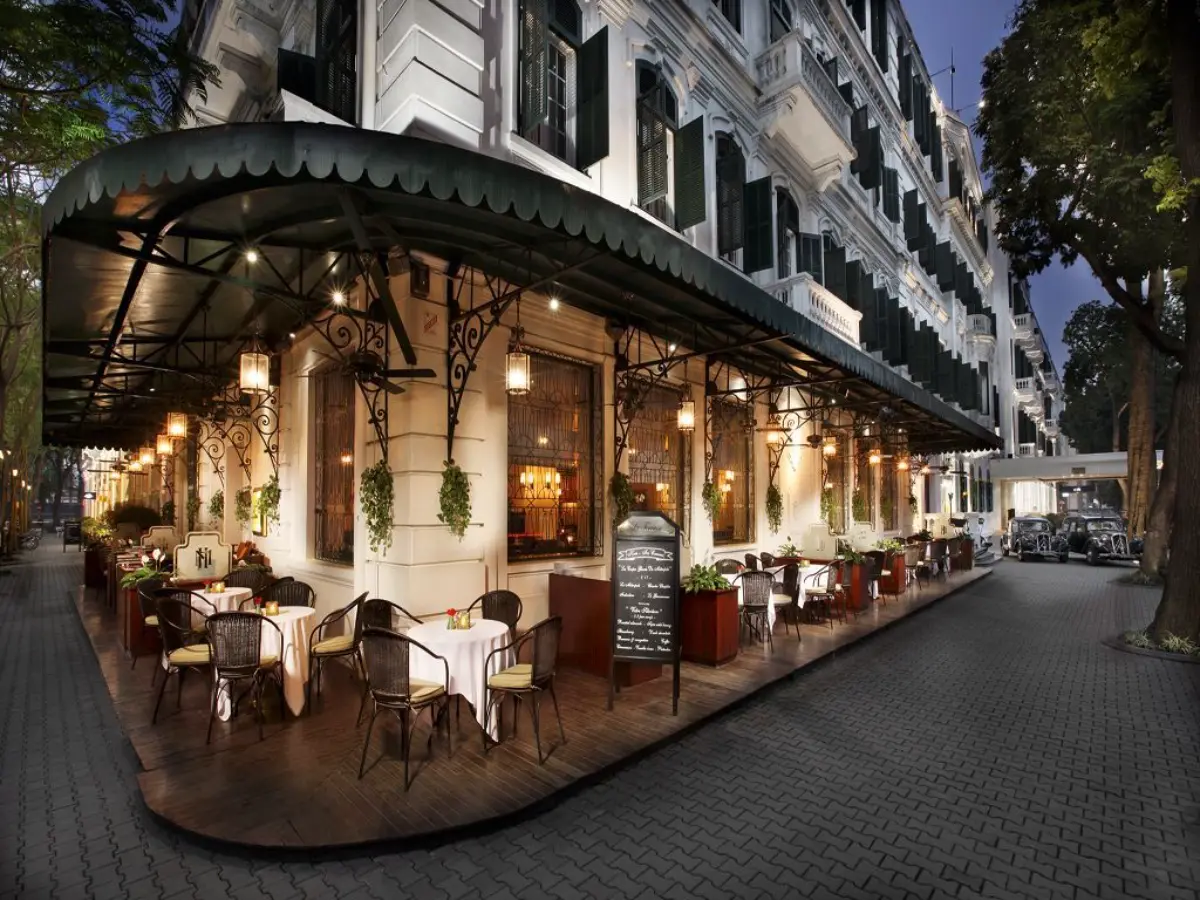
Metropole Hotel
The ultimate crown jewel of classic French colonial elegance. Nostalgic white facades, timeless ironwork, and cinematic grandeur embody the peak of Indochine luxury.

Hue
Azerai La Residence
Timeless Art Deco elegance sitting proudly on the banks of the Perfume River facing the ancient Imperial Citadel.

Hoi An
Four Seasons The Nam Hai
An architectural sanctuary layout directly on the pristine coast. Unrivaled luxury villas and soul-stirring cultural spas.

Ho Chi Minh City
Park Hyatt Saigon
A pristine architectural heritage sanctuary dating back to 1930. Bask in old-world Saigon charm with opulent crystal chandeliers and nostalgic French-Indochine design lines.