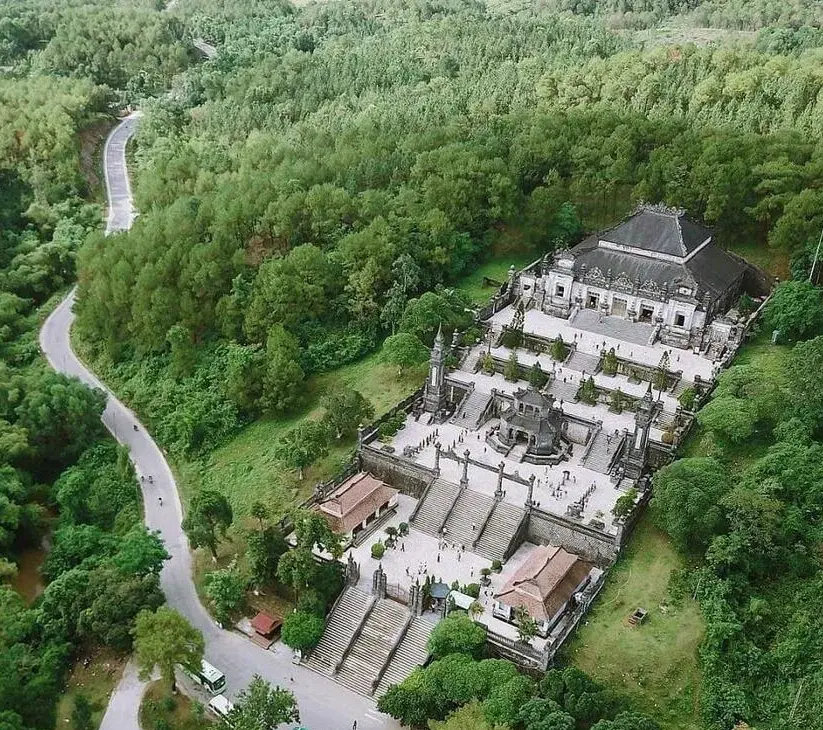
Heritage Hotels
Stay inside history within colonial mansions, converted royal residences, and boutique heritage gems across Indochina’s most beautiful cities.
Explore Hotels →Inside Vietnam’s Most Exclusive Luxury Resort and the Future of Ultra-Luxury Tourism
Why would the world’s most exclusive resort spend $32 million to build just 10 villas in Vietnam? This is not an extravagance — it is a deliberate expression of a brand philosophy where scarcity creates value, privacy trumps volume, and sustainability commands a premium.
This is not a hotel expansion — it is a deliberate expression of a brand philosophy
Most hotels increase profits by adding more rooms. Standard industry practice dictates that more inventory equals more revenue. Yet Amanoi, Vietnam’s most exclusive resort, is doing the opposite.
The world’s first Aman resort in Vietnam is planning an expansion at a deliberately glacial pace, with an estimated investment of nearly 80 billion VND per villa—among the highest construction costs anywhere in Asia. To put this in perspective, this investment could build an entire mid-sized boutique hotel in many parts of Southeast Asia. Instead, Amanoi is allocating it to add just ten rooms to its existing collection.
This isn’t simply a hotel expansion. It represents an entirely different philosophy of luxury—one where scarcity creates value, where privacy trumps volume, and where sustainability commands a premium that wealthy travelers are increasingly willing to pay.
“Luxury is not about having more. It’s about having what few can experience.”
Amanoi’s spectacular setting within Nui Chua National Park, a UNESCO Biosphere Reserve.
Founded in 1988, Aman has redefined luxury through intimacy, privacy, and architectural harmony with nature
Aman was founded in 1988 by Adrian Zecha, who envisioned intimate, serene retreats in spectacular locations that felt more like private homes than hotels. The name “Aman” derives from the Sanskrit word for “peace”—and peace has been the brand’s guiding principle ever since. Today, Aman operates 38 hotels, resorts, and private residences across 24 countries.
Most luxury hotels brag about size—massive lobbies, hundreds of rooms, sprawling facilities. Aman does the opposite. Most Aman resorts have fewer than 50 rooms. The largest has just over 100.
Aman properties are designed to blend into their environments rather than dominate them. Buildings are low, materials are natural, and the landscape remains the primary attraction.
Aman’s staff-to-guest ratio is among the highest in hospitality, often exceeding 5:1. Service is subtle—anticipating needs before guests articulate them.
You won’t find gilded chandeliers or marble palaces at an Aman. Instead, you’ll find handcrafted textiles, local stones, and design that honors regional traditions.
The story of Amanoi begins with Luc Van Nerom, a Belgian entrepreneur with deep roots in Vietnam
From the start, the vision for Amanoi was ambitious: create a resort that would become Vietnam’s most prestigious address, rivaling the world’s finest properties. This meant choosing a location of unparalleled natural beauty, investing in architecture and design that would stand among Asia’s best, building only a limited number of rooms to ensure exclusivity, and creating a true sanctuary that would attract the world’s most discerning travelers.
Timeline: 2005-2010 (Site Selection) → 2011-2012 (Construction) → 2013 (Opening) → 2024-2025 (First Expansion) → 2026 (Phase 2 Planning)
90 hectares, 68 villas — and soon, 78

Amanoi is situated on Vietnam’s south-central coast, overlooking the stunning Vinh Hy Bay. The bay remains remarkably pristine, with crystal-clear waters, rich marine biodiversity, and dramatic granite mountains that plunge directly into the sea.
Over 200 coral species · 300+ reef fish species · Sea turtles · Dolphins

In 2021, Nui Chua was designated a UNESCO World Biosphere Reserve, cementing its status as one of Vietnam’s most important natural areas. The designation recognizes the park’s exceptional biodiversity and the commitment to conservation and sustainable development.
29,000+ hectares · Vietnam’s only dry tropical forest
The magic number is one villa per hectare. Upon completion of the planned expansion, Amanoi will have 78 villas on 90 hectares—maintaining a density that is virtually unparalleled in luxury hospitality. When you stay at Amanoi, you are never more than a few minutes from complete solitude. You cannot see other villas from your own. This spatial generosity is perhaps the greatest luxury Amanoi offers.
“Create something that feels like it grew out of the landscape, not something that was imposed upon it.”
“The architecture deliberately recedes, allowing nature to remain the primary experience.”
From intimate pavilions to the extraordinary Ocean Pool Residence

Sea or mountain views. Perfect for couples seeking intimacy. Features a private deck with panoramic views, minimalist interiors, and seamless indoor-outdoor living.

Garden setting with private plunge pool. Ideal for guests wanting extra space and privacy. Features a lush garden, outdoor shower, and expansive living areas.

Private infinity pool with ocean views. Perfect for families or groups. Features multiple bedrooms, spacious living areas, a private kitchen, and dedicated butler service.

Direct beach access with panoramic ocean views. The ultimate ultra-luxury experience. Features four en-suite bedrooms, a private infinity pool, expansive terraces, and personalized service.
Understanding ultra-luxury economics — where scarcity creates value
* Hand-built structures, custom joinery, and manual construction significantly increase costs.
In conventional hospitality, adding rooms is straightforward mathematics: more rooms = more revenue. But ultra-luxury operates by a different economic logic. When you’re selling exclusivity, every additional room dilutes the product.
The value equation: Value = (Quality × Exclusivity) / Availability
Aman’s entire brand rests on the promise of privacy and seclusion. If Amanoi had 300 rooms, it would no longer be an Aman. This is not hyperbole—it’s the fundamental economics of the brand.
* Based on estimated projections. Actual results may vary.
Working inside a National Park — with responsibility comes cost
Privacy, silence, space, and nature — the ultimate luxuries
In a world of constant connectivity, privacy has become one of the most precious commodities. Amanoi offers absolute seclusion — no ambient noise, no crowds, no pressure. The only sounds are waves, birds, wind, and the occasional splash of a private pool.
“You cannot see other villas from your own. You rarely encounter other guests unless you choose to.”
Amanoi has become one of Asia’s premier wellness destinations, offering traditional Vietnamese massage, Ayurvedic treatments, meditation, yoga, forest bathing, and multi-day wellness programs for serious transformation.
Private wellness journeys · Spa · Yoga · Forest bathing · Detox programs
Farm-to-table dining with organic kitchen gardens. Authentic Vietnamese cuisine. Private dining anywhere on the property — on villa terraces, on the beach, in the forest, or on a boat at sunset.
World-class wine program · Private tastings · Chef experiences
60% of Amanoi’s guests are now Millennials and Gen Z
Younger luxury travelers are less interested in gold fixtures and marble lobbies than in authentic experiences. They want to feel connected to a place, not isolated from it.
For younger travelers, the ultimate luxury is keeping something special to themselves — the ability to have an experience that cannot be shared publicly.
Younger guests want to return from travel with memories and personal growth, not souvenirs and bragging rights.
For Millennials and Gen Z, environmental and social responsibility are not add-ons — they’re prerequisites. A resort that damages the environment is not considered luxurious.
How does Vietnam’s most exclusive resort compare to its competitors?
| Resort | Location | Rooms | Style | Privacy | Price (USD/night) |
|---|---|---|---|---|---|
| Amanoi | Vinh Hy Bay | 68 (soon 78) | Ultra-minimalist | Highest | $1,500 – $15,000+ |
| Six Senses Ninh Van Bay | Ninh Van Bay | 62 | Rustic eco-luxury | Very high | $800 – $5,000 |
| Zannier Bãi San Hô | Phú Yên | 73 | Colonial-chic | High | $600 – $3,000 |
| Four Seasons Nam Hai | Hội An | 100 | Resort elegance | Moderate | $800 – $3,500 |
Choose Amanoi if you: Value privacy above all else, want absolute immersion in nature, seek the highest level of exclusivity, appreciate minimalist architecture, and are willing to pay for the ultimate sanctuary experience.
Each resort offers a distinct vision of luxury — choose the one that aligns with your travel philosophy.
Vietnam’s hidden coastal paradise
Dry Season (December – May): Warm, sunny days, low humidity. Ideal for outdoor activities.
Wet Season (June – November): Higher rainfall, occasional storms, lush vegetation, dramatic cloudscapes.
Best time to visit: December to May
Amanoi’s pricing reflects extremely low room density (one villa per hectare), world-class architectural design, exceptional privacy and seclusion, location within a UNESCO Biosphere Reserve, premium service standards, and limited room availability (demand exceeds supply).
For travelers seeking the ultimate in privacy, exclusivity, and connection with nature, Amanoi offers an experience that cannot be replicated elsewhere. However, it is not for everyone — value is subjective and depends on what you prioritize in travel.
Amanoi is owned by a consortium of investors led by Belgian entrepreneur Luc Van Nerom, who co-founded the resort and continues to oversee its development.
The ideal room count of approximately 78 villas maintains the density of roughly one villa per hectare, which Aman’s co-founder believes is the perfect balance between guest experience and landscape preservation.
“Aman” means peace in Sanskrit, and “oi” means “place” in Vietnamese. Together, Amanoi means “place of peace.”
Prices range from approximately $1,500 per night for a Pavilion to over $15,000 per night for the Ocean Pool Residence. Special packages and promotions may be available.
December to May offers the best weather — warm, sunny days and low humidity. However, the wet season (June-November) can offer lush landscapes and lower rates.
The most common access is via international flight to Cam Ranh International Airport, followed by a private car transfer (approximately 1.5 hours). Optional helicopter or yacht transfers are also available.
No, Amanoi is not an all-inclusive resort. Room rates include accommodation, welcome amenities, and select services. Dining, spa treatments, and experiences are additional.
Through low-density development, protection of existing vegetation, water conservation and rainwater harvesting, waste management and recycling, wildlife corridor preservation, and annual financial contributions to Nui Chua National Park.
Amanoi’s refusal to maximize occupancy demonstrates that limiting supply can actually increase demand for high-end products. When desire exceeds availability, perceived value increases significantly.
In an era of increasing density and over-development, space has become one of the most valuable commodities in hospitality. Amanoi’s commitment to one villa per hectare offers a lesson in spatial generosity.
No amount of artificial amenities can replicate the value of genuine connection with nature. Amanoi’s integration into the national park demonstrates that authentic natural experiences, preserved and protected, are the ultimate luxury.
Amanoi’s commitment to conservation is not just good ethics — it’s good business. For today’s luxury traveler, sustainability is a prerequisite, not an afterthought.
Amanoi’s measured approach — 20 years from vision to current state — demonstrates that patient, deliberate growth can generate exceptional long-term value and brand strength.
The most successful luxury hospitality experiences are those that feel personal and unique. Amanoi’s service model — anticipating needs without intrusion — represents the gold standard for ultra-luxury service.
Amanoi’s decision to invest an estimated 800 billion VND for just 10 additional villas is not an extravagance — it is a deliberate expression of its brand philosophy. By limiting density, preserving nearly every hectare of its spectacular setting, and prioritizing privacy over volume, the resort reinforces the very qualities that define ultra-luxury hospitality.
— Indochine CHIC Travel Guide
Curated Journeys Through Heritage & Elegance
Explore our comprehensive guides to Vietnam’s most exclusive destinations
The world’s most private luxury hotel brand — a deep dive into the philosophy of Aman.
Explore →The architect behind Asia’s most beautiful resorts and his design philosophy.
Learn More →Where privacy is the greatest luxury — a guide to the world’s most exclusive destinations.
Read More →How luxury resorts are redefining travel in Asia with conservation at their core.
Explore →Let Indochine CHIC craft your perfect Amanoi experience. Private transfers, luxury accommodations, bespoke itineraries, and curated experiences tailored to your preferences.
hello@indochinechic.com
Explore the living legacy of Indochina through our curated editorial collection of heritage guides, hotels, and experiences.
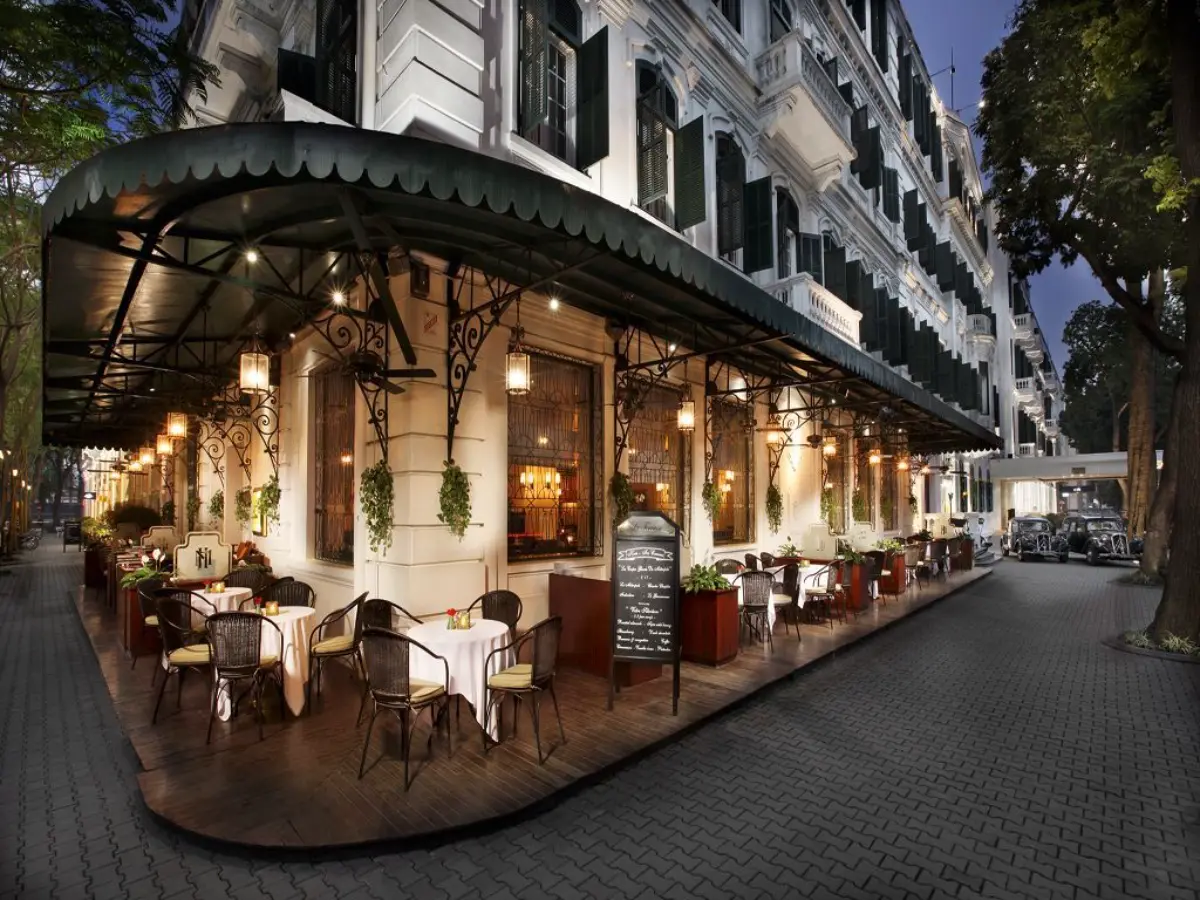
The ultimate crown jewel of classic French colonial elegance. Nostalgic white facades, timeless ironwork, and cinematic grandeur embody the peak of Indochine luxury.

Timeless Art Deco elegance sitting proudly on the banks of the Perfume River facing the ancient Imperial Citadel.

An architectural sanctuary layout directly on the pristine coast. Unrivaled luxury villas and soul-stirring cultural spas.

A pristine architectural heritage sanctuary dating back to 1930. Bask in old-world Saigon charm with opulent crystal chandeliers and nostalgic French-Indochine design lines.