Quảng Phú Cầu: The Incense Village
A Century of Incense
The Scent of Tradition
Quảng Phú Cầu has been producing incense for more than a hundred years. The craft was passed down through generations, and today, the village is one of the largest incense-making centers in northern Vietnam. The tradition is rooted in the spiritual practices of the Red River Delta: incense is burned at temples, pagodas, and ancestral altars, its smoke carrying prayers to the heavens. The village’s incense is known for its quality, its fragrance, and its vibrant color — a deep red that symbolizes luck and prosperity.
The Art of Incense Making
A Process of Skill and Patience
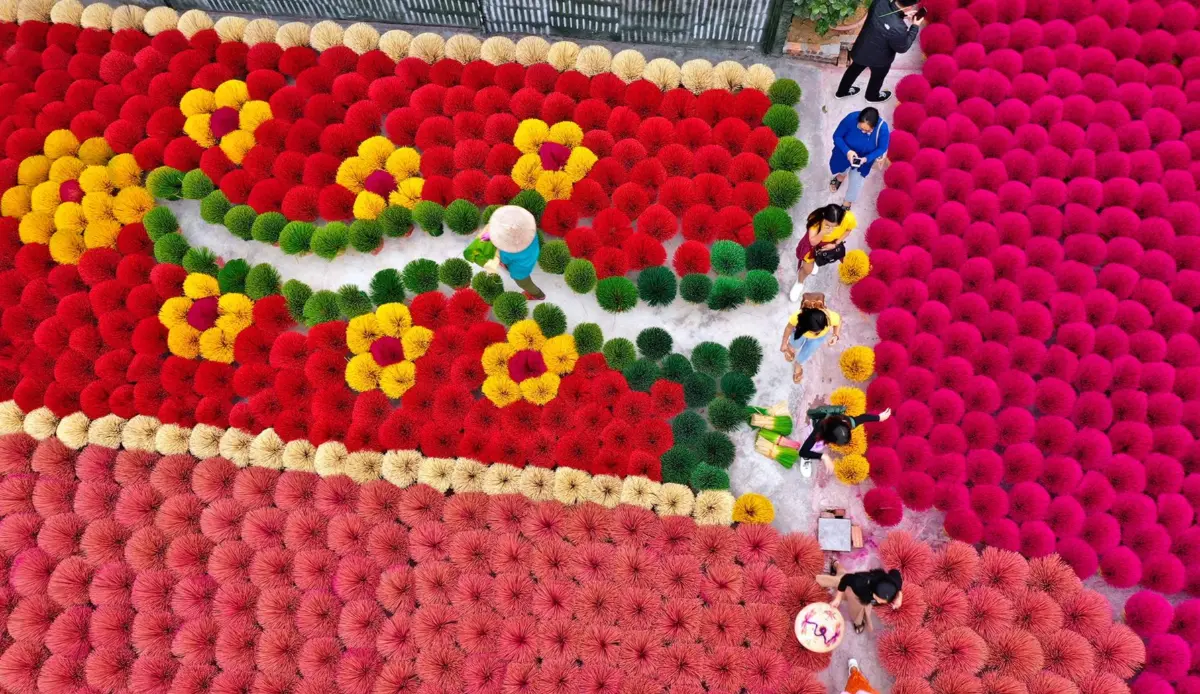
The process begins with bamboo: thin, straight sticks are cut to length and split. The paste is made from sawdust, incense powder, and natural binders — the recipe a family secret passed down through generations. Workers dip the bamboo sticks into the paste, rolling them to ensure an even coat. The sticks are then laid out in bundles to dry, first in the shade, then in the sun. The drying fields are the most striking part of the village: thousands of red sticks arranged in circular patterns, creating a landscape of color that changes with the light. The final step is the fragrance: the sticks are scented with natural ingredients like cinnamon, star anise, or sandalwood, giving each batch its distinctive aroma.
The Drying Fields: A Photographer’s Dream
A Sea of Red
The drying fields are the reason Quảng Phú Cầu has become a destination for photographers. Bundles of incense sticks are spread across the ground in circular patterns, their red tips creating a striking contrast with the earth. The workers — often women in traditional conical hats — move among the bundles, turning them to ensure even drying. The best time to photograph is early morning or late afternoon, when the light is golden and the shadows are long. The fields are not a tourist attraction but a working space; visitors are welcome, but they should be respectful, asking permission before photographing individuals.
The Village Workshops
Where the Work Happens
Behind the drying fields are the workshops — family-run operations where the incense is made. Visitors can walk through the narrow lanes, peering into open-fronted buildings where workers roll the sticks, mix the paste, and bundle the finished product. The atmosphere is busy but relaxed, and the workers are often happy to explain the process. Many families have been making incense for generations, and the workshops are a testament to the persistence of a craft in the face of industrialization. A visit to the village is an opportunity to see tradition in action — and to buy incense directly from the makers.
Beyond Incense: The Village’s Other Crafts
A Tradition of Ritual Objects
Incense is not the only product of Quảng Phú Cầu. The village also produces paper offerings (vàng mã) — the votive papers burned at festivals and funerals to send gifts to ancestors. The paper offerings are crafted in the same family workshops, with intricate designs that reflect the wealth and status of the departed. A visit to the village can include a look at this related craft, which is equally steeped in tradition.
Quang Phu Cau Village Tours
Half‑Day Tour: A guided visit to the village, including the drying fields, a workshop demonstration, and time to purchase incense.
Photography Tour: For photographers, a guide can arrange access to the best spots and times, with the opportunity to capture the drying fields in golden light.
Combined Itinerary: Pair Quảng Phú Cầu with Đường Lâm Village or the Perfume Pagoda for a full day exploring Hanoi’s countryside.
Private Guide: For those seeking a deeper understanding of the craft, a private guide can arrange visits to family workshops and conversations with artisans.
The Essence of Quảng Phú Cầu — Quảng Phú Cầu is a place of color and scent. Its fields of drying incense are a visual spectacle, but beyond the photograph is a living tradition — a craft that has sustained a community for generations, that connects the material world to the spiritual, that fills the air with the scent of prayer. For visitors, it offers a rare opportunity to see a traditional craft in its original setting, to walk among the work of artisans, and to understand the role that incense plays in the spiritual life of Vietnam.
Frequently Asked Questions
Allow 1.5–2 hours to see the drying fields, visit a workshop, and explore the village lanes.
Early morning (before 9 AM) or late afternoon for the best light and fewer crowds. The village is busiest on weekends.
By car or taxi (1–1.5 hours) southwest of Hanoi. Organized tours include transport. Public buses run from Hanoi to the nearby town of Ứng Hòa.
A camera, cash for purchasing incense, and comfortable shoes for walking on uneven surfaces.
Yes. Many workshops sell directly to visitors. Prices are reasonable, and you can buy bundles of high‑quality incense.
Yes. Children enjoy the bright colors of the drying fields and the activity of the workshops.