

Cát Bà Island: Where the Jungle Meets the Sea
Lan Hạ Bay: The Quiet Sister
Fewer Boats, More Serenity
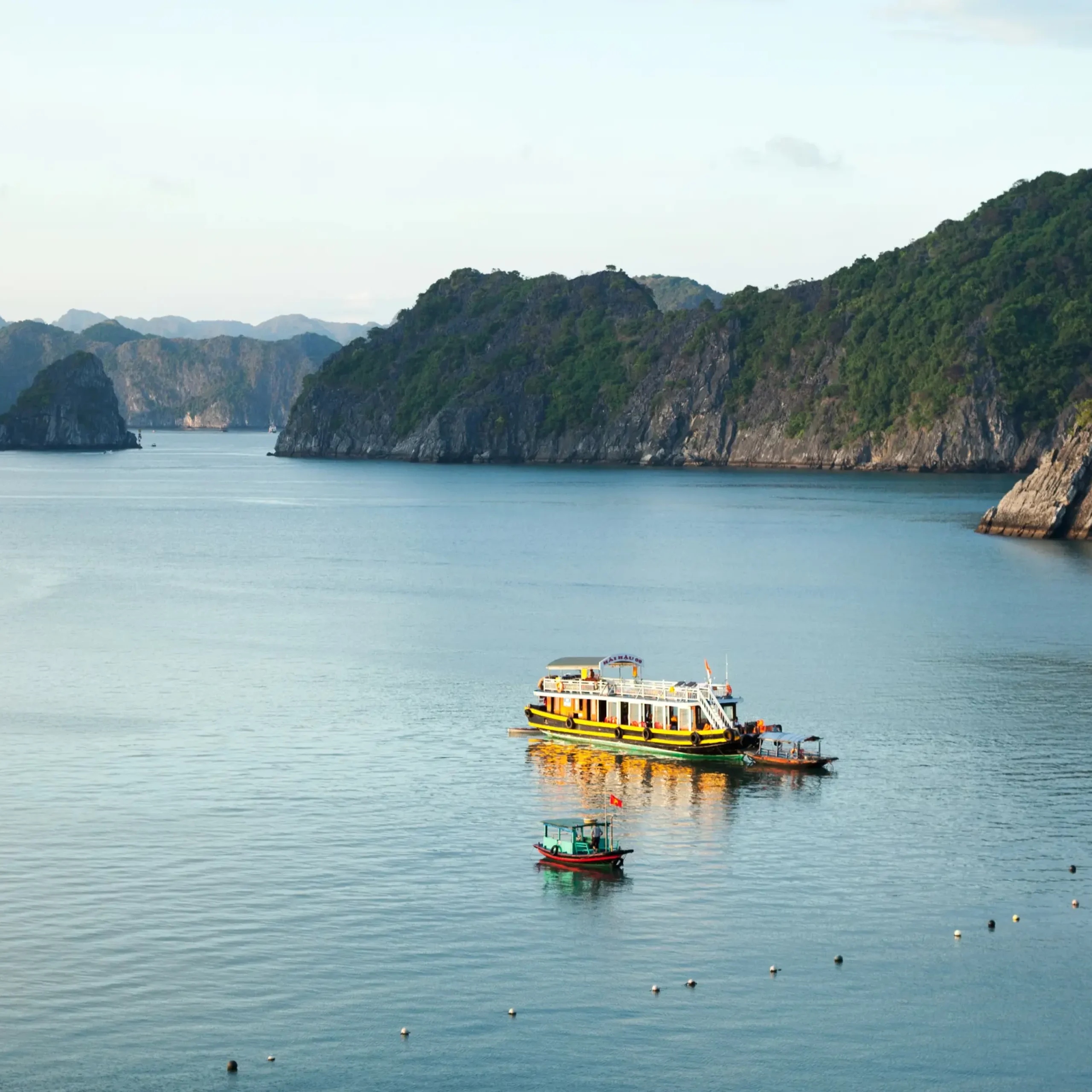
While Hạ Long Bay draws the crowds, Lan Hạ Bay — stretching along Cát Bà’s southern coast — offers a more intimate experience. Its 300‑plus karst islands create a labyrinth of sheltered coves, white‑sand beaches, and quiet inlets accessible only by small boat. The waters here are calm, clear, and perfect for kayaking, paddleboarding, or simply floating in the embrace of the limestone towers. For those who choose to cruise the bay, overnight stays in Lan Hạ offer the rare experience of waking to mist rising from a sea of stone — a spectacle that feels entirely your own.
The Island’s Wild Heart
Home of the Golden‑Headed Langur
More than half of Cát Bà Island is protected as Cát Bà National Park — a dense forest of limestone peaks, caves, and mangrove forests. The park is a sanctuary for biodiversity, but its most famous resident is the Cát Bà Langur (Trachypithecus poliocephalus), one of the rarest primates in the world. With a population once as low as 40 individuals, conservation efforts have brought the species back from the brink. To see one — a flash of golden fur against green canopy — is a rare privilege. For hikers, trails lead to viewpoints like Kim Giao and the summit of Ngự Lâm Peak, offering panoramas that stretch across the bay.
The Cave of Six Million Years
Stalactites and Ancient Secrets
Discovered in 1938, Trung Trang Cave is one of Cát Bà’s most accessible wonders. Carved by water over six million years, its 300‑meter passage winds through a limestone mountain, opening into chambers filled with stalactites and stalagmites in shapes that have earned names like “the crocodile” and “the fairy.” A wooden walkway leads visitors through the cave’s cooler, quieter depths — a welcome respite from the tropical sun. Above ground, the surrounding forest offers short treks and the chance to spot langurs or the colorful butterflies that give the island its name (Cát Bà means “women’s flower island” in Vietnamese).
Secret Beaches and Island Castaways
Where You Can Have a Beach to Yourself
Cát Cò Beaches (1, 2, and 3): The most accessible beaches, with calm waters, fine sand, and a backdrop of limestone cliffs. Connected by a coastal path, they offer easy swimming and sunset views.
Viet Hai Village: On the eastern side of the island, this isolated fishing and farming community is reached by boat or by hiking through the national park. A stay here is a step back in time — no crowds, no traffic, just the sound of the sea and the rustle of forest.
Monkey Island (Dao Cat Dua): A small islet connected to Cát Bà by a sandbar at low tide, home to a troop of macaques. The climb to the summit offers one of the bay’s most photographed viewpoints.
For the adventurous, kayaking to one of Lan Hạ’s uninhabited islands for a night of camping under the stars is the ultimate island experience — a taste of being a Robinson Crusoe, with seafood cooked over a fire and no light but the moon on the water.
The Rhythm of the Island
Summer Heat, Winter Calm
Summer (May–July): The peak season — warm waters, blue skies, and the island at its most vibrant. Expect crowds at the main beaches, but the reward is perfect swimming weather.
July–August: The rainy season brings the possibility of storms; check forecasts before traveling. When the weather holds, the landscape is at its most lush.
Autumn & Spring (September–November, March–April): Mild temperatures, fewer crowds, and ideal conditions for trekking and kayaking.
Winter (November–March): Cooler and quieter. The island empties of tourists, and the mist that settles over the bay creates an atmosphere of quiet mystery. A time for peaceful walks and contemplation rather than swimming.
The Taste of the Island
From the Sea to the Table
Cát Bà’s cuisine is defined by the sea. Floating fishing villages once surrounded the island, and though many have been relocated, the tradition of fresh seafood remains. Hải sản Cát Bà — a meal of freshly caught crab, squid, clams, and fish — is the island’s essential experience. Look for sò huyết (blood cockles), tu hài (geoduck), and the small but sweet ghẹ (swimming crab). On the island itself, the town of Cát Bà is lined with seafood restaurants where you can select your dinner from tanks of live creatures, still moving in the water.
Cat Ba Tour Packages
Lan Hạ Bay Day Cruise: Explore the bay’s hidden corners by boat, with kayaking, swimming, and a seafood lunch.
2‑Day, 1‑Night Cruise: The best way to experience Lan Hạ — overnight on a traditional boat, with sunset views, morning kayaking, and the chance to see the bay at its quietest.
Island Exploration: Combine a national park trek, Trung Trang Cave, and visits to Viet Hai Village and the Cát Cò beaches.
Multi‑Day Northern Itinerary: Combine Cát Bà with Hạ Long Bay, Hanoi, and Ninh Bình for a comprehensive journey through Vietnam’s northern landscapes.
The Essence of Cát Bà — Cát Bà offers something that its famous neighbor cannot: solitude. In Lan Hạ Bay, you can find yourself alone on a beach, a kayak, a mountain trail. It is a place where the grandeur of the limestone karsts is shared with the intimacy of a fishing village, where the call of a rare primate reminds you that you are in a sanctuary, not a spectacle. To visit Cát Bà is to experience the best of Vietnam’s northern seascape — but at a pace that allows you to truly feel it.
Frequently Asked Questions
At least 2 days — one for a Lan Hạ Bay cruise, one for island exploration (national park, cave, beaches). Three days allow for a more relaxed pace and the chance to visit Viet Hai Village or camp on a secluded beach.
Lan Hạ Bay is adjacent to Hạ Long Bay, sharing the same karst landscape but with fewer tourist boats and a more tranquil atmosphere. It is the bay that wraps around Cát Bà Island, offering a quieter, often more pristine experience.
May–July offers the best swimming weather, though it is also the busiest. September–November and March–April offer mild conditions with fewer crowds. Winter (November–March) is cool and misty — beautiful for photography and trekking.
From Hanoi: bus to Hai Phong, then ferry or speedboat to Cát Bà (total 4–5 hours). From Hạ Long: ferry from Tuần Châu to Gia Luân port (15–45 minutes). A new cable car from Hai Phong to Cát Bà offers spectacular aerial views.
It is possible but not guaranteed — the langurs are extremely rare (population approximately 60–70). Trekking with a guide in the national park increases your chances; the conservation center in the park offers information and sightings.
Swimwear, comfortable walking shoes (for cave and park trails), light clothing, insect repellent, sunscreen, and a rain jacket if traveling in the rainy season. For overnight cruises, a light jacket for the evening.