
La Vang Shrine Pilgrimage: Vietnam’s Holy Land
A complete guide to Our Lady of La Vang – history, religious significance, mass schedules, pilgrim etiquette, and practical travel tips
Words by Indochine Chic · 14 min read · updated for 2026
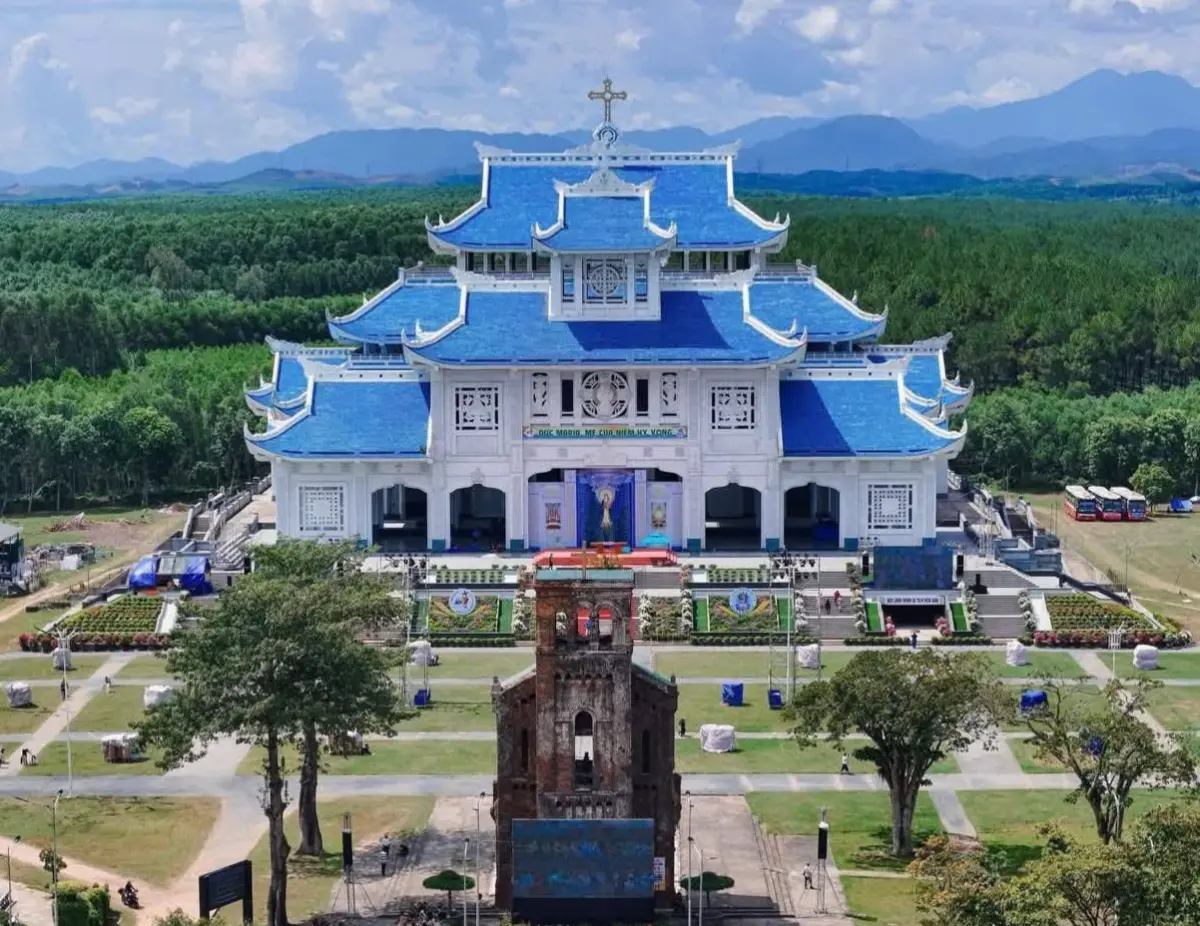
There are places in Vietnam where history and faith intertwine so deeply that the air itself seems to hold the memory of miracles. La Vang Shrine is such a place. Hidden in the jungles of Quảng Trị Province – a land scarred by war and blessed by apparitions – the shrine of Our Lady of La Vang (Đức Mẹ La Vang) has been the most important Catholic pilgrimage site in Vietnam for over 220 years. Millions have walked its paths, knelt before its altar, and whispered prayers to the Virgin Mary who appeared to persecuted Catholics in 1798. This guide covers everything: the miraculous apparitions, the shrine’s turbulent history, the modern basilica, practical pilgrimage information, and why La Vang remains the spiritual heart of Vietnamese Catholicism.
Quick Snapshot: La Vang Shrine at a Glance (2026)
| Category | Quick Answer |
|---|---|
| Official Name | Basilica of Our Lady of La Vang (Đền Thánh Đức Mẹ La Vang) |
| Location | Hải Lăng District, Quảng Trị Province, Central Vietnam |
| Distance from Hue | Approximately 70 km (1.5-2 hours by car) |
| Distance from Đà Nẵng | Approximately 120 km (2.5-3 hours by car) |
| Apparition Year | 1798 |
| Papal Recognition | Pope Francis raised it to a Basilica on August 22, 2025 |
| Patron Saint | Our Lady of La Vang (Đức Mẹ La Vang) |
| Feast Day | August 15 (Assumption of Mary) with novena from August 6-14 |
| Mass Schedules | Daily: 5:30 AM, 7:30 AM, 9:00 AM, 4:00 PM, 5:30 PM, 7:30 PM |
| Best Time to Pilgrimage | August (feast day) or November-April (dry season) |
1. The Apparition of Our Lady of La Vang (1798)
The story of La Vang begins during one of the darkest periods of Catholic history in Vietnam. In 1798, a brutal persecution of Christians swept through the country. Emperor Cảnh Thịnh of the Tây Sơn dynasty issued an edict against Catholicism, and thousands of converts were forced to flee for their lives into the dense, malarial jungles of Quảng Trị Province.
Among the refugees was a small community of Catholics who took shelter in the deep forest near a place called “La Vang” – a name derived from the Vietnamese word “la” (leaf) and “vang” (yellow), referring to the yellow leaves that carpeted the jungle floor. The refugees faced starvation, disease, and constant fear. Many died from tropical illnesses. In their desperation, they gathered each night to pray the Rosary beneath the canopy of tall trees.
One evening, as the faithful prayed, a woman appeared to them. She was dressed in the traditional Vietnamese áo dài, with a child in her arms. Her eyes shone with compassion, and a gentle light surrounded her. The refugees immediately recognized her as the Blessed Virgin Mary. She comforted them, told them to continue praying the Rosary, and promised that her Son would answer their prayers. She also revealed the healing properties of a specific leaf that grew abundantly in the area, instructing them to boil it to treat fevers (now believed to be the Artemisia or sweet wormwood plant, known for its anti-malarial properties).
From that moment, the persecuted community began to recover. Their prayers were answered. Years later, when peace returned and they could leave the jungle, they built a small wooden chapel on the spot where the Virgin appeared. That humble chapel became the seed of what is now the most important Marian shrine in Vietnam.
2. The Basilica and Shrine Grounds
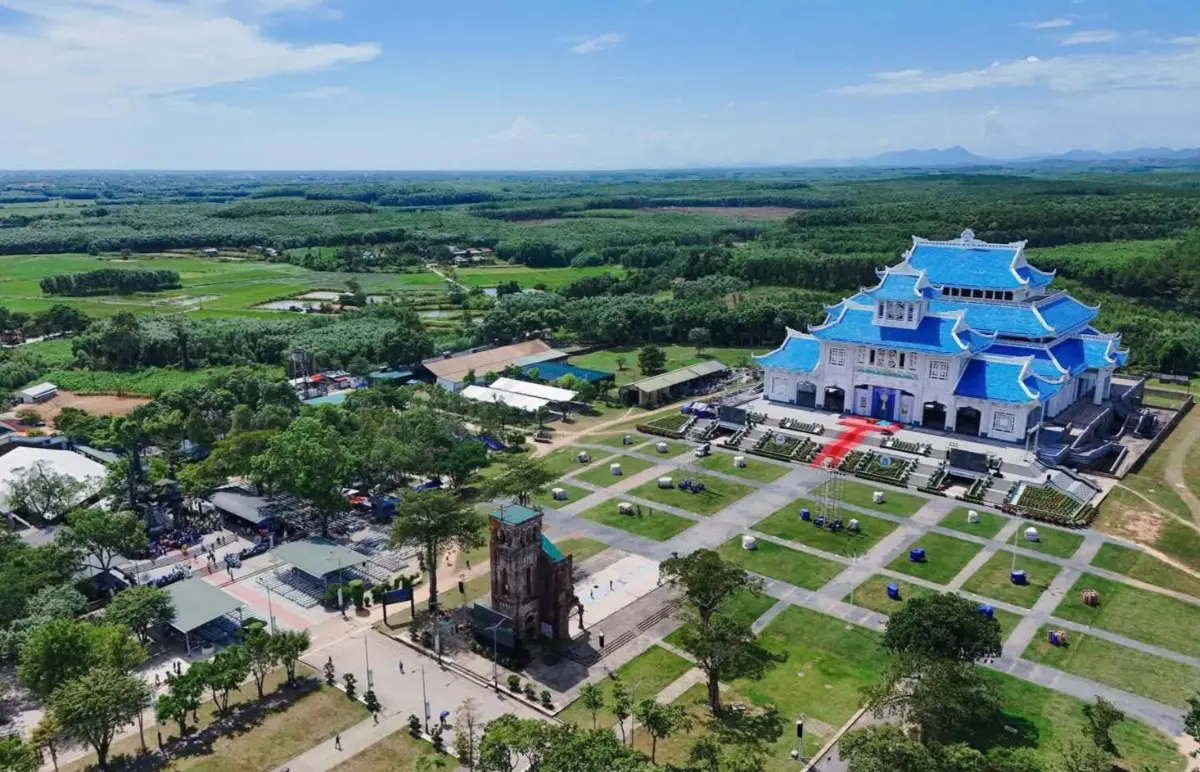
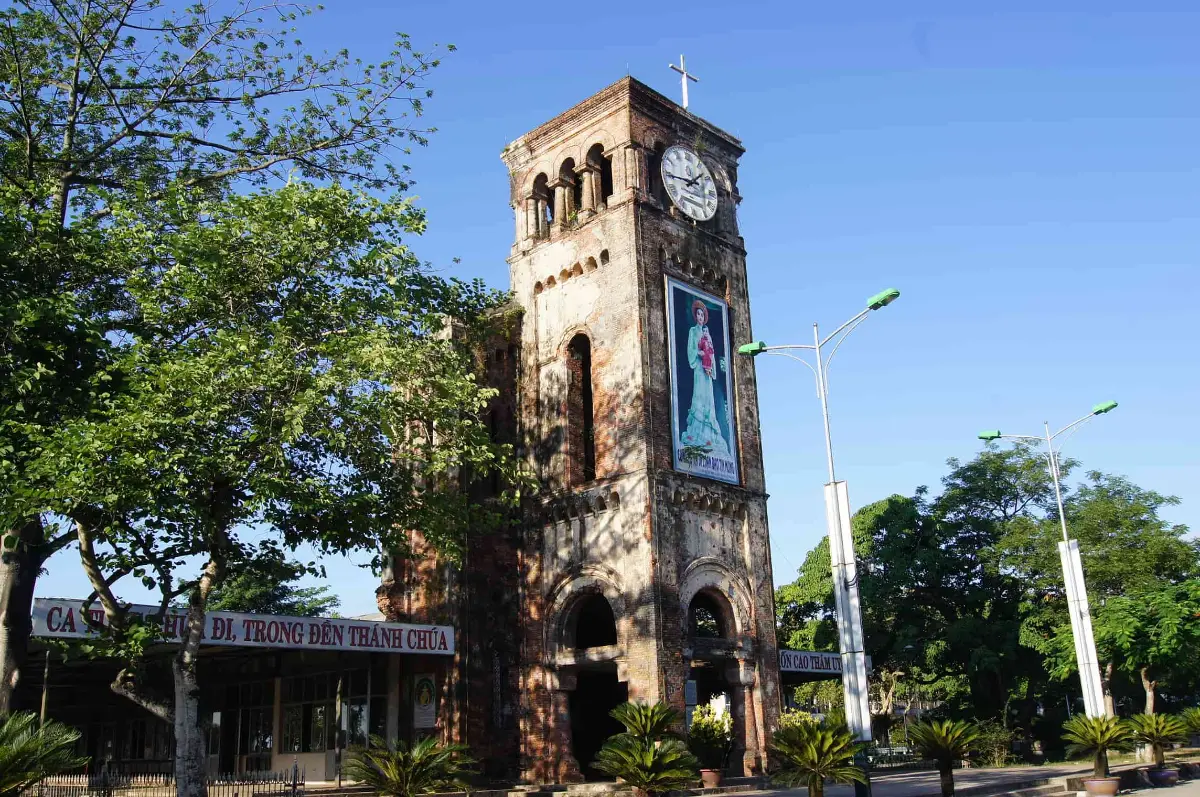
The current Basilica of Our Lady of La Vang is a modern structure, built after the original 19th-century church was destroyed during the Vietnam War. The first church on the site was completed in 1901 during the French colonial period. It was expanded in the 1920s and became a major pilgrimage destination. But in 1972, during the Easter Offensive of the Vietnam War, the church was bombed and left in ruins. For decades, pilgrims worshipped at a temporary open-air altar.
The new basilica was consecrated in 2012 after years of careful planning and fundraising. Its architecture is a striking fusion of Western and Vietnamese design. The most distinctive feature is the sweeping, curved roof that rises like a bird in flight – or, as some interpret it, like the protective mantle of the Virgin Mary over her children. The roof is supported by massive columns that evoke the trees of the original jungle where Mary appeared. The front plaza can accommodate tens of thousands of pilgrims during the annual feast in August.
The shrine grounds include:
- The Old Well (Giếng Nước): The spring that provided water to the persecuted refugees. Pilgrims traditionally drink from this well and take home bottles of its water.
- The Apparition Site (Khu Vực Hiện Ra): A marked area with a statue of Our Lady of La Vang, commemorating the exact spot where Mary appeared.
- The Stations of the Cross (Đàng Thánh Giá): A hillside path featuring dramatic sculptures depicting the passion of Christ.
- The Statue of Our Lady of La Vang: A large white statue of Mary holding the infant Jesus, depicted in Vietnamese dress.
- The Pilgrim House (Nhà Khách): Simple accommodation for pilgrims.
- The Candle Area: Where pilgrims light candles and offer petitions.
3. Why Pilgrims Come: Miracles, Graces, and Devotion
For over two centuries, Vietnamese Catholics have made the journey to La Vang to ask for Mary’s intercession. The shrine is revered for:
- Physical healings: Countless pilgrims have reported recoveries from chronic illnesses after drinking water from the old well or after praying at the apparition site. The shrine’s archives contain hundreds of testimonies of cures attributed to Our Lady of La Vang.
- Spiritual consolations: Many pilgrims come seeking comfort in times of grief, anxiety, or vocational discernment. They report a sense of profound peace after spending time in the basilica.
- National identity: For Vietnamese Catholics, La Vang is not just a religious site but a symbol of their survival through centuries of persecution. The shrine represents the resilience of the Catholic faith in Vietnam.
- Family traditions: Many families make an annual pilgrimage to La Vang, passing the practice down through generations. A pilgrimage to La Vang is often a rite of passage for young Vietnamese Catholics.
The statue of Our Lady of La Vang depicts Mary in the traditional Vietnamese áo dài dress, with the child Jesus resting on her arm. Her face is serene, with Asian features, making her image deeply relatable to Vietnamese worshippers. This cultural adaptation is a powerful example of how the Catholic faith has been “inculturated” in Vietnam – made truly Vietnamese.
4. The Feast of Our Lady of La Vang (August 15)
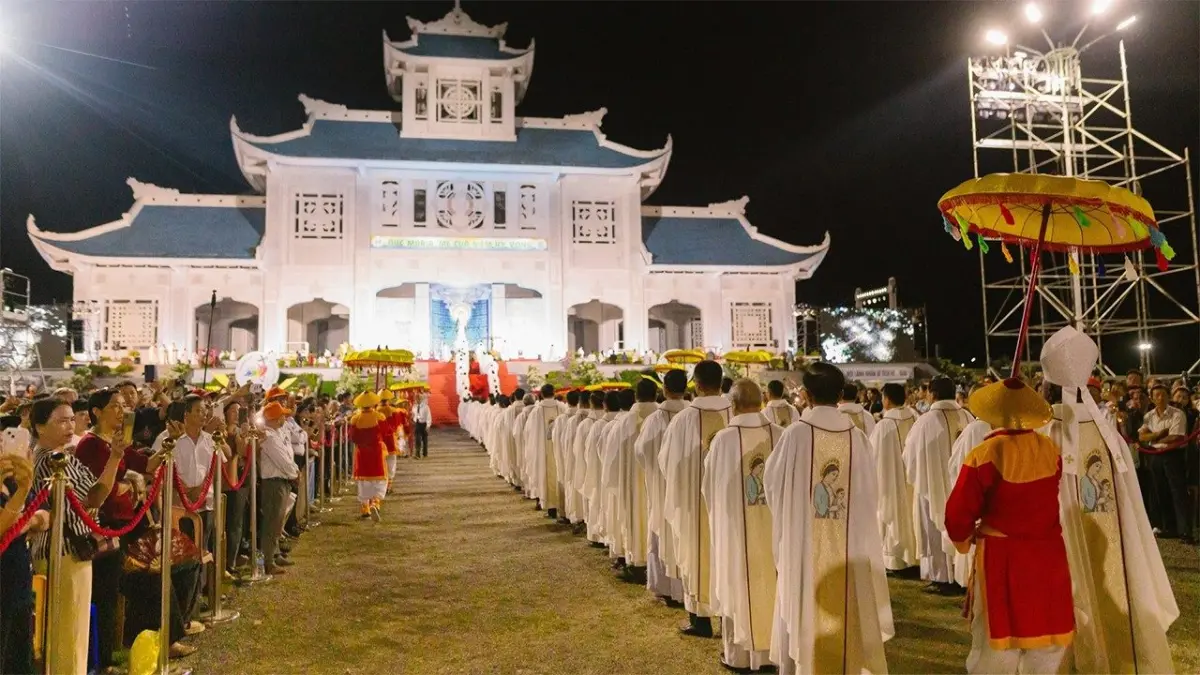
The most important date in the shrine’s calendar is August 15, the Solemnity of the Assumption of Mary, which is also the Feast of Our Lady of La Vang. The celebration actually begins on August 6 with a nine-day novena (a period of prayer leading up to the feast). Each day focuses on a different theme: the apparition, the persecuted Church, Vietnamese martyrs, families, the sick, and so on.
During the novena (August 6-14):
- Special Masses every morning and evening.
- The Rosary is recited at the apparition site.
- Confessions are available throughout the day to accommodate the large number of pilgrims.
On August 15 (Feast Day):
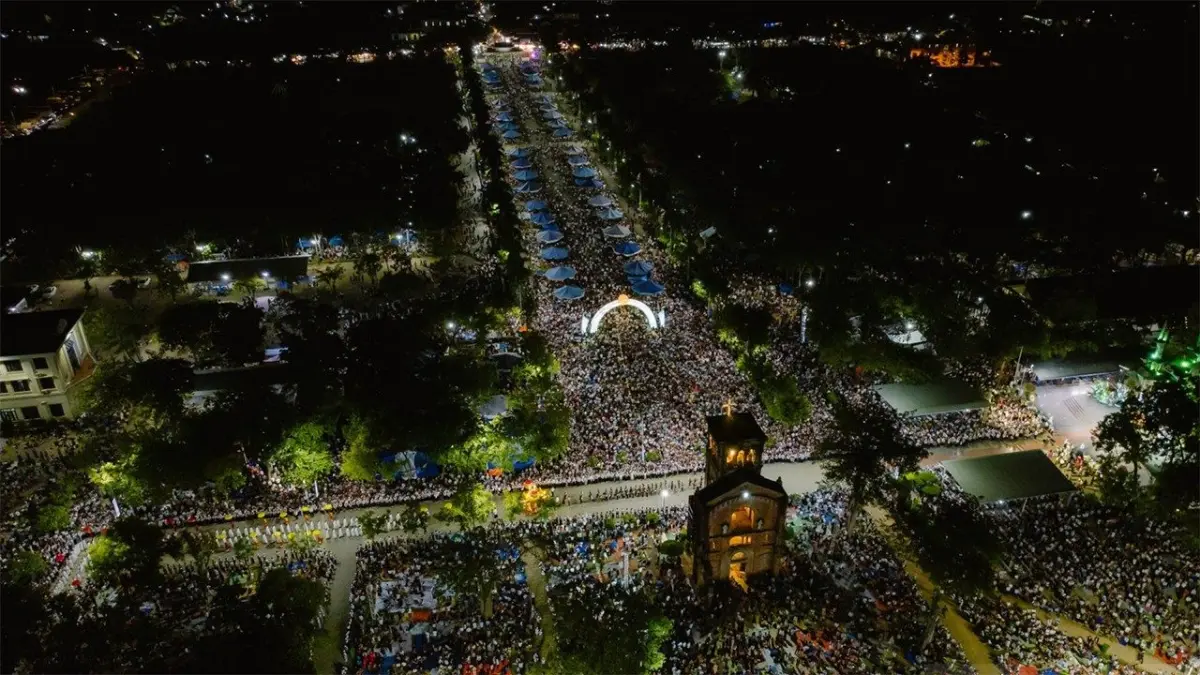
- A solemn Pontifical Mass celebrated by the Bishop of the diocese (or a visiting bishop) at 9:00 AM, often outdoors on the plaza to accommodate the tens of thousands of attendees.
- A candlelight procession in the evening, carrying the statue of Our Lady of La Vang through the grounds.
- Baptisms (some adults, many infants) are performed in the basilica’s baptistery.
- The shrine is so crowded that pilgrims sometimes stand for hours. There is a palpable sense of joy, devotion, and community.
In 2025, the feast was particularly special because Pope Francis had raised the shrine to the status of a Basilica just days earlier (August 22, 2025). This was a historic moment for Vietnamese Catholics, recognized officially by the Holy See. The 2026 feast is expected to be even larger, as pilgrims from across Vietnam and overseas join the celebration.
5. How to Make a Pilgrimage to La Vang
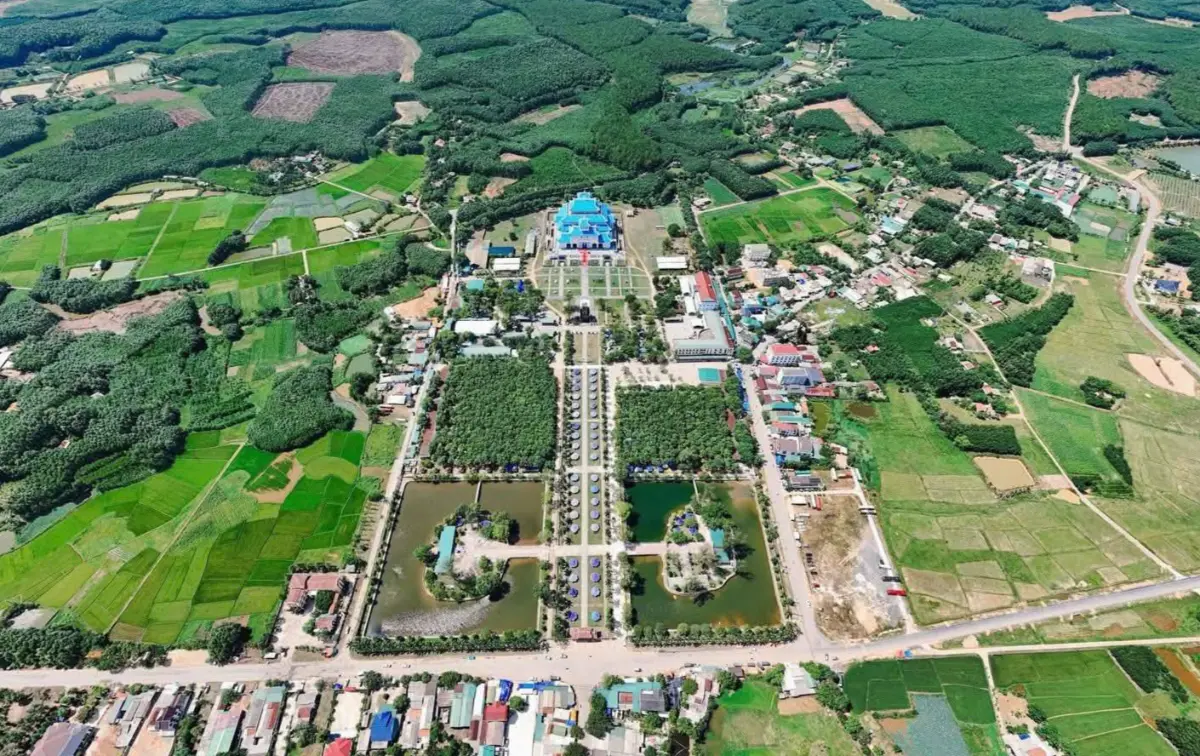
Getting There
| From | Distance | Travel Time | Recommended Transport |
|---|---|---|---|
| Hue City | ~70 km | 1.5-2 hours | Private car, taxi, or pilgrim bus |
| Đà Nẵng | ~120 km | 2.5-3 hours | Private car or organized tour |
| Quảng Trị Town | ~30 km | 45 minutes | Taxi or motorbike |
| Đông Hà City | ~25 km | 30-40 minutes | Taxi or motorbike |
The shrine is located in the countryside of Hải Lăng District, Quảng Trị Province. Most pilgrims fly to either Phu Bai Airport (Hue) or Da Nang Airport and then travel by road. The route passes through beautiful coastal plains and rural villages. Shrine volunteers often wave flags along the road during the feast week, guiding pilgrims to the site.
Mass Schedules (Regular)
- Weekdays: 5:30 AM, 7:30 AM, 9:00 AM, 4:00 PM, 5:30 PM, 7:30 PM (Vietnamese)
- Sundays: Additional Masses including one for families and one for youth (check the schedule board at the entrance)
- Confession: Available 8:00 AM – 11:00 AM and 2:00 PM – 5:00 PM daily
Accommodation
During the feast week (August 6-15), the Pilgrim House fills up weeks in advance. Book early or plan to stay in Đông Hà or Hue and commute each day.
What to Bring on Pilgrimage
- Rosary and prayer book – You will be praying the Rosary multiple times, often in groups.
- Comfortable walking shoes – The shrine grounds are extensive; you will walk between the basilica, the apparition site, and the Stations of the Cross.
- Sunscreen, hat, umbrella – Quảng Trị is hot and sunny, especially in August.
- Water bottle – Many pilgrims fill bottles at the Old Well (you can drink the water).
- Modest clothing – Cover your shoulders and knees (required for entry to the basilica).
- Cash (VND) – For candles, offerings, and souvenirs (the shrine has a small shop).
Pilgrim Etiquette
- Speak quietly – The grounds are for prayer and reflection, not loud chatter.
- Do not run or climb on statues – Respect the sacred art.
- Participate in Mass or the Rosary if you can – Even if you do not understand Vietnamese, the atmosphere is powerful.
- Ask before photographing individuals – Especially pilgrims who are praying.
- Do not use flash inside the basilica – It distracts worshippers and can damage artifacts.
6. Nearby Attractions and Historical Sites
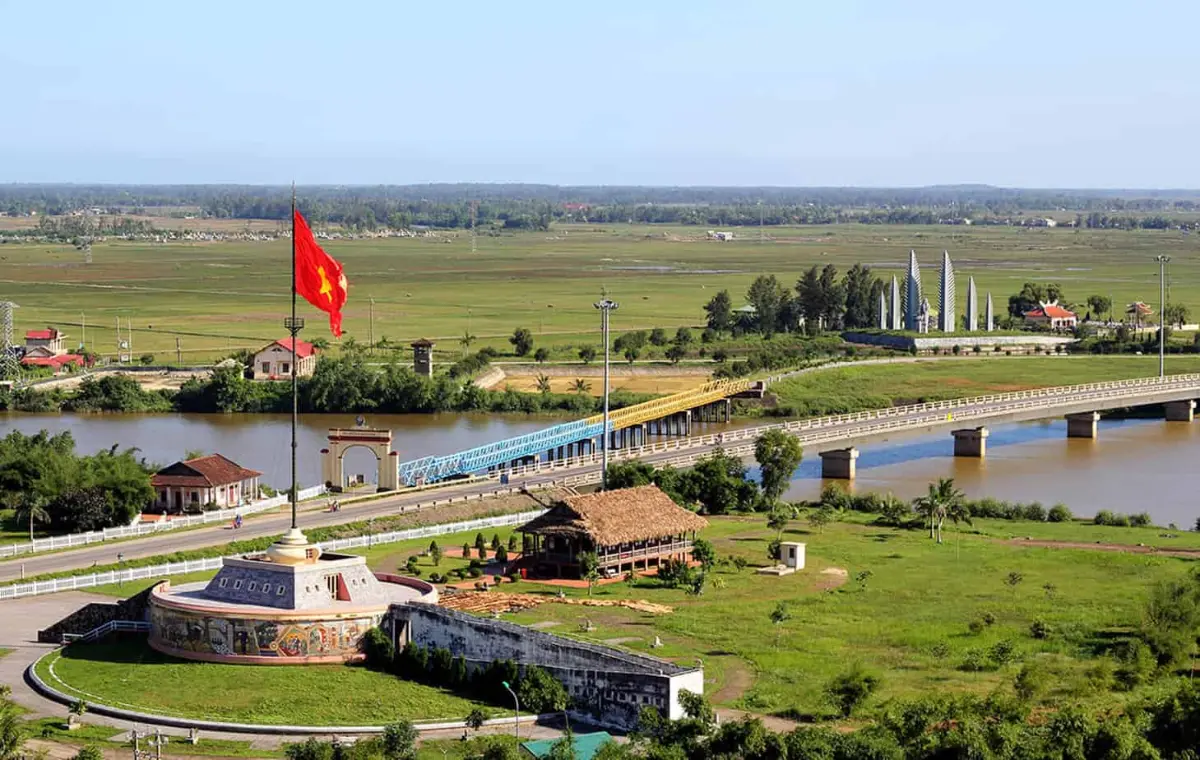
Quảng Trị Province is rich in history, much of it related to the Vietnam War. Pilgrims often combine a visit to La Vang with stops at:
- Quảng Trị Citadel (Thành Cổ Quảng Trị): The site of an 81-day siege in 1972. A memorial to the fallen soldiers (both North and South).
- Hien Luong Bridge (Cầu Hiền Lương): The bridge over the Bến Hải River that divided North and South Vietnam from 1954 to 1975. The border markers are still preserved.
- Vinh Moc Tunnels (Địa đạo Vịnh Mốc): A massive underground complex where villagers lived for years to escape American bombing. Entrance fee is modest.
- Rockpile (Núi Đá Một): A strategic US Marine observation post during the war; now a viewpoint.
- Con Co Island (Đảo Cồn Cỏ): A small island that served as a military outpost; now a tourist destination with pristine beaches (accessed by boat).
For pilgrims interested in the history of Vietnamese Catholicism, the nearby diocese of Quảng Trị has several other historic churches, including some that were rebuilt after being destroyed in the war.
7. Practical Tips for Pilgrims (2026 Updates)
- Plan for heat: Quảng Trị is one of the hottest provinces in Vietnam, especially in August. Mass times are scheduled early morning and late afternoon to avoid the worst heat. Bring a fan if you are sensitive.
- Book transport early for Feast Week: Buses and private cars fill up quickly. If you are traveling from overseas, arrange your transport through Indochine Chic or a trusted local agency.
- Learn a few Vietnamese phrases: “Cho con xin phép” (May I?) and “Cảm ơn” (Thank you) go a long way.
- Bring a candle: You can buy candles at the shrine, but many pilgrims bring their own. The candle area is constantly lit with offerings.
- Visit the old well early: During Feast Week, the line for the well can be an hour long. Go at 6:00 AM to avoid crowds.
- Avoid peak midday heat: From 11 AM to 2 PM, the sun is intense. Take a break in the Pilgrim House or return to your accommodation.
8. Conclusion: A Journey to Vietnam’s Holy Land
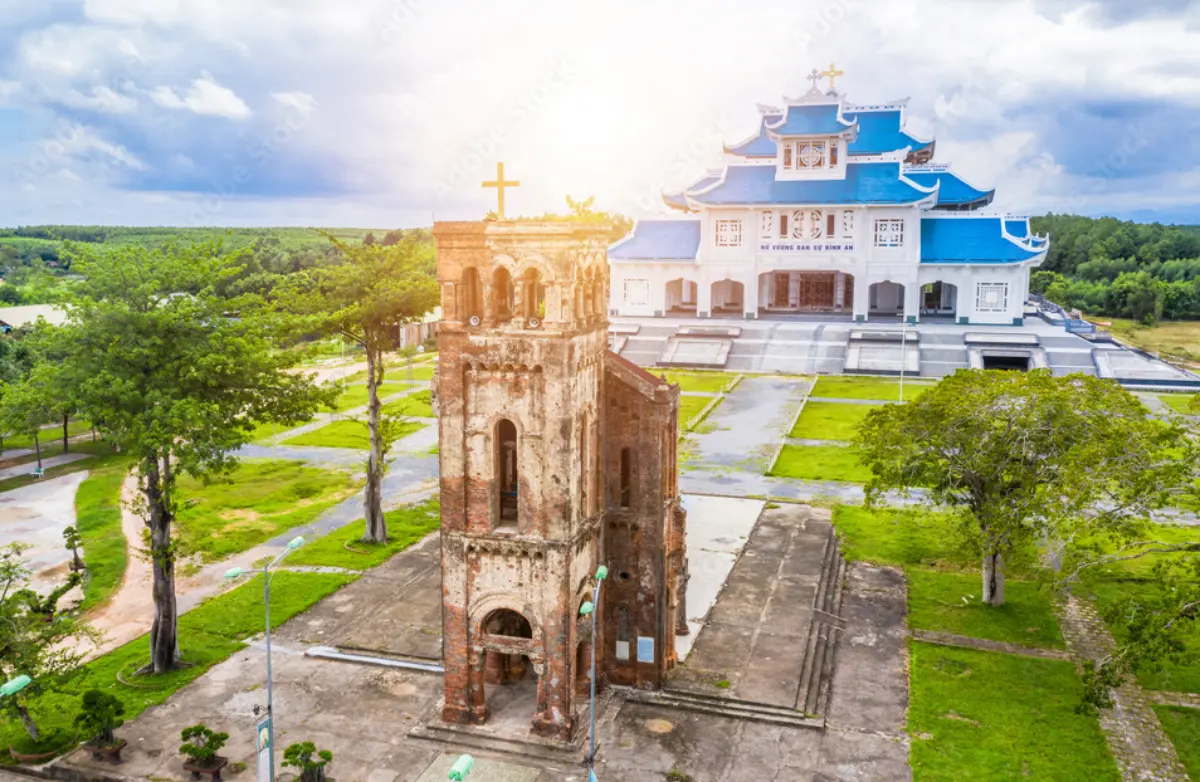
La Vang Shrine is more than a tourist site. It is a place where centuries of suffering and hope meet, where the Catholic faith in Vietnam found refuge and strength. Standing before the basilica, its curved roof stretching toward the sky, you feel the weight of history and the lightness of grace. Whether you come seeking healing, asking for a miracle, or simply wanting to understand the deep faith of Vietnamese Catholics, La Vang will leave an imprint on your soul.
In 2026, as the shrine celebrates its new status as a Basilica, there has never been a better time to make the pilgrimage. Join the thousands who walk the grounds, pray the Rosary, light a candle, and drink from the old well. Our Lady of La Vang – Vietnam’s Mother – is waiting.
Lạy Đức Mẹ La Vang, cầu bầu cho chúng con. (Our Lady of La Vang, pray for us.)
— The Indochine Chic Team


