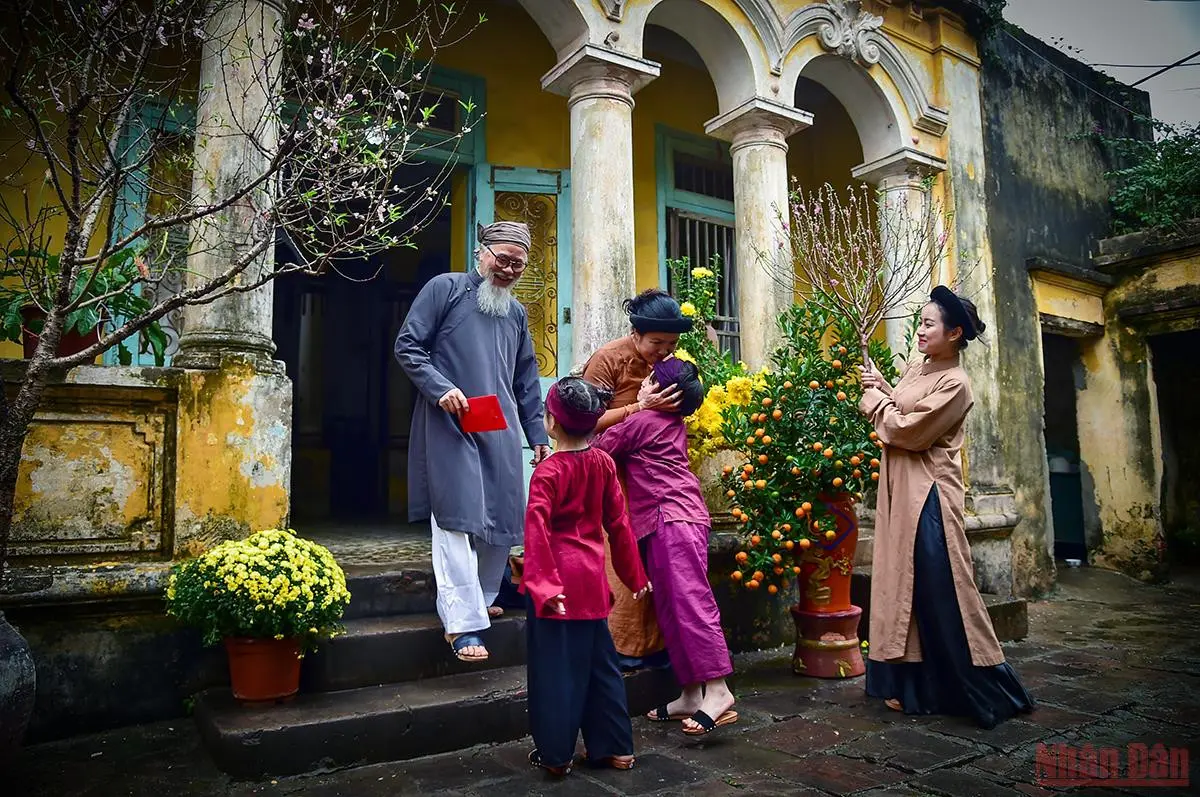
Welcome to the era of “lucky day” tourism, where the world’s most discerning travellers are timing their Halong Bay cruises not around weather patterns or holiday schedules, but around the precise rituals that define Vietnam’s most significant celebration.
The Ancient Art of Xông Đất
In Vietnamese tradition, the first visitor to enter a home after the stroke of midnight on Tết is no ordinary guest. Known as the xông đất or “first-footer,” this individual carries the spiritual responsibility of blessing the household with prosperity, health, and happiness for the coming year. Families carefully select someone whose character, career success, and temperament align with the fortunes they wish to invite.
What was once an intimate family ritual has, in 2026, found an extraordinary new expression. International cruises are now curating their arrival schedules to position themselves as the “first-footer” of the Lunar New Year for their guests. It is a transformation of tourism into something far more meaningful: participation in cultural tradition rather than mere observation.
Xông Đất on the Water
Imagine stepping from a tender onto your luxury vessel precisely as the first moments of the lunar year unfold. The crew welcomes you as the honoured first-footer — a blessing exchanged between traveller and destination, each carrying fortune into the other’s year.
Curated Tết Experiences on the Water
For the sophisticated traveller seeking more than a postcard moment, Halong Bay’s luxury cruise operators have responded with programming that elevates Tết from a calendar date to an immersive cultural journey.
Picture this: You step aboard your vessel on the first day of the lunar year. As you cross the gangway, you are greeted by crew members in traditional áo dài presenting crimson envelopes—lì xì—containing crisp new bills, their red colour symbolising luck and vitality. It is not merely a gesture of hospitality; it is an invitation into Vietnamese tradition.
The sundeck, usually reserved for sunset cocktails, transforms into a stage for múa lân—lion dances performed to rhythmic drumbeats that are believed to chase away malevolent spirits and summon good fortune. The lions weave between guests, pausing before each traveller as if bestowing an individual blessing upon the journey ahead.
Dining becomes an education in culinary symbolism. A traditional Tết banquet unfolds across the evening: bánh chưng, the square glutinous rice cake representing the Earth; thịt kho trứng, caramelised pork with eggs symbolising abundance; and dưa hành, pickled onions whose sharpness is said to cut through the misfortunes of the past year. Each course is introduced not merely as a dish but as a story—a layer of meaning that transforms a meal into a ritual.
The Tết banquet is a language unto itself. Every ingredient, every preparation, carries generations of wisdom about what to welcome and what to leave behind.
Beyond the Crowds, Into the Culture
There was a time when travel advisories warned of Tết as a period to avoid—a time when businesses closed, transportation became chaotic, and the uninitiated traveller might feel adrift. The sophisticated traveller of 2026 understands differently. They recognise that the most profound cultural experiences occur precisely when a society pauses to honour its deepest traditions.
By aligning a cruise with the Lunar New Year, the traveller does not simply witness Vietnam; they participate in its soul. They receive blessings meant for family. They share meals meant for ancestors. They stand on the deck of a luxury vessel in one of the world’s most spectacular natural settings, watching the first sunrise of the lunar year paint the limestone karsts in shades of gold and rose—a moment that exists at the intersection of natural beauty and human meaning.
An Invitation to Fortune
For those who understand that true luxury lies not in what one possesses but in what one experiences, a Tết cruise offers something increasingly rare: authenticity. It is the opportunity to begin one’s own year with intention, surrounded by a culture that has spent millennia perfecting the art of welcoming good fortune.
In 2026, Halong Bay’s waters will reflect not only the beauty of Vietnam’s landscape but the light of lanterns, the movement of lion dancers, and the quiet prayers of a nation celebrating renewal. To be there is to understand that some journeys are not merely about where you go, but about when you arrive—and the blessings that arrive with you.
To arrive at Giao Thừa is to arrive at the threshold of fortune.
The first-footer ritual reminds us that beginnings matter. How we enter a new year shapes the year itself. For those who choose to welcome the lunar year from the deck of a luxury vessel in Halong Bay, the journey becomes its own blessing.
Lucky day tourism. The most meaningful way to begin.