The Red River: Lifeblood of Hanoi
The Cradle of a Civilization
Where Vietnam Began
The Red River Delta is the birthplace of Vietnamese civilization. For millennia, the river’s annual floods have deposited rich silt, creating some of the most fertile agricultural land in Southeast Asia. The first Vietnamese states — Văn Lang, Âu Lạc — emerged here, and the river became the artery of a growing nation. The Đông Sơn culture, famous for its bronze drums, flourished along the river’s banks. Today, the delta remains the agricultural heartland of northern Vietnam, producing rice, vegetables, and the fruit that feeds the capital. The river is not just a waterway; it is the foundation of Vietnamese identity.
The Seasons of the River
A River That Changes
The Red River is defined by its seasons. From May to October, the monsoon rains swell its waters, and the river rises, sometimes threatening the city’s levees. This is the flood season, when the river is at its most powerful, its waters a deep red-brown, its current swift. From November to April, the river retreats, and sandbars emerge, revealing gardens planted by farmers who live on the riverbanks. The dry season is the time for walking on the exposed banks, for fishing, for the slow rhythms of the river. Both seasons have their beauty — the drama of the flood, the quiet of the dry — and both have shaped the life of the city.
Long Biên Bridge: The River’s Icon
Spanning the Centuries
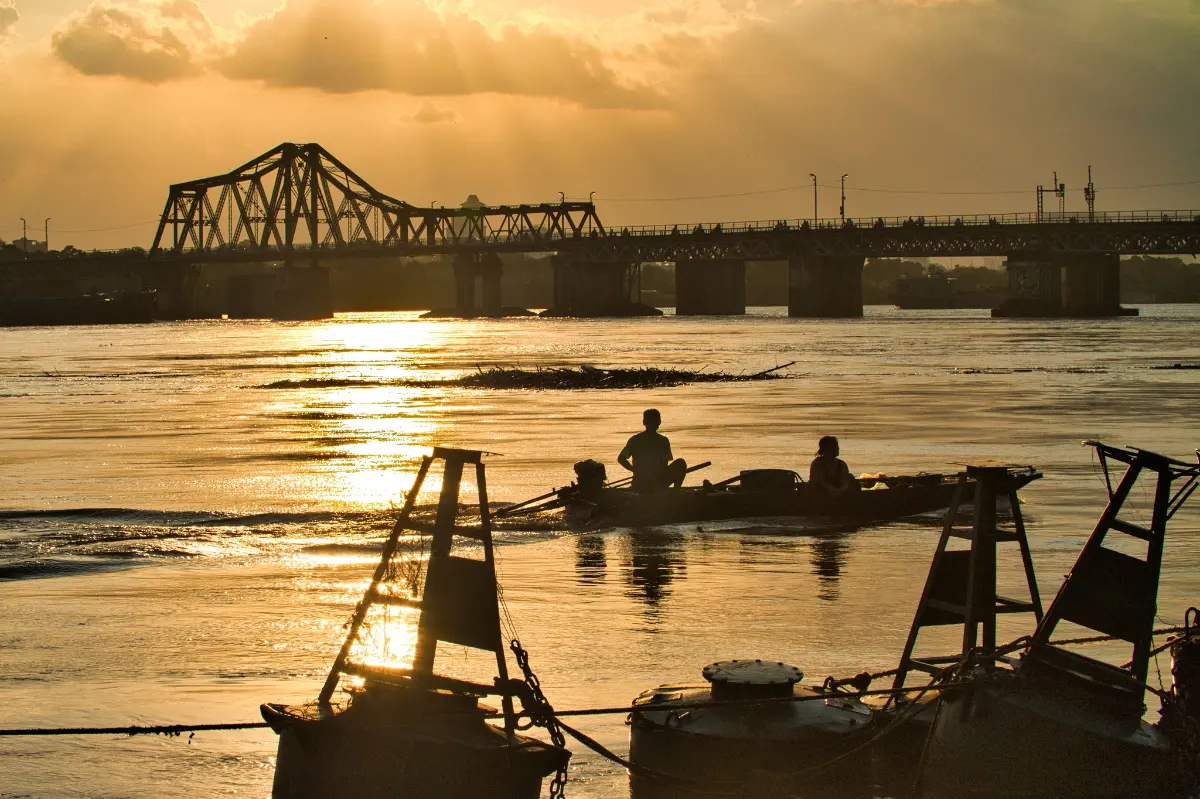
The most famous view of the Red River is from Long Biên Bridge. Designed by Gustave Eiffel and completed in 1902, the bridge is a steel lattice that has connected the city to its northern suburbs for more than a century. From the bridge, you can see the river’s full expanse: the sandbars, the gardens, the distant mountains. The bridge itself is a symbol of resilience — bombed and repaired, bombed and repaired again — and walking across it is the best way to experience the river’s scale. At sunset, the steel structure glows, and the water reflects the fading light.
The Gardens of the Riverbank
Farming on the Sandbars
In the dry season, the river’s sandbars emerge, and with them, a hidden world. Farmers from the surrounding villages plant gardens of corn, banana, and vegetables on the exposed land. These “bãi giữa” (mid‑river gardens) are a vital source of food for the city, and walking among them is to see a different side of Hanoi. You can reach the gardens by crossing the bridge and descending to the riverbank, or by taking a boat from the shore. The gardens are a reminder that the river is not a barrier but a source of life — and that even in the heart of the capital, the rhythms of agriculture continue.
Fishing on the Red River
The Fishermen of the River
For generations, families have fished the Red River. Their boats — small wooden vessels — are a common sight, especially in the early morning. The catch is modest: carp, catfish, shrimp — but it is a livelihood that has sustained river communities for centuries. From the bridge, you can watch the fishermen casting their nets, and in the early morning, you can see the boats returning with their catch. The fishermen are the last link to a way of life that is slowly disappearing, as the city encroaches on the river’s banks.
The River at Dawn
When the City Wakes
The best time to experience the Red River is at dawn. As the sun rises over the city, the river is at its most serene. The light is golden, the water calm, and the city’s noise has not yet begun. On the riverbank, you’ll see people exercising, fishing, or simply sitting by the water. The Long Biên Bridge catches the first light, and the sandbars emerge from the mist. It is a moment of quiet in a city that is rarely still — a reminder that the river, despite the city that has grown around it, remains a place of peace.
Red River Experiences
Sunrise Walk: Cross Long Biên Bridge at dawn, descend to the riverbank, and explore the gardens. A guide can share the history of the river and the bridge.
Boat Tour: For a different perspective, take a small boat from the shore and see the river from the water.
Photography Tour: For photographers, a guide can help you find the best vantage points, from the bridge to the gardens.
Combined Itinerary: Pair the Red River with the Old Quarter or West Lake for a comprehensive exploration of Hanoi’s relationship with water.
The Essence of the Red River — The Red River is not a destination to be checked off a list; it is a presence that runs through the city’s history, its economy, and its daily life. To stand on its banks is to feel the weight of centuries — the silt that built the delta, the boats that carried armies, the gardens that feed the city. It is a river that has given its name to a nation, and that continues to shape the life of the capital. For visitors, it offers a perspective on Hanoi that is not found in the museums or the temples — a perspective of water, of earth, of the slow currents that have carried this city forward.
Frequently Asked Questions
The best ways are to walk across Long Biên Bridge, explore the riverbank gardens, or take a boat tour.
Early morning (6–8 AM) for sunrise and the quietest atmosphere. The dry season (November–April) is best for exploring the gardens.
Yes, but be cautious. The riverbank is uneven, and the water can rise quickly. Stay on established paths.
No. The current is strong, and the water is polluted. Swimming is not recommended.
The reddish-brown color comes from the silt carried from the mountains of Yunnan, rich in iron oxide.
Small boats can be hired from the shore near Long Biên Bridge. Tours are informal; negotiate the price in advance.