Pù Luông: Vietnam’s Hidden Shangri‑La
A Landscape of Water and Stone
17,000 Hectares of Pristine Beauty
Spanning more than 17,662 hectares in the districts of Bá Thước and Quan Hóa, the Pù Luông Nature Reserve is a protected area of exceptional biodiversity. Its forests shelter rare species, its limestone peaks rise to 1,700 meters, and its rivers carve through valleys that have been cultivated for centuries. The reserve was established to preserve both the natural environment and the cultural traditions of the Thái and Mường ethnic minorities who call this place home. Unlike more developed destinations, Pù Luông remains quiet, wild, and deeply authentic — a place where conservation and community coexist.
The Rhythm of the Rice Terraces
Two Moments of Magic
The terraced fields of Pù Luông offer two distinct seasons of breathtaking beauty. May to June is the water‑flooding season — the fields are filled, reflecting the sky, the clouds, and the surrounding limestone peaks. At sunrise or sunset, the terraces become mirrors of light. September to October is the harvest season — the fields turn brilliant gold, the valley is alive with the activity of farmers, and the air carries the scent of ripening rice. These are the months when photographers and nature lovers make the journey, but Pù Luông rewards the visitor in any season with its quiet beauty.
Villages of Stilt and Stone
Life on the Water’s Edge
The villages of Pù Luông — Kho Mường, Hieu Village, Don Village — are clusters of traditional stilt houses, their wooden frames raised above the ground, their roofs thatched or tiled. Here, the Thái people practice wet‑rice cultivation, weaving, and a communal way of life that has persisted for centuries. Visitors are welcomed into homestays, where meals are shared on bamboo mats, and evenings are spent in conversation or listening to the sounds of the forest. In these villages, the concept of “slow travel” is not a trend but a way of being.
Paths Through the Valley
Walking Between Terraces and Waterfalls
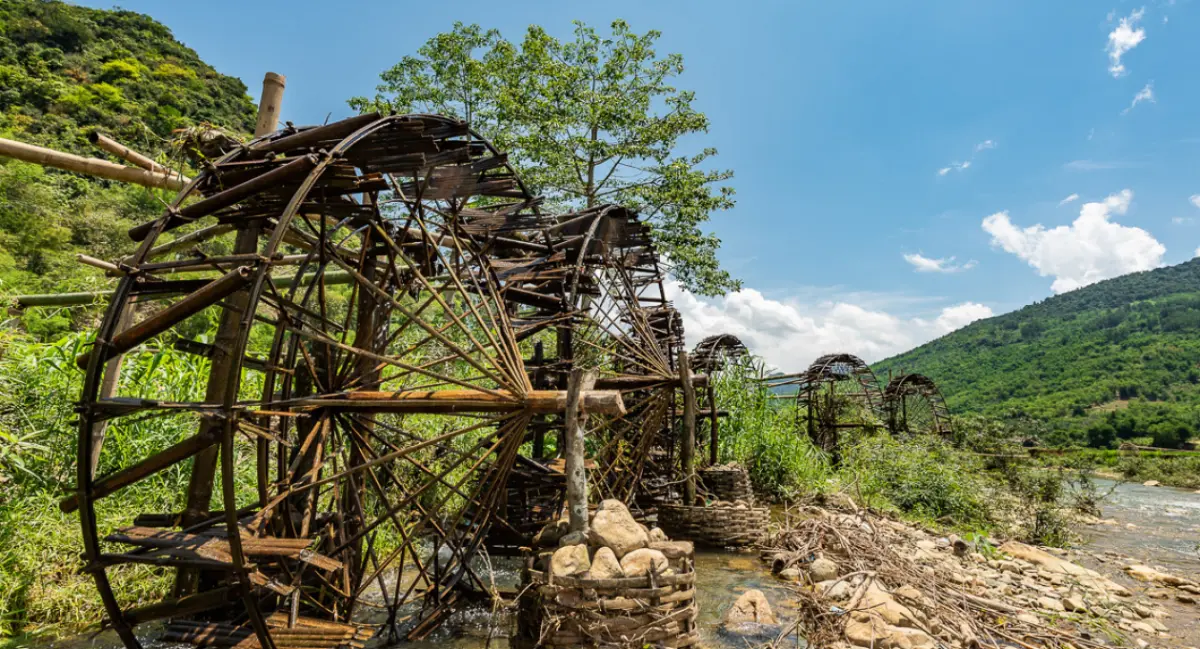
The best way to experience Pù Luông is on foot. Trails wind through the reserve, connecting villages and offering views that change with every turn. A popular route follows the Cham River, passing through bamboo forests and past water wheels — traditional irrigation devices that lift river water to the terraces. Another leads to Hieu Waterfall, a cascading stream that offers a cool respite on warm afternoons. For those seeking a challenge, the trek to the summit of Pù Luông Peak (1,700 meters) rewards with panoramic views across the reserve and into neighboring Mai Châu.
From Pù Luông to the Wider World
A Gateway to Northern Vietnam
Pù Luông’s location makes it an ideal base for exploring the surrounding region. To the north lies Mai Châu, with its famous stilt‑house villages and vibrant market. To the east, Cúc Phương National Park — Vietnam’s first national park — offers ancient forests and endangered primate rescue centers. To the south, the Citadel of the Hồ Dynasty, a UNESCO World Heritage Site, stands as a monument to Vietnam’s 14th‑century history. A journey through this corner of Vietnam weaves together natural beauty, cultural heritage, and a sense of being far from the familiar.
The Taste of the Highlands
Riverside Meals and Forest Herbs
In Pù Luông, meals are an expression of the landscape. Grilled hill chicken, marinated with local herbs and cooked over an open fire. Cơm Lam — sticky rice steamed in bamboo tubes, the green bamboo skin imparting a subtle fragrance. Wild vegetables foraged from the forest, served with a dipping sauce of chili and salt. And always, a jar of corn wine shared among guests, the custom of hospitality in these mountains. Many homestays offer meals that showcase the flavors of the reserve — simple, fresh, and deeply connected to the land.
Pu Luong Tour Packages
2‑Day Homestay Experience: Trekking through terraces, a night in a traditional stilt house, and a visit to Hieu Waterfall.
3‑Day Discovery: Extended trekking, a visit to Kho Mường village, and an exploration of the reserve’s water wheels.
Pù Luông & Mai Châu: Combine the quiet of Pù Luông with the more developed tourism of Mai Châu for a comprehensive highland journey.
Private Guided Trek: For those seeking a deeper experience, a local guide can tailor routes to your fitness level and interests.
The Essence of Pù Luông — Pù Luông is a place that has, so far, resisted the transformation that comes with mass tourism. Its paths are still walked by farmers, its villages still home to generations, its forests still home to wildlife. To visit is to witness a landscape that is both cultivated and wild, to be welcomed into communities that practice hospitality without expectation, and to leave with the sense that you have seen Vietnam as it once was — and, in this corner of Thanh Hóa, as it still can be.
Frequently Asked Questions
A minimum of 2 days allows for a trek, a waterfall visit, and a homestay. For a more relaxed experience, 3 days is ideal, with time to explore the valley by bicycle or on foot.
May–June for the water‑flooding season (mirrored terraces); September–October for the golden harvest; March–April for spring blossoms and mild temperatures.
By private car from Hanoi (3–4 hours) via National Road 6 to Hòa Bình, then into the reserve. Public transport is limited; a private vehicle is recommended.
Sturdy walking shoes, light layers (mornings and evenings can be cool), insect repellent, a rain jacket, and comfortable clothing for homestays. A headlamp is useful for evening village walks.
There are options for all fitness levels — from gentle walks between villages to the challenging ascent of Pù Luông Peak. A local guide can recommend routes suited to your ability.
Homestays are in traditional stilt houses; guests sleep on comfortable mattresses in shared or private rooms. Meals are family‑style, featuring local specialties. The experience is simple, authentic, and welcoming.