Long Biên Bridge: The Steel Witness
An Eiffel Legacy
The Bridge That Eiffel Built
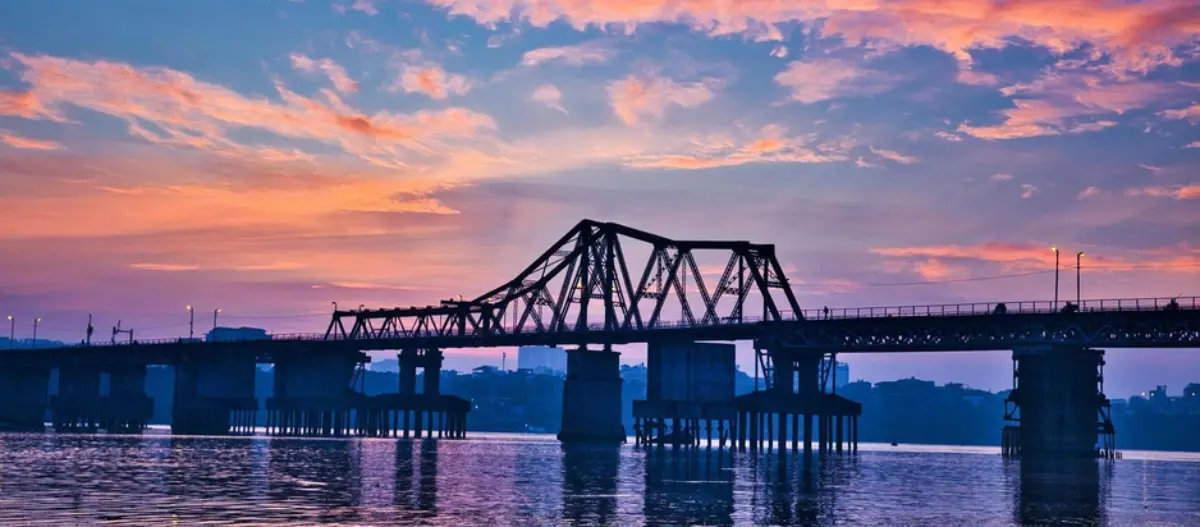
Long Biên Bridge was constructed between 1899 and 1902 by the French engineering firm Daydé & Pillé, under the direction of Gustave Eiffel. At the time, it was one of the longest bridges in Asia, spanning 2.4 kilometers across the Red River. The bridge was originally named the Doumer Bridge, after the Governor-General of Indochina. Its design is classic Eiffel: a steel lattice structure, with a central railway line flanked by roads for cars and pedestrians. The steel was imported from France, and the bridge was considered an engineering marvel. Today, it stands as a monument to colonial ambition — and to the resilience that has kept it standing.
A Century of War
The Bridge That Would Not Fall
Long Biên Bridge has survived where other structures have not. During the First Indochina War, it was bombed by French forces retreating from the city. During the Vietnam War, it was a strategic target: the bridge was bombed repeatedly by American aircraft, with the aim of cutting the supply route to the north. The spans were destroyed and repaired, destroyed and repaired again. The bridge still bears the scars of that era — sections rebuilt with different materials, the original steel alongside later additions. For Hanoians, the bridge became a symbol of endurance: a structure that, like the city itself, would not be broken.
Walking the Bridge
A Walk Through History
The best way to experience Long Biên Bridge is on foot. A narrow pedestrian path runs along the side of the bridge, separated from the traffic by a steel barrier. The walk is about 2.4 kilometers from the city center to the far side of the Red River, and it takes about 30 minutes at a leisurely pace. As you walk, you’ll pass cyclists carrying goods, motorbikes weaving through traffic, and trains crossing the central line. Below, the Red River flows, its sandbars dotted with gardens. The views are extraordinary: the city skyline to the south, the countryside to the north, and the steel lattice of the bridge itself, a structure that is both industrial and elegant.
The Cyclists of Long Biên
The Bridge at Rush Hour
Long Biên is not a museum; it is a working bridge. Every day, thousands of cyclists and motorbikes cross the Red River on its narrow lanes. Farmers carry baskets of vegetables from the gardens on the riverbanks. Workers commute from the suburbs. Vendors balance their goods on bicycles, weaving through the traffic. The bridge is at its busiest in the early morning and late afternoon, when the light is golden and the energy is palpable. For photographers, this is the time to capture the bridge in motion — the flow of people, the shadow of the steel, the river below.
The River Below
The Muddy Waters
The Red River (Sông Hồng) gives Hanoi its name — the City Within the River. The river is wide and muddy, its waters colored by the silt of the mountains. In the dry season, sandbars emerge, and farmers plant vegetable gardens on the banks. In the wet season, the water rises, sometimes threatening the bridge’s foundations. From the bridge, you can see the scale of the river, the barges moving goods, the children swimming. The river is both a barrier and a lifeline, and the bridge has been its only permanent crossing for more than a century.
Long Bien Bridge Experiences
Self‑Guided Walk: Cross the bridge on foot, taking time to photograph the steel structure and the river views. Allow 1–2 hours round trip.
Cycling Tour: Rent a bicycle and cross the bridge like a local; continue to the gardens on the riverbanks.
Photography Tour: For photographers, a guide can arrange access to the best vantage points, including the bridge itself and the riverbanks.
Combined Itinerary: Pair Long Biên Bridge with the Old Quarter or the Red River gardens for a morning exploration.
The Essence of Long Biên Bridge — Long Biên Bridge is not a structure to be admired from a distance; it is a place to be experienced. To walk its steel walkway, to feel the vibration of the trains, to see the river below and the city beyond — these are the experiences that connect you to Hanoi. The bridge has been bombed and repaired, but it has never been abandoned. It is a symbol of resilience, a monument to the ordinary people who cross it every day, and a reminder that even the strongest structures are built to carry life forward.
Frequently Asked Questions
The bridge is 2.4 km long. A one‑way walk takes about 30 minutes; allow 1–2 hours round trip, including time for photos.
Yes, but caution is required. There is a pedestrian path separated from traffic, but it is narrow. Be aware of motorbikes and bicycles.
Early morning (6–8 AM) or late afternoon (4–6 PM) for the best light and to see the bridge at its busiest. Avoid the midday heat.
Yes, but traffic is heavy and the lanes are narrow. Most visitors choose to walk or cycle.
The best vantage points are from the middle of the bridge looking toward the city, and from the riverbanks below.
The pedestrian path is narrow and has steps at the entrance. It is not wheelchair accessible.