Hỏa Lò Prison: The Hanoi Hilton
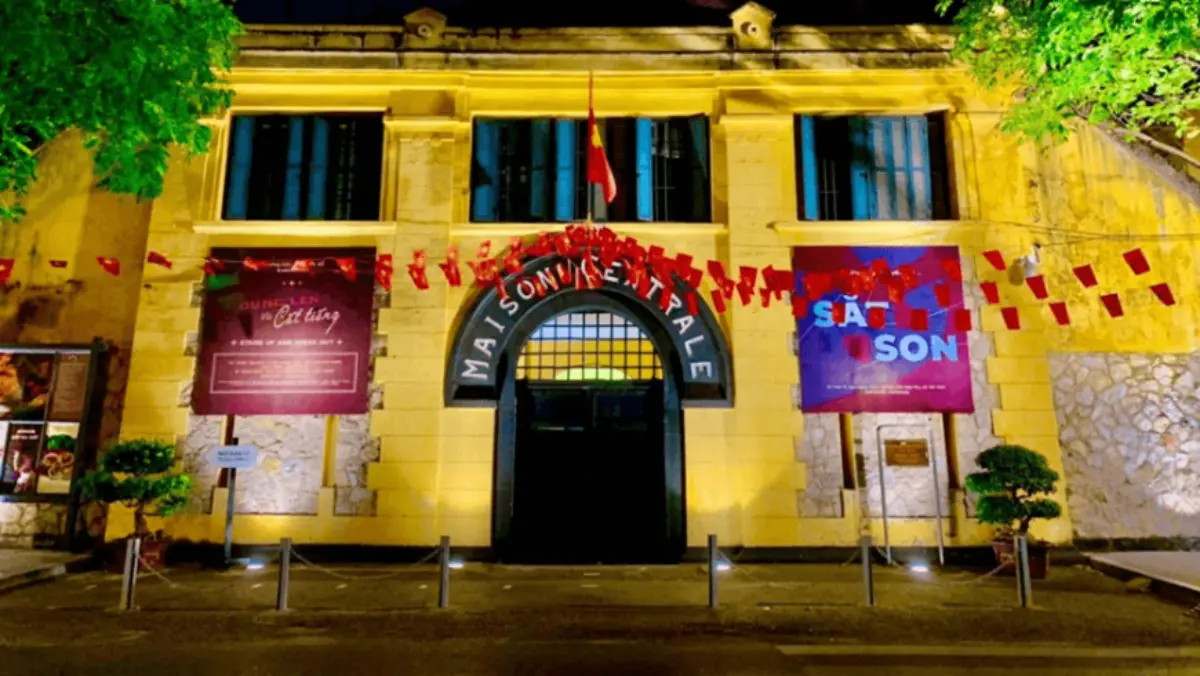
The Fiery Furnace
A Prison Built for Oppression
When the French colonial government completed Hỏa Lò in 1896, it was intended to hold between 450 and 600 prisoners. Within years, it was overcrowded with thousands. The prison’s name derived from the craft village that once stood on the site — a village specializing in making ceramic stoves — but the name became synonymous with the brutal conditions inside: cramped cells, malnutrition, and the infamous “tiger cages” where prisoners were shackled in chains. Vietnamese revolutionaries, including future leaders of the independence movement, were held here. The guillotine used for executions remains on display — a stark reminder of the colonial regime’s methods of control.
The Tiger Cages & Revolutionary Martyrs
Where Revolution Was Forged
The most notorious section of the prison was the “tiger cages” — cramped cells where prisoners were kept in chains, often in solitary confinement. Many of Vietnam’s most celebrated revolutionaries spent time in Hỏa Lò, including Phan Bội Châu and Nguyễn Văn Cừ. Their stories are told through photographs and artifacts throughout the museum. Visitors can see the original cells, the chains, and the shackles — a visceral reminder of the conditions that prisoners endured. The prison also includes a restored section of the guillotine room, where executions were carried out. For Vietnamese visitors, this is a site of pilgrimage, honoring the martyrs who sacrificed for independence.
The Hanoi Hilton: American POWs
A Different Chapter
During the Vietnam War, Hỏa Lò was used to house American prisoners of war. The prisoners — including future US Senator John McCain — gave the prison its ironic nickname, “the Hanoi Hilton.” Exhibits in this section include photographs, uniforms, and personal artifacts, presented with a perspective that highlights the treatment of POWs as consistent with international standards. Visitors can see a section of the prison as it was during the war, including the room where McCain’s flight suit is displayed. The interpretation of this period is contested — some see it as propaganda, others as a genuine attempt to document a complex history. What is undeniable is that the prison holds stories from both sides of a war that divided nations.
The Guillotine & Death Row
A Chilling Relic
Among the most sobering exhibits at Hỏa Lò is the restored guillotine — a device used by the French to execute prisoners. The guillotine, originally used in Algeria, was brought to Vietnam and used throughout the colonial period. Visitors can see the blade, the basket, and the platform, alongside photographs and descriptions of executions. The room also includes a section on the cells where prisoners awaited execution, known as “death row.” It is a place that confronts visitors with the ultimate price paid by those who fought for independence.
Escape & Resilience
Tunnels and Freedom
Despite the prison’s formidable defenses, there were successful escapes. The most famous was in 1951, when prisoners tunneled out of the prison, a feat commemorated in exhibits that show the tunnel route and the tools used. The museum also tells the story of the prison’s role in the August Revolution of 1945, when prisoners were freed as part of the uprising that led to independence. These stories of escape and liberation are woven throughout the museum, offering a counterpoint to the narratives of oppression.
The Museum Today
Walking Through History
Most of the original prison was demolished in the 1990s to make way for a high‑rise building. The museum occupies the remaining wing — the gatehouse and a section of the original walls. Visitors enter through the massive wooden gate, then walk through the preserved cells, the guillotine room, and the exhibition halls. The museum is well‑organized, with signs in Vietnamese, English, and French. A visit takes about 1–2 hours, and while the subject matter is heavy, the museum offers a necessary education in Vietnam’s modern history. It is a place of reflection, not spectacle.
Hoa Lo Prison Tours
Self‑Guided Visit: Explore the museum at your own pace; audio guides available.
Guided Historical Tour: A guide can provide context on the colonial era, the revolutionary movement, and the POW experience.
Combined Itinerary: Pair Hỏa Lò with the Hồ Chí Minh Mausoleum Complex for a comprehensive exploration of Hanoi’s 20th‑century history.
Private Guide: For those seeking a deeper understanding of the complex historical narratives, a private guide is recommended.
The Essence of Hỏa Lò — Hỏa Lò is a difficult place to visit. It is a site of suffering, a reminder of colonial brutality and the costs of war. But it is also a place of resilience — a testament to the endurance of those who were imprisoned within its walls, and to the generations who have worked to ensure that these stories are not forgotten. For visitors, it offers an essential window into Vietnam’s modern history, and an opportunity to reflect on the complexity of the past. To walk through its gates is to walk through history — and to emerge with a deeper understanding of the country that is Vietnam today.
Frequently Asked Questions
Allow 1–2 hours to explore the museum thoroughly. The exhibits are well‑organized and the space is manageable.
Morning is the best time to avoid crowds. The museum is open daily, except during the lunch break (11:30 AM–1:30 PM).
No formal dress code, but out of respect for the site, modest attire is appropriate.
Yes. Photography is allowed throughout the museum. Some areas have low light; a flash may be needed.
Yes. Exhibits are labeled in Vietnamese, English, and French. Audio guides are available at the entrance.
The subject matter is heavy, and some exhibits (including the guillotine) may be disturbing for young children. Parental discretion is advised.