Hanoi Train Street: Life on the Tracks
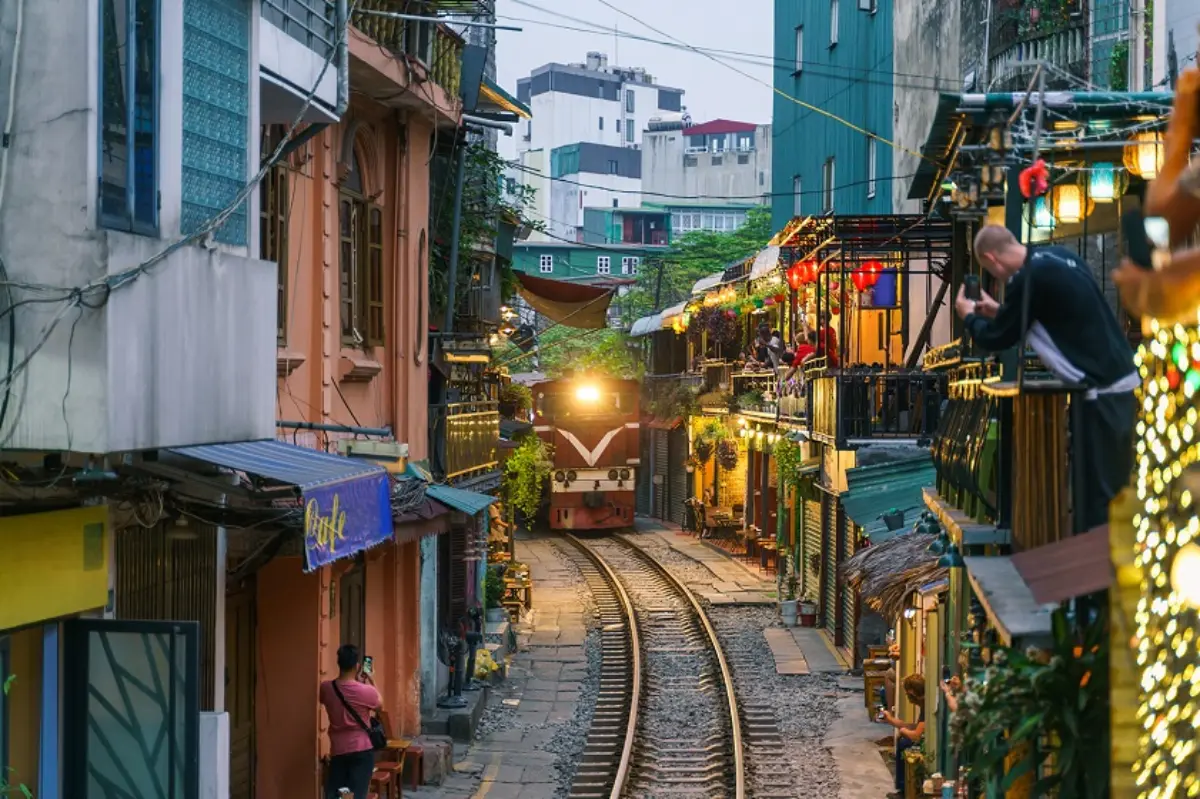
A Corridor of Resilience
A Century of Coexistence
The railway line that cuts through Hanoi’s Old Quarter was built during the French colonial era, connecting the capital to the northern provinces. For decades, it ran through the heart of the city, and as Hanoi grew, homes and businesses were built along its path. In the narrow corridor near Lê Duẩn Street and Phùng Hưng, the tracks pass within arm’s reach of the buildings. The residents who settled here learned to live with the trains, timing their daily activities around the schedule, pulling their children from the tracks when the whistle sounded. It is a testament to the resilience of urban life — the ability to adapt, to find space where none seems to exist, to make a home in a corridor that, by any rational design, should not have become a neighborhood.
The Street Today
When the Trains Are Not Passing
When the trains are not running — which is most of the day — the tracks become an extension of the homes that line them. Children play on the rails; neighbors sit on stools beside the tracks, drinking tea; laundry hangs from the windows, fluttering over the steel lines. The street is narrow — barely three meters wide in places — but it is filled with life. The residents have adapted to the space: potted plants line the tracks, small shops open their doors onto the railway, and the narrow corridor becomes a shared living room for the community. It is this sense of everyday life, rather than the spectacle of the passing trains, that gives Train Street its character.
The Passing of the Train
Two Minutes of Thunder
Twice a day — once in the morning and once in the evening — the train passes through the narrow corridor. For the residents, it is a routine: a quick glance at the clock, the clearing of the tracks, the press against the walls. For visitors, it is a spectacle. The train approaches slowly, the whistle sounding a warning, and then the carriages fill the narrow space, passing so close that you could reach out and touch the metal. The noise is deafening, the wind strong, and then, in a minute, it is over. The train disappears around the bend, the street returns to its daily rhythm, and the cafes resume their business. It is a moment of controlled chaos, a reminder of the power that runs through the heart of the city.
The Cafes
Coffee and the Railway
In recent years, as Train Street gained international attention, cafes began to open along the tracks. Small plastic tables and chairs are set up on the railway itself — carefully cleared when the train approaches — and visitors can sit with a coffee or a bia hơi (fresh beer) while waiting for the daily spectacle. The cafes are run by families who have lived on the street for generations; they know the train schedule by heart, and the warning shout of “Tàu! Tàu!” (Train! Train!) is passed down the street before the whistle sounds. For many visitors, sitting at one of these cafes, watching the street come alive as the train approaches, is the quintessential Train Street experience.
Safety & Access
A Changing Street
In 2019, following safety concerns and a fatal accident, the authorities closed Train Street to tourists, restricting access to residents only. The street is still accessible, but visitors must now be accompanied by a local — usually one of the café owners — who will ensure that safety protocols are followed. The cafes have become the gateways to the experience: you enter through a café, take a seat, and the café owner ensures that you know when the train is coming and where to stand. It is a system that has made the street safer while preserving the community’s connection to tourism. Visitors should be aware that walking the street independently is no longer permitted; the cafes are the entry point.
Train Street Experience
Train Street Café Visit: Join a local café owner for a seat on the tracks, a drink, and the experience of the passing train. Most visits are timed to coincide with the train schedule.
Photography Tour: For those seeking the best photos, a guide can help you find the ideal vantage points and navigate the safety protocols.
Combined Itinerary: Pair Train Street with a walking tour of the Old Quarter or a visit to Hoàn Kiếm Lake.
Private Guide: A local guide can share the history of the street and the stories of the families who live there.
The Essence of Train Street — Train Street is not a museum; it is a living neighborhood. The tracks are not a spectacle but a daily reality for the families who have made their homes here. For visitors, it offers a glimpse into the remarkable adaptability of urban life — the ability to find space where none seems to exist, to turn a corridor into a community, to make a home inches from a railway line. It is a reminder that the most compelling travel experiences are often not the ones we plan for, but the ones we discover in the spaces between.
Frequently Asked Questions
No. Since 2019, access is restricted. Visitors must be accompanied by a local, usually through one of the cafes. The café owners will ensure safety and provide the train schedule.
The schedule varies, but trains typically pass in the morning (around 7–8 AM) and evening (around 5–7 PM). Café owners can confirm the exact times for the day of your visit.
When proper safety protocols are followed, yes. Listen to the café owner, stay behind the designated lines, and never stand on the tracks when the train is approaching.
The most accessible entrance is on Phùng Hưng Street. Cafes are visible from the main road; you can approach and ask about seating.
Allow 30–60 minutes to sit, have a drink, and experience the train passing. The train itself is a 1–2 minute event.
A camera, cash (for drinks), and patience. The experience is about the atmosphere as much as the train.