The Old Quarter: Hanoi’s Living Soul
The 36 Streets of Trade
A Street for Every Craft
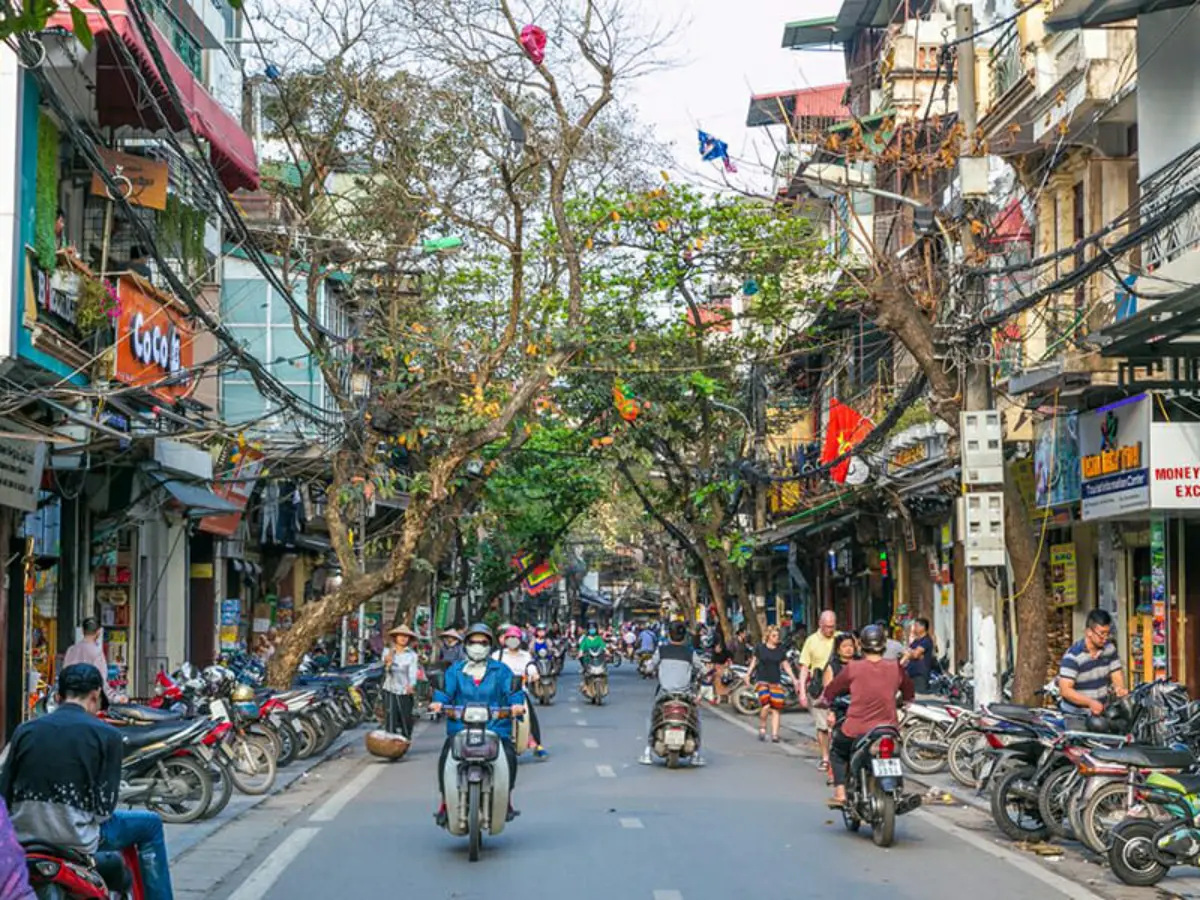
In the Old Quarter, the streets are named for the goods once sold there — a system that dates back to the 13th century. Hàng Gai (Silk Street) remains a destination for textiles and tailoring. Hàng Bạc (Silver Street) is still lined with jewelers and silversmiths. Hàng Mã (Paper Offerings Street) is a riot of color, selling paper votive objects for ancestor worship. Hàng Đường (Sugar Street) specializes in sweets; Hàng Lược (Comb Street) in hair accessories; Phố Thuốc Bắc (Northern Medicine Street) in traditional Chinese herbs. While modernization has blurred the boundaries, the names remain — and with them, the memory of a time when each street was a guild, and each guild defined the quarter.
Tube Houses: Architecture of Space
Long and Narrow, Deep and Courtyarded
The iconic architecture of the Old Quarter is the tube house (nhà ống) — a narrow, multi‑story building that maximizes limited street frontage. A typical tube house is only 3–4 meters wide but can stretch back 30 meters or more, with a series of internal courtyards that provide light and ventilation. The ground floor was traditionally a shop; the upper floors were living quarters and storage. Some of these houses have been preserved and are open to visitors, such as the Ancient House at 87 Mã Mây, which offers a glimpse of life in the quarter 150 years ago. The tube house is a response to the constraints of space — and a testament to the ingenuity of Hanoi’s merchants.
Pagan Temples & Communal Houses
Sanctuaries in the Labyrinth
Scattered throughout the Old Quarter are temples and communal houses that have served the neighborhood for centuries. Bạch Mã Temple (White Horse Temple), built in the 11th century, is one of Hanoi’s oldest; legend has it that a white horse guided the emperor to the site. Đình Cổ Vũ and Đình Kim Ngân are examples of the communal houses that served as centers for each street’s guild. These sites are often hidden behind unassuming façades, and finding them is part of the pleasure of exploring the quarter. They are active places of worship, and visitors are welcome to enter — quietly, respectfully — and witness the continuity of devotion in this commercial heart.
The Cuisine of the Quarter
Street Food Capital
The Old Quarter is Hanoi’s street food center. Phở 10 Lý Quốc Sư serves one of the city’s best bowls of beef noodle soup. Bún Chả Hàng Mành was made famous by Anthony Bourdain’s visit with President Obama, but the grilled pork and noodle dish has been a Hanoi staple for generations. Hàng Bè offers crispy bánh rán (fried glutinous rice balls) filled with mung bean or sweet potato. And Giang Café, hidden down a narrow alley on Nguyễn Hữu Huân, is the origin of cà phê trứng (egg coffee) — a decadent mix of egg yolk, sugar, and robusta coffee that has become a symbol of the city. The food here is not for tourists; it is for the people who live and work in the quarter — and that authenticity is its greatest appeal.
The Night Market & Weekend Transformation
When the Quarter Lights Up
On weekend evenings, the Old Quarter transforms. The Night Market opens on Friday, Saturday, and Sunday nights, stretching from Hàng Đào to Đồng Xuân Market. Stalls sell souvenirs, clothing, and street food; the crowds are thick, the energy infectious. But the real transformation is on foot — from Friday evening to Sunday evening, the streets of the central quarter are closed to traffic, and the area becomes a pedestrian zone. Children play in the streets, families promenade, and the sound of live music drifts from cafes. It is a rare chance to see the Old Quarter without the chaos of motorbikes — and a reminder that this is, above all, a neighborhood where people live.
Đồng Xuân Market: The Wholesale Heart
The Northern Anchor
At the northern edge of the Old Quarter, Đồng Xuân Market is the district’s wholesale hub. Built in 1889 by the French colonial administration, the market’s three‑story building houses hundreds of stalls selling textiles, household goods, and food. The market is at its busiest in the early morning, when vendors from across the city arrive to buy produce. The surrounding streets are filled with outdoor stalls selling everything from dried fruit to hardware. Đồng Xuân was badly damaged by fire in 1994 but has been restored, and it remains the commercial anchor of the quarter — a place where the old and new economies of Hanoi intersect.
Old Quarter Tour Packages
Walking Tour (Half‑Day): Explore the 36 streets, visit Bach Ma Temple and a traditional tube house, and sample street food.
Street Food Tour (Evening): Taste phở, bún chả, bánh rán, and egg coffee — with insights into Hanoi’s culinary culture.
Cyclo Tour: See the quarter from a traditional bicycle rickshaw, with the freedom to stop at markets and temples.
Private Guide: For those seeking a deeper understanding, a local guide can tailor the route to your interests — architecture, history, or food.
The Essence of the Old Quarter — The Old Quarter is not a place to be understood on a map; it is a place to be experienced on foot, with all the senses engaged. It is the smell of incense from a temple, the sound of a silversmith’s hammer, the taste of egg coffee on a cool afternoon. It is the chaos of the motorbikes and the calm of a hidden courtyard. It is a neighborhood that has been the commercial heart of Hanoi for a millennium, and that remains, despite all the changes, the soul of the city. To get lost here is to find Hanoi.
Frequently Asked Questions
A full day allows you to explore the main streets, visit a few temples, and sample the food. Two days allows for a deeper immersion — including a night market visit and a cyclo tour.
On foot. The quarter is compact and pedestrian‑friendly, especially on weekend evenings when the main streets close to traffic.
Phở (beef noodle soup), bún chả (grilled pork with noodles), bánh rán (fried rice balls), and cà phê trứng (egg coffee).
Light, breathable clothing and comfortable walking shoes. Modest dress for temple visits (shoulders and knees covered).
Yes. The quarter is busy and generally safe, but as with any crowded area, be mindful of your belongings.
Early morning (before 9 AM) is the quietest time. Weekday evenings are less crowded than weekends.