Côn Sơn – Kiếp Bạc: Where Heroes and Sages Rest Among the Pines
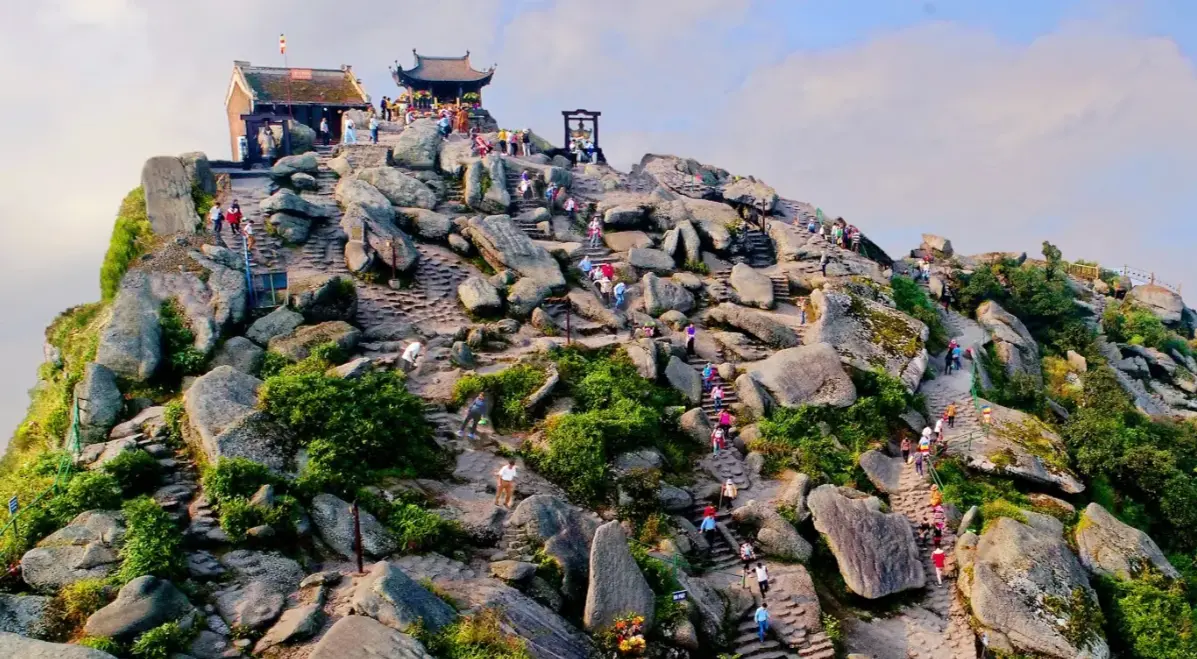
In the mist‑shrouded hills of Hải Dương, where six rivers converge and pine forests whisper secrets to the wind, lies a landscape that holds the soul of Vietnam. Here a Zen patriarch spent his final years composing verses of enlightenment, and a legendary general planned the naval victories that repelled the mightiest empire of the 13th century. This is Côn Sơn – Kiếp Bạc: a sacred terrain where Buddhism, Confucianism, and national heroism intertwine.
The complex rests in Chí Linh town, Hải Dương province, roughly seventy to eighty kilometers northeast of Hanoi’s fading bustle. It divides naturally into two zones separated by five kilometers of countryside: Côn Sơn Pagoda, the spiritual heart of Truc Lam Zen, and Kiếp Bạc Temple, the martial shrine to Vietnam’s most revered military commander. Recognized as a Special National Relic in 2012, in 2025 it joined the UNESCO World Cultural Heritage ensemble of Yên Tử – Vinh Nghiêm – Côn Sơn – Kiếp Bạc.
This guide is for the cultural pilgrim, the history enthusiast, and the wanderer who seeks landscapes where the spiritual and the heroic exist in perfect balance. Here you will not merely observe—you will walk where a poet‑king composed under pine boughs, and where a general studied maps by lamplight, dreaming of rivers set ablaze with Mongol steel.
Two Legends, One Sacred Terrain
Côn Sơn Pagoda: The Poet’s Sanctuary
Côn Sơn Pagoda—also called Thiên Tư Phúc Tự, meaning “Sanctuary Blessed by Heaven”—was first built in the 10th century, at the foot of Côn Sơn mountain. Its golden age arrived in the 14th century, when it became one of the three principal centers of the Truc Lam Zen sect, alongside Yên Tử and Quỳnh Lâm.
In 1329, the Venerable Monk Pháp Loan—the second patriarch of Truc Lam—undertook a major restoration of the pagoda. His successor, the Third Patriarch Huyền Quang (1254–1334), made Côn Sơn his lifelong home. A poet‑monk of extraordinary refinement, Huyền Quang expanded the pagoda, taught Buddhist scriptures, cast statues, and transformed Côn Sơn into a luminous center of Vietnamese Buddhism. He passed away on the 23rd day of the first lunar month in 1334—a date still commemorated today as the Côn Sơn Spring Festival.
Centuries later, another figure emerged from these pine forests: Nguyễn Trãi (1380–1442), the brilliant strategist and poet who helped Lê Lợi liberate Vietnam from Ming domination. A world cultural celebrity, Nguyễn Trãi retreated to Côn Sơn in his later years, composing some of Vietnamese literature’s most beloved verses while sitting on flat rocks beside the stream, contemplating national affairs. A temple dedicated to him was inaugurated in 2002 at the foot of Tô Sơn mountain, ensuring his spirit remains among the pines.
Kiếp Bạc Temple: The General’s Stronghold
Five kilometers from Côn Sơn lies Kiếp Bạc—a name combining two villages, Kiếp and Bạc, that once occupied this valley. The site is flanked on three sides by Rồng (Dragon) Mountain and looks out upon the confluence of six rivers: Cầu, Thương, Lục Nam, Dương, Kinh Thầy, and Thái Bình.
In the 13th century, as Mongol armies swept across Asia, the legendary General Trần Hưng Đạo (1228–1300) chose this hidden valley as his military headquarters. From this base he stockpiled rice, trained soldiers, and planned the resistance against three Yuan‑Mongol invasions. After his first battle against the Mongols in 1258, Trần Hưng Đạo established his command center at Vạn Kiếp—as the area was then known—and from here orchestrated the naval victories of 1285 and 1288, culminating in the decisive battle on the Bạch Đằng River.
Following his death on August 20, 1300 (the 20th day of the eighth lunar month), local villagers built a temple in his honor. Today he is venerated as Đức Thánh Trần—Saint Trần—and Kiếp Bạc is considered the most sacred site dedicated to him, the place where he lived his entire life and planned his greatest victories.
A Triptych of Great Souls
- Huyền Quang (1254–1334) – Third Patriarch of Truc Lam Zen. Lived and died at Côn Sơn; established it as a major Buddhist center.
- Trần Hưng Đạo (1228–1300) – Supreme Commander, Tran Dynasty. Established military headquarters at Kiếp Bạc; planned victories against Mongol invasions.
- Nguyễn Trãi (1380–1442) – Poet, Strategist, World Cultural Celebrity. Retired to Côn Sơn; composed poetry beside the stream.
Where Three Teachings Meet
Côn Sơn represents a rare convergence of Vietnam’s three great spiritual traditions: Buddhism, Confucianism, and Taoism. The pagoda preserves not only Truc Lam Zen texts but also steles bearing Confucian inscriptions and altars dedicated to the great teacher Chu Văn An. This synthesis reflects the Vietnamese spirit—pragmatic, inclusive, and deeply respectful of wisdom in all its forms.
In 2012, the Côn Sơn Spring Festival and Kiếp Bạc Autumn Festival were recognized as National Intangible Cultural Heritages. These festivals, still celebrated today, draw tens of thousands of pilgrims who come to honor Huyền Quang’s enlightenment and Trần Hưng Đạo’s heroism.
Simplicity on the Pilgrim’s Path
The countryside around Côn Sơn – Kiếp Bạc offers no elaborate feasts, but rather the honest flavors of northern Vietnam. Visitors will find bánh chưng (square sticky rice cakes) prepared during festival seasons, freshwater fish from the Luc Đầu River confluence, local greens foraged from the forested hillsides, and simple vegetarian dishes served at the pagoda to pilgrims. During the autumn festival, cooking competitions featuring bánh chưng are held, preserving culinary traditions that date back centuries.
A Landscape for the Senses
Côn Sơn – Kiếp Bạc offers not merely sights, but a landscape that engages every sense. Let the journey unfold slowly; there is no need to rush through eight centuries of accumulated grace.
Pine forests, curved rooflines, the nine‑story lotus tower, the half‑moon lake, and the confluence of six rivers.
Wind in the pines, the murmur of the stream, the deep resonance of the bronze bell, and festival drums on the river.
Incense of sandalwood and benzoin, wet earth after rain, and the sharp clarity of pine forests.
Cool stone steles from the 14th century, worn steps of the mountain path, and the smooth surface of Nguyễn Trãi’s stone table.
Practical Guide
When to Come
| Spring (Jan–Mar) | Cool, misty. Spiritual atmosphere. Côn Sơn Spring Festival: 16th–23rd day of 1st lunar month. |
|---|---|
| Autumn (Sep–Oct) | Cool, clear. Festive. Kiếp Bạc Autumn Festival: 15th–20th day of 8th lunar month. |
| Summer / Winter | Summer: lush but hot (early mornings best). Winter: quiet and peaceful. |
Getting There
From Hanoi (70–80 km, 1.5–2 hours): By car/taxi via National Highway 5 toward Hải Dương, then follow signs to Chí Linh town (approx. 1,000,000–1,500,000 VND). By bus: buses from Giáp Bát or Mỹ Đình to Hải Dương city (~80,000 VND), then local bus/taxi to Côn Sơn (about 30 km). Many tour operators offer day trips.
Before You Go
Opening hours: Daily 7:00–17:00. Admission: Free (donations welcomed). What to carry: Clothing that covers shoulders/knees, comfortable walking shoes, water bottle, insect repellent, cash for donations/meals, a small notebook for inspiration.
Walking the Sacred Terrain
Côn Sơn Pagoda: Start at the three‑entrance gate with the half‑moon lake. Visit the bell tower, the central sanctuary (housing a three‑meter Buddha and statues of Truc Lam patriarchs), and the Nine‑Story Lotus Tower (reconstructed in 2014). Behind the pagoda, find the Thanh Hư stele (1369, National Treasure). The Pearl Well (Giếng Ngọc) lies at the foot of Kỳ Lân mountain. For those with stamina, 600 stone steps ascend to Bạch Vân (White Cloud) hermitage and the “fairy chessboard” rocks. The Nguyễn Trãi Temple, built in 2002, sits beside Côn Sơn stream with its legendary stone table.
Kiếp Bạc Temple: Enter through the arcade gate; see the Jade Well (Ngọc Tỉnh) which has never run dry. The temple comprises three sanctuaries: central for Trần Hưng Đạo (bronze statue), left for General Phạm Ngũ Lão, right for his wife and daughters. The current structure dates from the 19th century, with stone floor from Emperor Khải Định’s era.
Beyond the Sacred Gates
Nearby: Yên Tử (60 km, original Truc Lam center with cable car), Vinh Nghiêm Pagoda (40 km, birthplace of Truc Lam Zen, UNESCO woodblocks).
Accommodation: Luxury hotels in Hải Dương city (30 km); mid‑range Côn Sơn Guesthouse or Công Đoàn Côn Sơn Hotel; budget options in Sao Do town (5 km).
Dining: Simple eateries near Côn Sơn and Kiếp Bạc serve pho, cơm bình dân, freshwater fish from the Luc Đầu River. During festivals, food stalls offer bánh chưng and traditional fare.
7:00 depart Hanoi → 8:30 Côn Sơn (gate, main sanctuary, lotus tower, steles) → 11:00 optional ascent or stream → 12:30 lunch → 14:00 Kiếp Bạc (arcade gate, sanctuaries, Jade Well) → 16:30 return.
Day 1: Côn Sơn, Bạch Vân at sunset, overnight in Côn Sơn Guesthouse. Day 2: Nguyễn Trãi Temple, Kiếp Bạc, return Hanoi evening.
Myth‑Busting & Don’t Miss
• The Thanh Hư stele (behind the pagoda, easy to overlook)
• The fairy chessboard at Bạch Vân summit
• The Jade Well at Kiếp Bạc
• Nguyễn Trãi’s stone table by the stream
• The ascent to Bạch Vân (save for a return visit)
• Extended museum exhibits unless deeply interested
Myth: “Côn Sơn and Kiếp Bạc can be seen in two hours.” Fact: The complex spans five kilometers with multiple zones; a thorough visit requires at least four to five hours. Many visitors spend a full day at Côn Sơn alone, especially if climbing the mountain.
A Final Reflection
Côn Sơn – Kiếp Bạc is not a single site but a dialogue across centuries. In the same valley, a Zen patriarch sought enlightenment in silence, and a military genius planned the defense of a nation. A poet who helped win independence retired here to compose verses by a stream, and his words still echo in the schoolbooks of Vietnamese children.
This is the genius of Vietnamese culture: the spiritual and the martial, the contemplative and the heroic, coexist not in contradiction but in complement. Huyền Quang’s pagoda and Trần Hưng Đạo’s temple are five kilometers apart, but they speak the same language—a language of devotion to something greater than the self.
In July 2025, this landscape joined the UNESCO World Heritage family alongside Yên Tử and Vinh Nghiêm—a recognition that the Truc Lam Zen tradition, born from a king’s renunciation and nurtured through centuries of resilience, deserves a place among humanity’s shared treasures.
“Côn Sơn has streams and mountains clear and deep.
I hear the pines and am at peace within.”
— Nguyễn Trãi (translation)
What will you discover among the pines?
Bình an — Peace be with your journey.