Cái Răng Floating Market: Dawn on the Hậu River
The Market That Never Sleeps
Dawn Commerce on the Hậu River
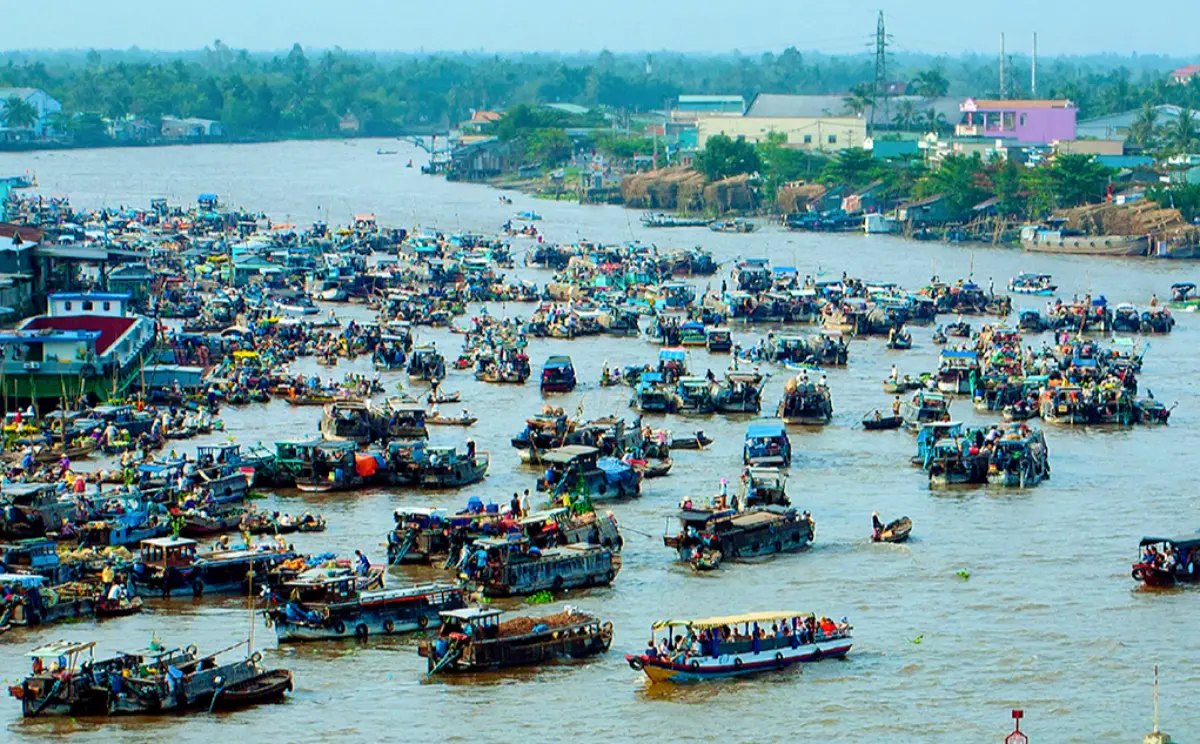
Cái Răng is not a tourist re‑creation; it is a working market that has served the Mekong Delta for generations. Located on the Hậu River, a tributary of the Mekong, the market draws boats from across the region. Wholesalers anchor in the main channel; smaller boats navigate between them, buying and selling in quantities that range from a single pineapple to a boatload of durian. The market is at its peak between 5:00 and 8:00 AM, when the sun is low and the water is calm. By mid‑morning, the boats begin to disperse, returning to their home ports or to the smaller canals that feed the market. A visit here is an immersion in the delta’s economy — and a glimpse of a way of life that has changed little in a century.
The Language of the Bẹo
Silent Advertising on the Water
One of the most distinctive features of Cái Răng is the bẹo — a long bamboo pole attached to each boat, from which vendors hang samples of their goods. A pole bearing a bundle of mangoes signals that the boat sells mangoes; a string of longans, longan; a bunch of bananas, bananas. The system is efficient, silent, and has been used for generations. As you drift through the market, you’ll see these poles against the sky, a forest of commerce that tells you at a glance what each boat has to offer. The bẹo is a visual language, understood by buyers and sellers alike — a tradition that has survived modernization and continues to define the market’s character.
Breakfast on the Water
A Bowl of Hủ Tiếu, Served from a Boat
Among the fruit and vegetable boats, you’ll find the breakfast vendors — small boats with steaming pots of hủ tiếu (noodle soup), bánh mì, and cà phê. These floating kitchens are an essential part of the market experience. A breakfast boat will pull alongside your tour boat, and you’ll be served a bowl of noodles or a cup of coffee while floating on the river. The broth is rich, the noodles fresh, the coffee strong — and the setting is unforgettable. It is a meal that connects you directly to the traditions of the delta: eating on the water, moving with the current, the market swirling around you.
Beyond the Market: Noodle Factories & Orchards
The Sources of the Market
A visit to Cái Răng is often combined with a stop at a noodle factory — one of the small, family‑run operations that produce the fresh rice noodles used in hủ tiếu. Watching the process — the steaming, the cutting, the drying — gives context to the meal you’ve just had on the water. Further along the canals, you’ll find fruit orchards where the produce of the market is grown. A walk through an orchard — mango, rambutan, durian — offers a chance to taste the fruit at its source and to understand the agricultural wealth that sustains the delta.
The People of the Market
Generations on the Water
Many of the families who work at Cái Răng have been on the water for generations. Children grow up on the boats, learning to navigate the currents before they learn to read. The women who row the small boats that bring tourists through the market are often the matriarchs of their families, their faces weathered by sun and wind, their hands calloused from years of rowing. Engaging with them — even with limited language — is a reminder that the market is not a performance but a livelihood. They are happy to share their stories, to explain the fruit they’re selling, to teach you the names of the different varieties. It is this human connection that makes Cái Răng more than a tourist attraction.
The Season of Fruits
When the Delta is Most Abundant
While Cái Răng operates year‑round, the market is at its most spectacular during the fruit harvest season (May–August). During these months, the boats are piled high with mangoes, rambutan, mangosteen, durian, and longan — the full bounty of the delta. The colors are vivid, the prices low, and the energy of the market is heightened. If you can time your visit to coincide with the harvest, you’ll see Cái Răng at its most abundant — a celebration of the Mekong’s agricultural wealth.
Cai Rang Floating Market Tours
Dawn Market Tour: A 5:00 AM departure from Cần Thơ, with a 2‑hour boat tour of the market, breakfast on a floating kitchen, and a visit to a noodle factory.
Combined Experience: Pair the floating market with a visit to a fruit orchard, a boat ride through the narrow canals, and a stop at a local rice paper workshop.
Private Boat Tour: For a more intimate experience, a private boat allows you to set your own pace, linger at the boats that interest you, and spend as long as you like at the market.
Multi‑Day Mekong Journey: Combine Cái Răng with Cần Thơ, Cái Bè, and the Tràm Chim National Park for a comprehensive delta itinerary.
The Essence of Cái Răng — Cái Răng is a place that demands an early start. The alarm will ring before 4:00 AM, the boat will be waiting in the dark, and as you drift toward the market, the sky will begin to lighten. And then you will see them — the boats, hundreds of them, their bamboo poles silhouetted against the dawn. The sound of the engines, the calls of the vendors, the smell of hủ tiểu broth — these are the sensations that will stay with you. Cái Răng is not a market you observe; it is a market you enter. For those who make the journey, it is the Mekong Delta in its most essential form: commerce, community, and the enduring connection between the people of the delta and the water that sustains them.
Frequently Asked Questions
The market is busiest between 5:00 and 8:00 AM. Tours typically depart from Cần Thơ around 5:00 AM to arrive as the market is waking up.
The market is about 6 km from Cần Thơ city center. Most visitors take a boat tour from Ninh Kiều Pier. Organized tours are widely available.
A typical tour lasts 2–3 hours, including time at the market, a breakfast stop, and a visit to a noodle factory or orchard.
A camera, a hat, sunscreen, and cash for purchasing fruit or breakfast. A light jacket may be useful for the early morning boat ride.
Hủ tiếu (noodle soup) from a breakfast boat is essential. Fresh tropical fruit — mango, mangosteen, rambutan — is also a must.
Yes. Children enjoy the boat ride and the spectacle of the market. The pace is gentle, and the breakfast boats are a highlight for all ages.