Vat Phou: The Sacred Mountain Sanctuary
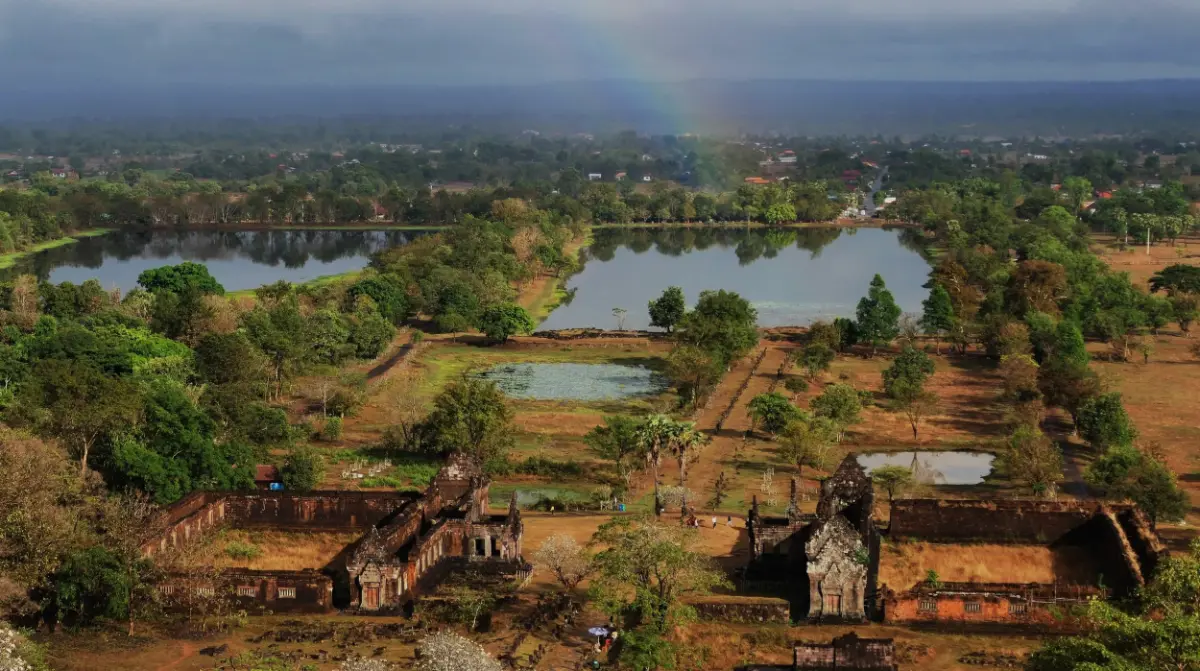
The Sacred Mountain: Phu Khao
A Natural Linga
The mountain that rises behind Vat Phou is known as Phu Khao. Its peak is unmistakably shaped like a linga — the phallic symbol of Shiva — and it is this natural formation that made the site sacred long before any temple was built. In Hindu cosmology, the linga represents the creative force of the universe, and the mountain itself was considered the supreme linga. The temple complex was built to honor this natural phenomenon, and the main sanctuary is aligned so that the rising sun illuminates the interior during important festivals. The mountain’s presence is felt throughout the site; it is the spiritual anchor, the reason the Khmer kings chose this place for their sanctuary.
The Main Sanctuary
A Shrine of Sandstone
The main sanctuary stands at the highest point of the complex, built against the mountain face. Its sandstone walls are weathered and moss‑covered, their carvings softened by centuries of rain. Inside, a sacred spring emerges from the rock, its water considered holy. The sanctuary was originally dedicated to Shiva, and a stone linga would have been the focus of worship. Later, the site was converted to Buddhism, and today a statue of the Buddha sits within the chamber. The sanctuary is reached by a steep staircase, and the view from its entrance looks out over the entire complex — the palaces, the barays, and the Mekong River beyond.
The Two Palaces
Guardians of the Processional Way
Flanking the processional walkway that leads to the sanctuary are the ruins of two palaces — the North Palace and the South Palace. These structures were not royal residences but rather pilgrimage halls, where travelers would rest and prepare for the ascent to the temple. The South Palace is the better preserved, with sandstone walls, carved lintels, and a central courtyard. The North Palace, now partially restored, offers a quieter, more atmospheric experience. Together, they frame the approach to the sanctuary, their presence a reminder that the journey to the sacred mountain was as important as the destination.
The Sacred Spring & Crocodile Stone
A Spring of Blessings
At the base of the staircase leading to the sanctuary, a sacred spring emerges from the mountain. The water has been considered holy for over a thousand years, and pilgrims still come to collect it for blessings. Beside the spring lies the crocodile stone carving — a large sandstone relief of a crocodile, believed to have been used in rituals. The crocodile is associated with water and fertility, and the carving is one of the most enigmatic features of the site. Together, the spring and the crocodile represent the life‑giving power of water, a theme that runs through the entire complex.
The Barays: Reservoirs of Purification
Water as Purification
Two large barays (reservoirs) flank the processional walkway. The northern baray, now dry, was once a vast body of water; the southern baray still holds water during the rainy season. In Khmer cosmology, water was essential for purification, and the barays served as ritual bathing pools for pilgrims. The reservoirs also played a practical role, storing water for the dry season. The southern baray, with its lotus flowers and reflections of the mountain, is a particularly beautiful spot at sunrise.
The Processional Walkway
A Journey from Earth to Heaven
The layout of Vat Phou is a representation of the Hindu concept of a journey from the earthly realm to the divine. The processional walkway begins at the Mekong River, symbolizing the material world, and leads past the two palaces (representing human society), the barays (purification), and up the staircase to the sanctuary (the realm of the gods). Walking this path is a meditation, a physical enactment of the spiritual journey. The walkway is lined with frangipani trees, and at certain points, the alignment with the mountain peak is precise. The walk takes about 30 minutes at a leisurely pace, and the sense of arrival at the sanctuary is profound.
Vat Phou Tour Packages
Complete Archaeological Tour (Half Day): Explore the entire site with a guide, including the palaces, barays, spring, crocodile stone, and main sanctuary.
Sunrise Pilgrimage: Arrive at dawn to witness the sun rising over the mountain and the sanctuary illuminated.
Combined Itinerary: Pair Vat Phou with Champasak Town, the Bolaven Plateau, or Si Phan Don for a comprehensive southern Laos journey.
Private Guide: For those seeking a deeper understanding of the site’s history, cosmology, and symbolism, a private guide is essential.
The Essence of Vat Phou — Vat Phou is a place that has been sacred for more than a thousand years. Its stones have been worn smooth by pilgrims’ feet, its carvings softened by rain, its rituals adapted from Hindu to Buddhist. But the mountain remains, its linga shape a constant presence, its spring still flowing. To walk the processional way, to stand in the sanctuary, to touch the water that has been considered holy for centuries — these are acts that connect you to the deep currents of belief that have shaped this landscape. Vat Phou is not a ruin; it is a living sanctuary, and its spiritual energy is palpable.
Frequently Asked Questions
Vat Phou refers to the complete archaeological site, including the main sanctuary, palaces, barays, spring, and crocodile stone. Wat Phu is often used interchangeably to refer to the temple complex. Both terms refer to the same UNESCO World Heritage Site.
Allow 2–3 hours to explore the full complex at a leisurely pace, including the walk from the entrance to the sanctuary and time to explore the palaces and barays.
The mountain (Phu Khao) is naturally shaped like a linga, the symbol of the Hindu god Shiva. This natural formation made the site sacred before any temple was built, and it is the spiritual anchor of the entire complex.
Modest dress is required — shoulders and knees covered. Comfortable shoes for walking on uneven stone paths. A hat and sunscreen are recommended, as much of the site is exposed.
Early morning (sunrise) offers the best light and cooler temperatures. The site is also beautiful in the late afternoon, when the light warms the sandstone.
Yes. Guides can be hired at the entrance. A guide is highly recommended to understand the site’s history, cosmology, and symbolism.