“UNCLE HO’S SANDALS” – A Legacy Forged from Simplicity
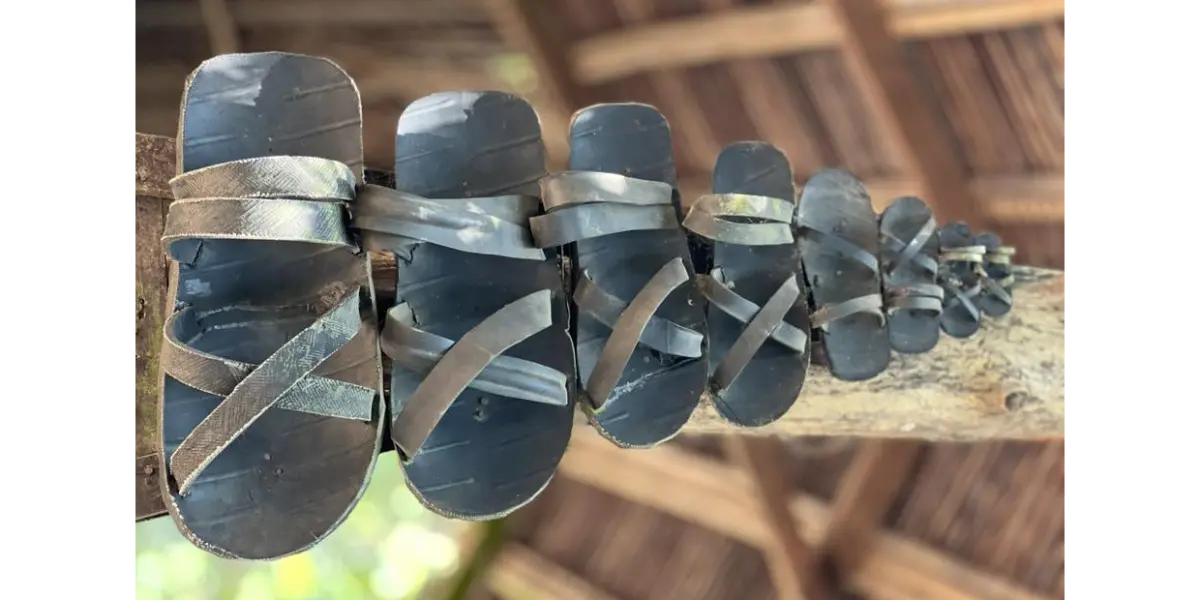
Dear travellers, as you walk through the bustling streets of Hanoi or explore the hidden tunnels of Cu Chi, you may notice a humble item that carries the weight of a nation’s story: the rubber sandal, affectionately known in Vietnamese as dép cao su, dép lốp (tire sandal), or simply dép Cụ Hồ – Uncle Ho’s Sandals. This unassuming footwear accompanied President Ho Chi Minh for over two decades and became a powerful symbol of resilience, ingenuity, and the Vietnamese spirit.
1. Origins – From War Trophy to Revolutionary Footwear
The story begins in 1947, deep in the northern war zone of Viet Bac. After a successful ambush against French colonial forces, Vietnamese soldiers captured a French military truck. Among the spoils was a sturdy rubber tyre – an object that would soon be transformed into something far more meaningful. Colonel Hà Văn Lâu, commander of the Bình-Trị-Thiên Front, noticed how local drivers fashioned makeshift footwear from old tyre casings. The result was a simple, durable sandal that could withstand rugged terrain and long guerrilla marches. That very first tyre was sent to President Hồ Chí Minh as a gift – a symbol of the soldiers’ creativity. From that moment, a pair of those sandals became inseparable from Uncle Ho, accompanying him for more than twenty years: from jungle war zones to the Presidential Palace, from diplomatic visits abroad to daily walks among villagers.
2. Construction and Craftsmanship – A Wonder from Vietnamese Hands
At first glance, Uncle Ho’s sandals look like a simple flip-flop. But every pair was handcrafted from recycled materials: the sole cut from the central flat portion of a discarded car tyre, the straps sliced from an old inner tube. Eight holes were punched along the edges, and using a thin metal strip (rút dép), the artisan would weave the strap into a sturdy, comfortable sandal. The underside was incised with diamond-shaped grooves for grip. The true wonder? No glue, no stitching – the straps and sole held together purely by the elasticity of rubber. A brilliant, nearly indestructible design.
3. The Ten‑Thousand‑Li Sandals – Stories of Uncle Ho
These sandals were more than footwear; they carried the spirit of a leader. During a work trip, Uncle Ho smiled and told his companions: “These are the ‘ten-thousand-li sandals’ from ancient fairy tales – the divine earth sandals. Wherever you go, you are welcome.” He saw in his simple sandals a magical quality, turning hardship into an adventure. In 1960, while visiting a naval unit, officers noticed his worn sandals and urged him to accept a new pair. Uncle Ho gently replied: “My sandals are old, but only the strap came loose. You fixed it firmly, so they will last a long time! We must practise thrift because our country is still poor…” Perhaps the most famous story took place during his official visit to India in 1958. Security officers secretly hid his worn sandals, intending to replace them with new shoes. Uncle Ho noticed immediately and calmly said: “Our country is not yet fully independent, our people still face difficulties. I wear rubber sandals, but inside I have new socks – that is more than enough, and still proper.” When he later entered the Taj Mahal, he left his sandals outside. Dozens of international journalists and photographers swarmed around the humble sandals, photographing, touching, examining every detail – a simple pair of rubber sandals had become a global sensation.
“Simple sandals, Uncle Ho’s sandals / Uncle walked from the war zone and back / Streets, battlefields, factories, villages / All bear the imprint of Uncle’s sandals, oh Uncle…” — poem by Tạ Hữu Yên, set to music by Văn An
4. Tire Sandals and Military Art – The “Backward Track” at Củ Chi Tunnels
Beyond their association with Uncle Ho, tyre sandals became a strategic tool in Vietnam’s guerrilla warfare. Because of the unique diamond‑pattern sole, the footprints they left pointed in the opposite direction of the wearer’s movement. When a soldier advanced forward, the imprint appeared to face backward. To an enemy tracker, it looked like a retreat. In reality, the troops were closing in. This was not merely a camouflage trick; it was a living example of how Vietnamese fighters transformed everyday objects into weapons of the mind – turning simplicity into a strategic advantage. Today, visitors to the Củ Chi Tunnels can witness live demonstrations of how soldiers made and used these sandals.
5. From War to the World – Tire Sandals Today
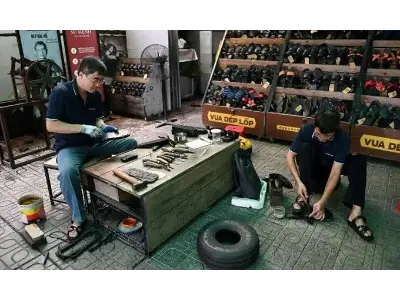
After the war, the tyre sandal evolved yet remained deeply cherished as cultural heritage. Different generations emerged: Uncle Ho Sandals 1947 (original French military tyres), Soldier Sandals 1954, Khe Sanh Sandals 1968, and Liberation Army Sandals 1975 with five straps. Artisan Phạm Quang Xuân, known as the “King of Vietnamese Tyre Sandals”, was entrusted by the Hồ Chí Minh Museum to create sandals for permanent exhibition. His son‑in‑law Nguyễn Tiến Cường left a software career to revive the craft, and today he has brought Vietnamese tyre sandals to more than sixty countries around the world. UNESCO is now considering these sandals as a candidate for Intangible Cultural Heritage status.
6. A Symbol of Simplicity and the Vietnamese Spirit
Uncle Ho’s sandals have long since entered poetry, music, and art. For Vietnamese people, the sandals embody the values that guided the nation through its most difficult times: simplicity, thrift, resilience, and wisdom. For international visitors, they offer a tangible connection to the life of Hồ Chí Minh – a leader who dressed not in silk, but in a simple khaki suit, and who walked through history in rubber sandals. A pair of Uncle Ho’s original sandals is preserved at the Hồ Chí Minh Museum in Hanoi, where you can see them up close. When you visit the Củ Chi Tunnels, you may even have the chance to try walking in a pair yourself – feeling the quiet strength of those who once trod the same path.
Conclusion: A Legacy That Walks With Us
From a captured military tyre to a global cultural icon, Uncle Ho’s sandals tell a story far greater than their modest appearance suggests. They remind us that greatness often springs from simplicity, and that the most profound legacies are forged not in palaces, but in the everyday objects we choose to carry with us. As you travel through Vietnam, let these sandals be a quiet companion – a reminder of a leader who walked with his people, and of a nation that continues to walk proudly into the future.
Frequently Asked Questions
About Uncle Ho’s Sandals & Cultural Heritage
The sandals were crafted entirely from recycled rubber: the sole was cut from the central flat portion of discarded car tyres, and the straps were sliced from old inner tubes. No glue or stitching was used—the elasticity of the rubber held the structure together, making them durable, waterproof, and ideal for guerrilla warfare.
Soldiers used a thin metal strip called a rút dép folded in half. After punching eight holes along the edge of the tyre sole, they would thread the rubber strap through each hole using the rút dép as a needle. The strap was woven in a pattern that created a secure, adjustable fit without any glue or stitching—pure tension and friction kept the sandal intact. This ingenious method allowed for quick field repairs using only scrap materials.
One of the original pairs worn by President Hồ Chí Minh is preserved and displayed at the Hồ Chí Minh Museum in Hanoi. Additionally, the Hồ Chí Minh Memorial Complex and the War Remnants Museum occasionally feature exhibits on his personal belongings.
Yes! At the Củ Chi Tunnels, visitors can often try on replica tyre sandals and witness demonstrations of their fabrication. Authentic handcrafted dép lốp are also available through artisan workshops like the family of Phạm Quang Xuân (the “King of Tyre Sandals”) in Hanoi, and online, bringing Vietnamese heritage to over 60 countries worldwide.
Beyond durability, the sandals played a clever tactical role: due to the diamond-cut sole pattern, the footprints left behind pointed in the opposite direction of movement. Enemy trackers were deceived into thinking soldiers were retreating when they were actually advancing – a brilliant psychological and camouflage tactic used notably at Củ Chi.
They symbolize the core Vietnamese virtues: simplicity, resilience, thrift, and patriotic ingenuity. Worn by Uncle Ho for more than two decades, they represent the closeness of the leader to the people and the resourceful spirit that guided the nation through hardship. Today they are icons of national pride and a candidate for UNESCO Intangible Cultural Heritage.
Yes! Vietnam has submitted the traditional craft of making tyre sandals (dép lốp) for consideration as UNESCO Intangible Cultural Heritage. The craft is recognized for its historical importance, sustainable reuse of materials, and deep connection to the nation’s revolutionary history and contemporary cultural identity.
“Have you ever tried on a pair of Uncle Ho’s sandals? Share your experience with us, or let us guide you through Vietnam’s most authentic heritage journeys.”