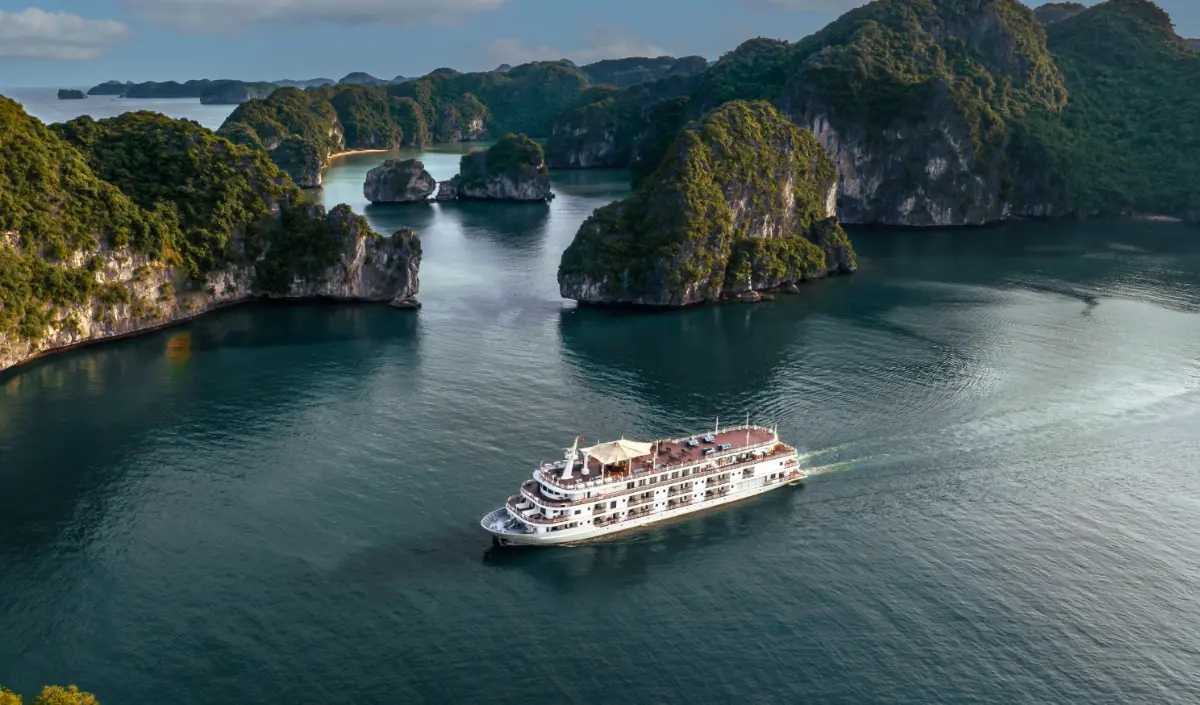
That era is ending. And in its place, something altogether more sophisticated is emerging.
A Necessary Evolution
The year 2026 marks a definitive turning point for Halong Bay’s cruising industry. Authorities and investors are aggressively phasing out aging wooden vessels, replacing them with modern steel-hulled ships equipped with advanced maritime safety systems. The romantic junk aesthetic, it turns out, came with hidden costs that discerning travellers are no longer willing to accept.
The shift follows comprehensive regulatory changes, including Vietnam’s Maritime Safety Reform Act implemented in late 2024, which mandated substantial upgrades to vessel design, crew training protocols, and emergency response systems. The results speak for themselves: Halong Bay has achieved a 98.3% safety compliance rating across all operating vessels—a remarkable improvement from 89% in 2023.
What Steel Offers That Wood Cannot
Understanding the transformation requires appreciating what modern construction delivers. According to maritime engineering data, steel hulls offer superior structural integrity, with double-hull designs incorporating watertight compartments that prevent sinking even if one section is compromised. Fire-resistant composite materials throughout cabin interiors have reduced fire spread potential by 67%.
The numbers tell a compelling story. By 2025–2026, 78% of overnight vessels feature modern steel-aluminium hybrid hulls offering superior stability and resistance to adverse weather conditions. The Explora By Grand Pioneers Cruises, launched in early 2026 with an investment exceeding 60 billion VND, boasts a safety coefficient (K) of 4—four times higher than maritime standards and the highest safety rating on Halong Bay.
The Ambassador Difference
Consider Ambassador Cruise, the largest overnight vessel in Halong Bay at 96 metres in length. Built with a steel hull, it accommodates 120 guests with a remarkable 1:1.8 crew-to-guest ratio—service levels that traditional wooden junks simply cannot match. Its 600-square-metre sundeck, dual passenger elevators, and 100% balcony cabins represent a standard of comfort that wooden construction precludes.
The vessel’s 30-to-90-square-metre cabins offer private balconies, marble bathrooms, and smart climate control—amenities that were once the exclusive domain of land-based luxury hotels. For the sophisticated traveller, this is not merely about indulgence; it is about reclaiming the journey as an experience of genuine comfort rather than picturesque endurance.
Safety Beyond Aesthetics
The shift to steel is fundamentally about safety. Following a recent cruise ship fire, the Quang Ninh Department of Construction ordered comprehensive inspections of all tourist boats, with particular attention to electrical systems, engine rooms, and kitchen areas. Wooden-hulled vessels require additional inspection of concealed electrical wiring to prevent short circuits and fire risks—vulnerabilities that modern steel construction largely eliminates.
Today’s vessels employ satellite-based weather prediction systems with 93% accuracy, multi-frequency radar detecting obstacles up to 12 nautical miles away, and automatic identification systems that communicate vessel positions to a centralised tracking centre every 30 seconds. Redundant satellite communication systems ensure contact even during extreme weather.
These are not incremental improvements. They represent a fundamental reimagining of what a cruise experience can be when safety is elevated to its rightful priority.
What Travellers Are Seeking
The shift in traveller behaviour is unmistakable. Search queries are migrating from “traditional junk” to “modern steel cruise” and “5-star safety ship”. Travellers are prioritising advanced safety systems and stability over purely aesthetic traditional designs, recognising that genuine luxury encompasses security, comfort, and peace of mind.
The new generation of vessels offers larger en-suite cabins, superior soundproofing, and stabilisation systems that reduce wave impact by up to 40%—minimising motion sickness and maximising restful nights on the water. For the traveller who values sleep quality as much as sunrise views, these are decisive advantages.
Heritage Reimagined
This is not to suggest that Halong Bay has abandoned its cultural soul. Modern vessels incorporate Vietnamese craftsmanship alongside European design standards, creating a distinctive “heritage meets modernity” aesthetic. The restoration of Cua Van Floating Cultural Centre and Vung Vieng fishing village, alongside the resumption of love duet singing performances, ensures that cultural authenticity remains central to the experience.
The difference is that today’s traveller can explore this heritage from a vessel that offers genuine luxury rather than romanticised discomfort. The wooden junk aesthetic, for all its photographic appeal, belonged to an era when travellers expected to compromise. In 2026, compromise is no longer required.
An Invitation to Experience
For those who understand that true luxury lies in the seamless integration of beauty, comfort, and safety, Halong Bay’s modern fleet offers something unprecedented: the opportunity to explore one of the world’s most spectacular natural wonders without sacrificing the standards that define sophisticated travel.
The limestone karsts remain unchanged. The emerald waters are as mesmerising as ever. But the vessels that carry you through them have been transformed—into floating sanctuaries of steel and glass, where advanced engineering serves the singular purpose of allowing you to experience the bay’s magic in complete serenity.
The junk boat era is ending. What rises in its place is something far more worthy of your journey.