Pak Ou Caves: The Sanctuary of a Thousand Buddhas
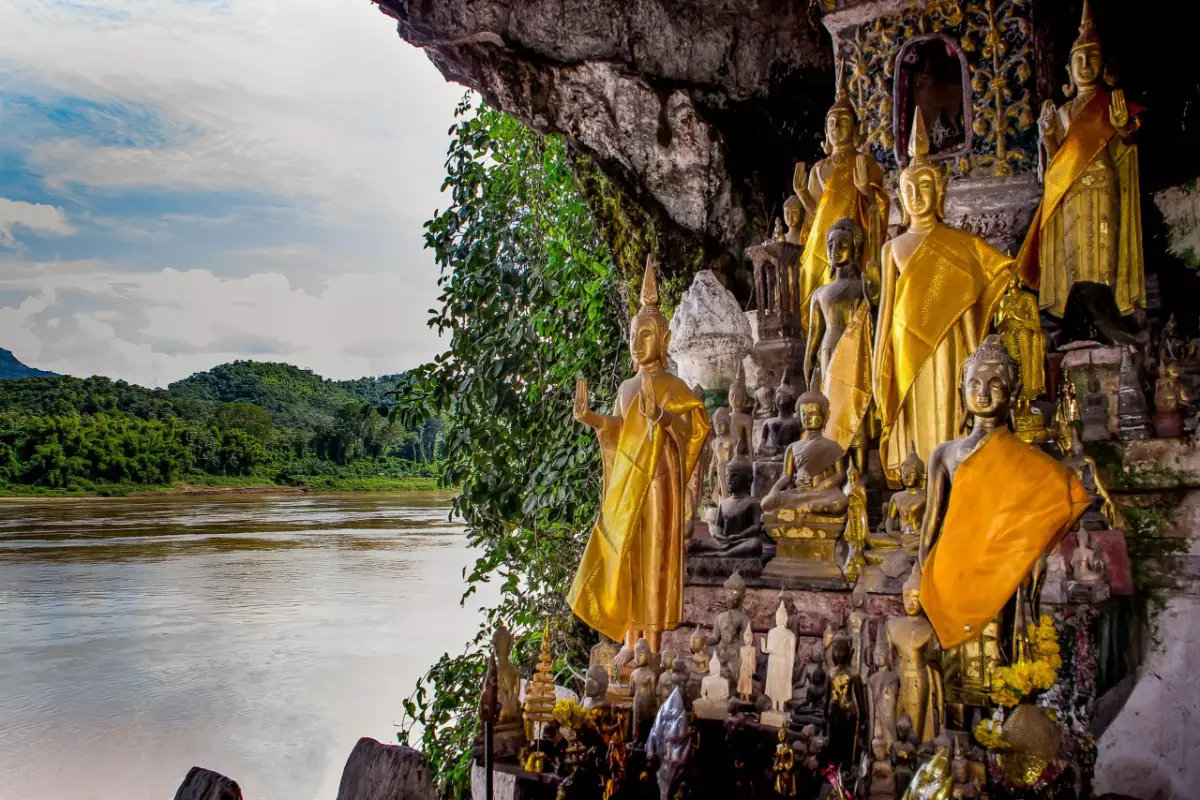
The Caves of a Thousand Buddhas
Two Caves, One Pilgrimage
The Pak Ou Caves consist of two main chambers. Tham Ting (Lower Cave) is the larger and more accessible, its entrance facing the river. Inside, hundreds of Buddha images of all sizes are arranged on ledges and in niches carved by the water. Tham Theung (Upper Cave) is reached by a steep staircase, and its interior is dimly lit, with a more intimate atmosphere. The caves are known collectively as the “Caves of a Thousand Buddhas,” though the number of images is far greater — some estimates place the count at over 4,000. The Buddhas range from ancient bronze statues to modern plaster figures, and they represent a tradition of devotion that spans centuries.
The Journey by Boat
The Approach
The approach to Pak Ou is as memorable as the caves themselves. From Luang Prabang, a traditional longtail boat takes you up the Mekong River, passing through a landscape of limestone cliffs, riverside villages, and forest. The journey takes about two hours, and the river is at its most beautiful in the early morning, when the mist rises from the water. On the way, you may see fishermen casting their nets, water buffalo bathing on the banks, and the occasional temple perched on a hill. The boat ride is a meditation, and the caves appear at the confluence, a natural sanctuary at the meeting of two rivers.
A Tradition of Devotion
Generations of Faith
The Pak Ou Caves have been a place of pilgrimage for at least 400 years. Lao kings and their courts came here to pay homage, and ordinary people have left offerings of Buddha images for generations. The tradition continues today: visitors can purchase a small Buddha to leave in the caves, or offer flowers and incense. The caves are especially busy during the Lao New Year (Pi Mai) in April, when pilgrims come to pray for good fortune in the coming year. The presence of so many images, accumulated over centuries, creates an atmosphere of accumulated devotion — a sense that you are standing in a place that has been held sacred for a very long time.
Tham Ting: The Lower Cave
A Cathedral of Stone and Gold
The lower cave is a natural limestone chamber, its ceiling high and its walls worn smooth by water. The Buddhas are everywhere: on ledges, in alcoves, stacked in corners. Some are large, sitting in meditation; others are small, worn smooth by time. The light enters from the river, illuminating the dust motes that hang in the air. A wooden platform allows visitors to walk through the cave, and the caretakers are often present to offer blessings. The atmosphere is one of quiet reverence, and the sound of water dripping from the ceiling is the only accompaniment.
Tham Theung: The Upper Cave
A Hidden Sanctuary
The upper cave is reached by a staircase that climbs the cliff face. The path is steep, but the effort is rewarded by a smaller, more intimate chamber. The Buddhas here are older, their features softened by time, and the darkness of the cave makes the incense smoke more visible. The upper cave is also the site of a royal altar, where Lao kings once made offerings. The view from the entrance looks out over the confluence of the rivers — a moment of peace after the climb.
The Villages & Whiskey Making
A Taste of the Mekong
Near the caves, the village of Ban Pak Ou is known for its traditional lao lao — rice whiskey. A visit often includes a stop at a distillery, where you can see the process of fermentation and distillation, and taste the local product. The whiskey is strong, and often flavored with local herbs or fruit. It is a lively addition to the pilgrimage, and a chance to interact with the people who live along the river.
Pak Ou Caves Tour Packages
Half‑Day Boat Tour: A morning or afternoon trip from Luang Prabang, with time in the caves and a stop at the whiskey village.
Full Day Mekong Journey: Combine Pak Ou with a visit to the Kuang Si Falls or a longer cruise on the Mekong.
Sunset Cruise: A late afternoon boat trip to the caves, returning as the sun sets over the Mekong.
Private Guide: For those seeking a deeper understanding of the caves’ spiritual significance, a private guide is recommended.
The Essence of Pak Ou — Pak Ou is a place of accumulated devotion. The thousands of Buddha images, gathered over centuries, are a testament to the faith of generations. The journey by boat, the climb to the upper cave, the quiet of the sanctuary — these are experiences that connect you to the spiritual heart of Laos. For travelers seeking not just a sight but an encounter with tradition, Pak Ou offers a journey into a living practice of faith.
Frequently Asked Questions
A half‑day tour from Luang Prabang typically takes 3–4 hours, including the boat ride and time in the caves.
Early morning (before 9 AM) offers the calmest river conditions and the best light. The caves are busiest in the late morning.
By boat from Luang Prabang (2 hours each way). Tours can be arranged through hotels or at the riverfront.
Modest dress is required — shoulders and knees covered. Comfortable shoes for the climb to the upper cave.
Yes. Small Buddha images can be purchased at the entrance, and visitors are welcome to leave them as offerings.
The climb involves about 100 steps, some of them steep. It is manageable for most visitors.