Muang La: The Thermal Sanctuary
The Hot Springs
Waters That Heal
The hot springs of Muang La emerge from the earth at temperatures of 38–40°C, rich in minerals that are said to have therapeutic properties. The springs have been developed into a series of pools, from the rustic “mud” springs — where bathers cover themselves in the mineral‑rich clay — to the elegant stone‑lined pools of the resort. Whether you choose the simple village pools or the more refined experience, the sensation of soaking in warm water while surrounded by jungle is one of the great pleasures of northern Laos. The springs are open year‑round, and the water is always warm.
The Village & Its People
Akha, Hmong & Tai Lue
Muang La is not a tourist town; it is a village where people live. The surrounding hills are home to a mix of ethnic groups — Akha, Hmong, Tai Lue — whose traditional villages are scattered across the mountains. A walk through the village reveals stilt houses, gardens, and the slow pace of rural life. The Akha are known for their elaborate headdresses, the Hmong for their embroidery, the Tai Lue for their weaving. A visit to a nearby village offers a glimpse into cultures that have remained distinct for centuries.
The Nam Pak River
A Gentle Flow
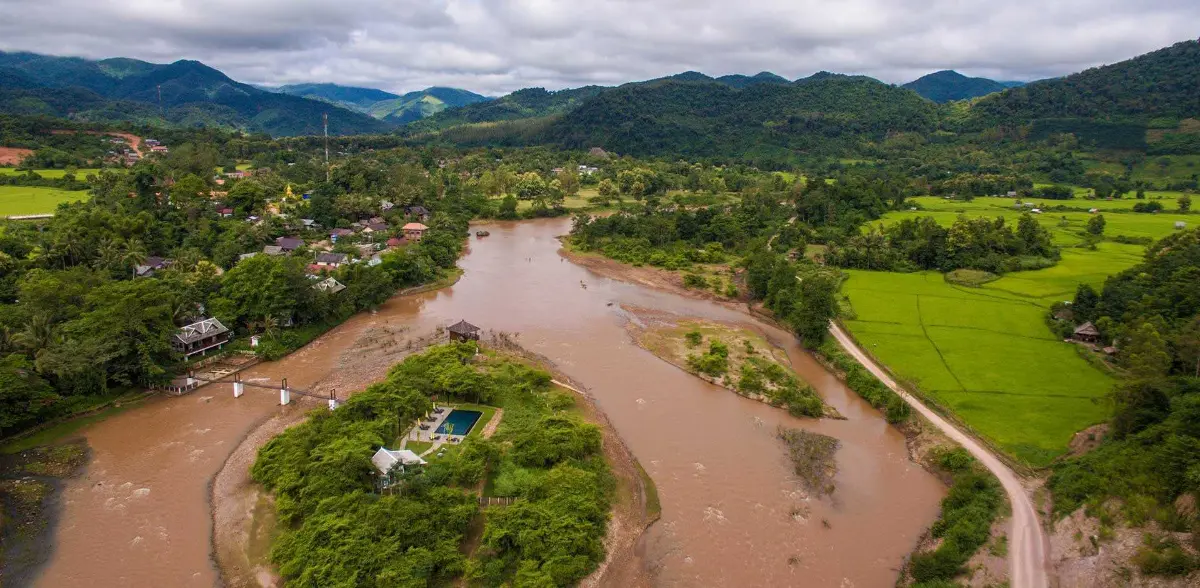
The Nam Pak River runs through the village, its water clear and cool. In the dry season, the river is low enough to wade, and the sandbars that emerge are perfect for a picnic. The river is also the lifeblood of the village — the source of water for the fields, the place where children swim, the path that connects Muang La to the wider world. A walk along the riverbank in the late afternoon, when the light is soft and the water reflects the sky, is a moment of peace.
Trekking & Village Visits
Into the Mountains
The hills around Muang La are crisscrossed with trails that lead to remote villages, waterfalls, and viewpoints. A guided trek can take you to an Akha village, where you can see traditional houses, learn about the cultivation of upland rice, and share a meal with a family. The trek is not strenuous, but it offers a window into a way of life that has changed little in generations. For those seeking a longer adventure, multi‑day treks can be arranged to explore the Nam Et-Phou Louey National Protected Area.
The Resort & Simple Stays
A Place to Rest
Muang La offers two very different ways to stay. The Muang La Resort is a luxury property with bungalows set among the forest, a restaurant, and its own pools fed by the hot springs. It is a place of comfort, with Lao hospitality at its core. For those seeking a simpler experience, guesthouses in the village offer basic accommodation, and homestays can be arranged with local families. Both options offer access to the springs, and both offer the chance to experience the quiet of the valley.
The Taste of the North
Sticky Rice & Forest Herbs
The food of Muang La is simple and satisfying. Sticky rice is the staple, eaten with grilled chicken, river fish, and forest vegetables. The laap here is made with chicken or fish, seasoned with herbs that grow in the surrounding hills. A meal in a homestay is an experience of Lao hospitality, and the food is always fresh, always local.
Muang La Tour Packages
Hot Spring Retreat (2 Days): A quiet escape to soak in the springs, explore the village, and enjoy the river.
Trekking & Village Visit (3 Days): A guided trek to an Akha village, with a homestay and a traditional meal.
Combined Itinerary: Pair Muang La with Luang Prabang or the Nam Et-Phou Louey National Protected Area for a broader exploration of northern Laos.
Private Guide: For those seeking a deeper connection to the cultures of the region, a private guide is recommended.
The Essence of Muang La — Muang La is a place that asks you to do nothing. To sit in the warm water, to watch the river flow, to listen to the sounds of the forest. It is a retreat from the rush of travel, a place where the only schedule is the rising of the sun. For those who seek a moment of stillness, Muang La offers a sanctuary that is both simple and profound.
Frequently Asked Questions
2 days is sufficient to enjoy the hot springs and explore the village. For those who want to trek to the hill tribe villages, 3–4 days is ideal.
The dry season (November–April) offers the most comfortable weather. The hot springs are warm year‑round, so any season is suitable.
By bus from Luang Prabang (5–6 hours) or from Oudomxay (2–3 hours). The road is winding but scenic. Private cars and organized tours are also available.
Light clothing, a swimsuit for the springs, a light jacket for the evenings, insect repellent, and a hat. Sturdy shoes for trekking.
Yes. The water is warm but not too hot, and the pools are shallow. Children enjoy the experience.
Yes. The Muang La Resort is the most comfortable option. There are also guesthouses in the village and homestays available.