The Củ Chi Tunnels: An Underground World
An Underground City
250 Kilometers Beneath the Earth
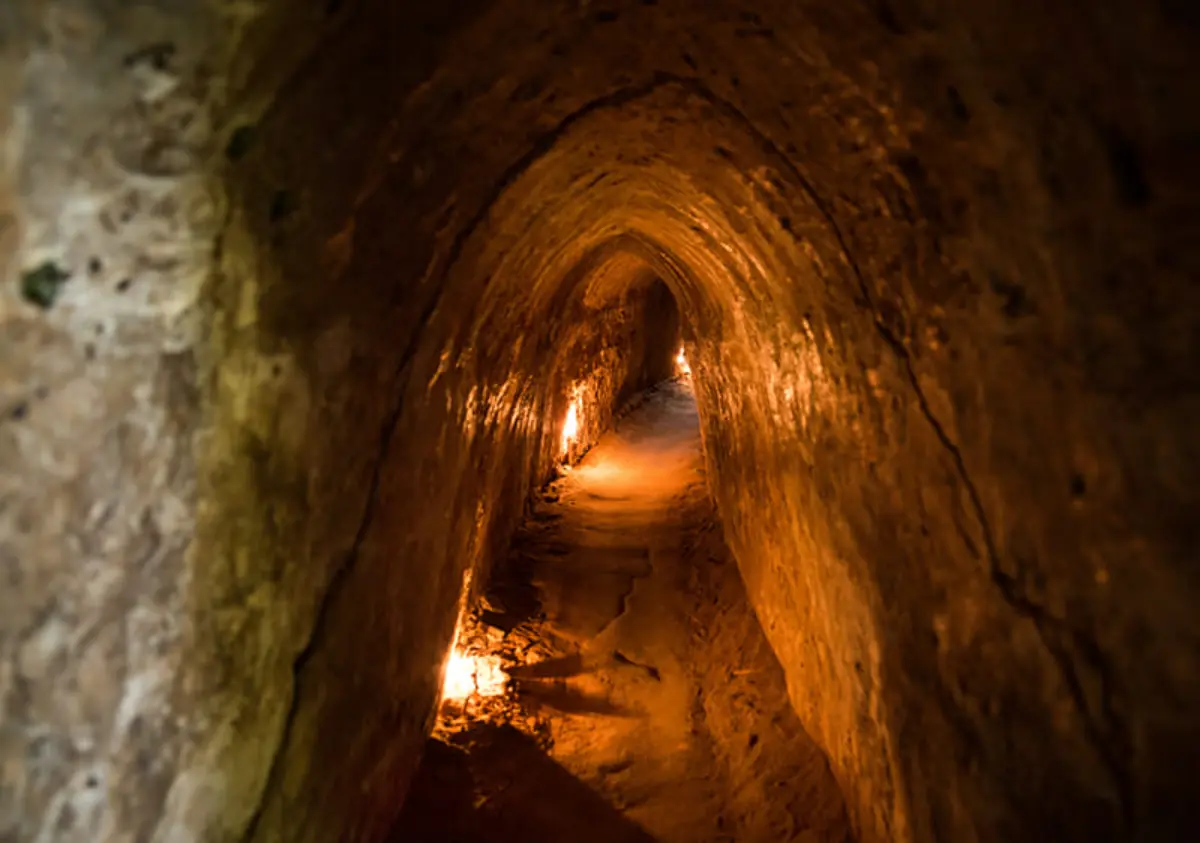
The Củ Chi Tunnels were not a single passage but a sprawling underground network that stretched from the Saigon River to the Cambodian border. Constructed over decades, the tunnels reached a total length of over 250 kilometers at their peak. They were built in layers: the upper tunnels for movement and storage, the lower levels for living and operations, and the deepest passages for escape routes. Within this underground city, there were kitchens (with cleverly vented smoke), sleeping quarters, meeting rooms, hospitals, and even theaters. The tunnels were ventilated through small, camouflaged holes that were nearly invisible from above. To navigate them required knowledge — and a small stature. The network allowed the Việt Minh and later the National Liberation Front to control a key strategic area just 40 kilometers from Saigon, despite overwhelming American firepower.
Life Underground
Survival in Darkness
Life in the tunnels was a constant struggle. The air was thin, the space cramped, the darkness unrelenting. Disease — malaria, intestinal parasites — was a constant threat. Food was scarce, often consisting of cassava and rice dipped in salt. Yet the tunnel dwellers adapted. They created ventilation systems, built wells for fresh water, and established field hospitals that treated thousands of wounded soldiers. Children were born in the tunnels; some never saw sunlight for months. The resilience of those who lived underground is perhaps the most haunting aspect of the Củ Chi story. A visit to the tunnels includes a chance to descend into a reconstructed section, to experience the narrow passages and the weight of the earth above — a reminder of the conditions that defined life for thousands.
Ben Dinh & Ben Duoc
Choosing Your Experience
The Củ Chi Tunnels are open to visitors in two main sections. Ben Dinh, closer to Saigon, is the more accessible and developed site, with widened tunnels for tourists, dioramas, and a shooting range. It is the most popular choice for day trips. Ben Duoc, further away, is less crowded and more authentic, with fewer modifications and a quieter atmosphere. Ben Duoc also features a memorial temple honoring those who fought and died in the area. Both sites offer the opportunity to crawl through tunnels, see displays of the booby traps that were used, and gain insight into the guerrilla warfare that defined the war. For those seeking a deeper, less‑touristed experience, Ben Duoc is the recommended choice.
Booby Traps & Guerrilla Warfare
Traps That Changed the War
One of the most memorable exhibits at the tunnels is the display of booby traps — ingeniously simple devices that inflicted devastating damage. The traps were made from bamboo, metal, and whatever materials were available. They were designed not to kill but to wound, as a wounded soldier would require multiple men to evacuate, draining enemy resources. The traps — swing traps, spike traps, trapdoors — were hidden beneath leaves, integrated into the terrain, and nearly invisible to the untrained eye. The ingenuity of these defenses, and the understanding of the landscape that they required, was a key factor in the guerrilla war. A visit to the tunnels includes a walk through a jungle path where these traps are demonstrated, a sobering reminder of the war’s brutality.
The Shooting Range
A Controversial Attraction
At both Ben Dinh and Ben Duoc, visitors have the option to fire weapons used during the war — AK‑47s, M16s, and sometimes heavier machine guns. The shooting range is a controversial addition to the site; for some, it is an opportunity to understand the weapons of the war. For others, it feels out of place at a historical memorial. The decision to participate is personal. The sound of gunfire echoes across the site, a reminder of the violence that once filled this jungle. Whether you choose to shoot or not, the presence of the range is itself a part of the experience — a jarring contrast to the quiet of the tunnels below.
The Taste of War & Peace
The Food That Sustained
At the tunnels, visitors are often offered a taste of tapioca (khoai mì) — the starchy root that was the staple food for tunnel dwellers. Served with a mixture of salt, sugar, and ground peanuts, it is a simple dish, but it carries a weight of meaning. It was the food that sustained fighters through years of conflict. After a visit to the tunnels, many travelers stop at one of the local restaurants in Củ Chi district for a meal of bánh xèo (crispy pancakes), lẩu (hot pot), or grilled seafood — a reminder that the region has returned to peace, and that the land that once bore the scars of war now produces food for a new generation.
Cu Chi Tunnels Tour Packages
Half‑Day Tour: A morning or afternoon visit to Ben Dinh, with a guided walk through the tunnels, a demonstration of booby traps, and time at the shooting range (optional).
Full Day Historical Tour: Combine the tunnels with the War Remnants Museum in Saigon for a comprehensive understanding of the Vietnam War.
Ben Duoc Experience: A quieter tour of the less‑visited section, including the memorial temple and a longer crawl through original tunnels.
Combined Itinerary: Pair the tunnels with a visit to the Mekong Delta or the Cao Dai Temple at Tây Ninh for a broader exploration of Southern Vietnam.
The Essence of Củ Chi — Củ Chi is not an easy place to visit. It is a site of suffering, ingenuity, and survival. To descend into the tunnels is to confront the reality of war in a way that no museum display can convey. The darkness, the confinement, the weight of the earth — these are sensations that stay with you. But Củ Chi is also a place of admiration — for the resilience of those who built this network, for the creativity that allowed them to survive, and for the peace that now covers the jungle floor. It is a journey into history that, for many visitors, becomes a journey into a deeper understanding of Vietnam itself.
Frequently Asked Questions
A half‑day tour (4–5 hours) is sufficient to visit Ben Dinh, see the exhibits, and crawl through the tunnels. A full day allows for a more relaxed pace or a visit to Ben Duoc.
Light, breathable clothing, comfortable shoes (closed‑toe recommended), and a hat. The tunnels can be warm and humid; bring water. Long pants are recommended for crawling.
The tunnels have been widened for tourists in the main sections, but they are still narrow. There are exit points every 10–15 meters. For those who are uncomfortable, the tunnels can be observed from above.
By car or organized tour — the journey takes about 1.5–2 hours. Many tours include hotel pickup. Private cars can also be arranged.
The shooting range is loud and may be distressing for young children. Parental discretion is advised. Ear protection is provided.
Ben Dinh is closer to Saigon, more developed, and busier. Ben Duoc is further, quieter, and includes a memorial temple. Ben Duoc is recommended for those seeking a less‑touristed experience.