Cà Mau: At the Edge of the Mekong
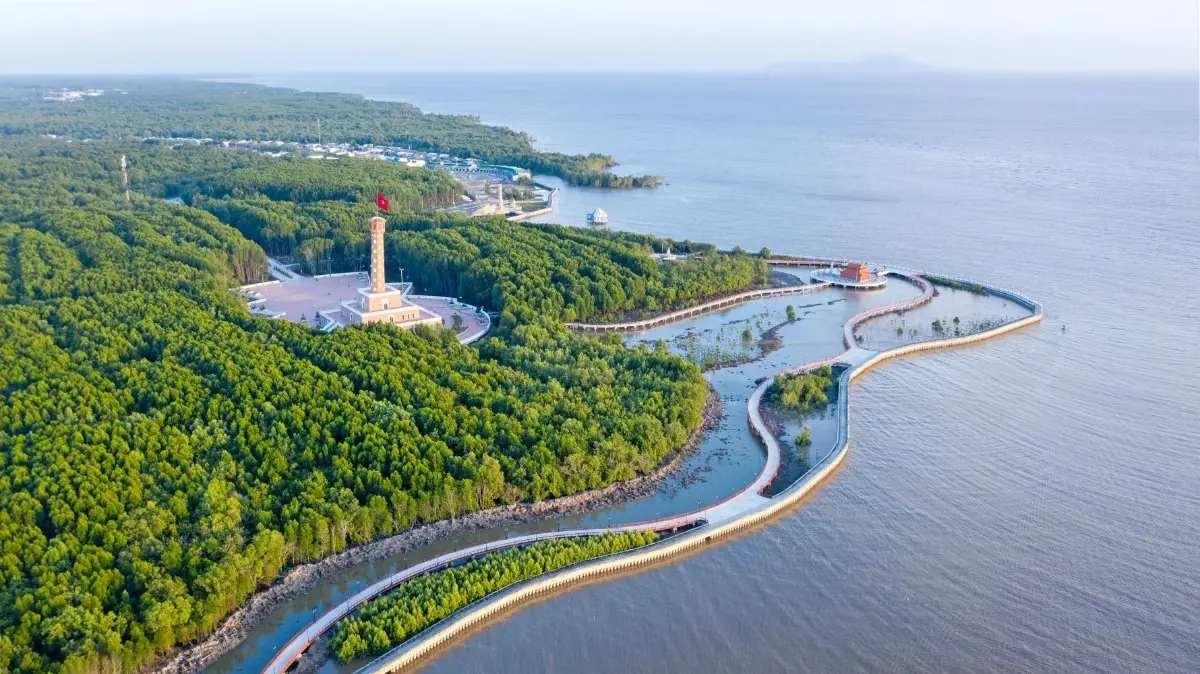
Mũi Cà Mau: The Southernmost Point
Where Vietnam Ends
Mũi Cà Mau (Cà Mau Cape) is the southernmost point of mainland Vietnam — a place of symbolic and geographic significance. Reached by boat through a network of canals and mangrove channels, the cape is marked by a towering lighthouse that stands as a sentinel at the edge of the country. The surrounding Cà Mau National Park protects a vast expanse of mangrove forest, where boardwalks and observation towers allow visitors to see the landscape from above: a green carpet of trees broken by silver waterways. At the cape itself, a marker notes the coordinates, and the sense of being at the end of a long journey is palpable. It is a pilgrimage for many Vietnamese, and a destination for travelers who want to touch the southern edge of the nation.
U Minh Hạ: The Forest of Melaleuca
A Wetland of National Importance
The U Minh Hạ National Park is one of Vietnam’s most important wetland ecosystems — a vast expanse of melaleuca forest, freshwater swamp, and peatland that is home to a remarkable diversity of wildlife. The forest is crisscrossed by canals that can be explored by boat, gliding through channels shaded by the tall melaleuca trees. The park is a sanctuary for birds — storks, herons, egrets — and for the endangered hairy‑nosed otter. The forest floor, covered in peat, is a natural carbon sink, and the ecosystem is a vital part of the delta’s environmental health. A visit to U Minh Hạ is a journey into a landscape that feels ancient and untouched.
The People of the Water
A Diverse Frontier
Cà Mau is home to a mix of ethnic Vietnamese and Khmer communities, each with their own traditions. The Khmer temples (chùa) in the province are centers of spiritual and cultural life, their architecture distinct from the Vietnamese pagodas. The Khmer Pagoda in Cà Mau City is a place of quiet beauty, with its curved roofs and ornate carvings. The communities along the coast are predominantly fishing villages, where life is tied to the sea and the daily rhythm of the tide. In these villages, you can see the traditional thúng chai (basket boats) that have been used for generations, and the stilt houses that rise above the water.
The Taste of the Southern Edge
Bánh Tằm Bì, Cá Lóc Nướng & Sủi Cảo
Bánh Tằm Bì: A dish of thick rice noodles topped with shredded pork, coconut, and a sweet‑sour dressing — a specialty of the far south.
Cá Lóc Nướng Trui: Snakehead fish grilled over straw until the skin is blackened and the flesh is tender. Served with rice paper, fresh herbs, and a tangy dipping sauce.
Sủi Cảo (Wonton Soup): A Chinese‑influenced dish that is a breakfast staple in Cà Mau — delicate wontons in a clear broth, often served with noodles.
Mắm Cà Mau: The province is known for its fermented fish products — from mắm cá linh to mắm tôm. These are acquired tastes, but they are essential to the local palate.
Waterways of the Delta
The Mekong’s Final Channels
The Cà Mau peninsula is defined by its waterways. The main channel, the Quản Lộ – Phụng Hiệp canal, runs from the province’s interior to the coast, lined with stilt houses and markets. Smaller canals branch off into the mangrove forests, offering quiet passage through the heart of the delta. A boat tour through these channels is the best way to experience the landscape — the dense green of the mangroves, the occasional fishing boat, the sense of being in a world where water is the primary means of connection. The canals also lead to the Cà Mau Floating Market, smaller than its counterparts in Cần Thơ but no less authentic.
Ca Mau Tour Packages
Cà Mau Cape & National Park: A full‑day journey to the southernmost point, with a boat tour through the mangrove forest and a climb up the lighthouse.
U Minh Hạ Discovery: Explore the melaleuca forest by boat, with birdwatching and a visit to a local bee‑keeping farm.
Mekong Delta Extended: Combine Cà Mau with Cần Thơ, Bạc Liêu, and Sóc Trăng for a comprehensive journey through the southern delta.
Cultural & Culinary Tour: Visit the Khmer pagoda, the floating market, and sample the province’s distinctive cuisine.
The Essence of Cà Mau — Cà Mau is a province of edges — the edge of the land, the edge of the river, the edge of the nation. It is a place where the water is never far, where the mangroves protect the coast, and where life is lived in accommodation to the sea. For those who make the journey, it offers a sense of having reached a frontier — a place that is both the end of one journey and the beginning of another. It is a destination that rewards the traveler with its quiet beauty, its rich traditions, and its unshakeable sense of being at the very edge of Vietnam.
Frequently Asked Questions
A minimum of 2 days allows you to visit Cà Mau Cape and U Minh Hạ National Park. For a more relaxed pace, 3 days is ideal, with time to explore the city and its canals.
The dry season (December–April) offers the most comfortable conditions for boat tours and outdoor exploration. The mangrove forests are accessible year‑round, but some areas may be flooded during the rainy season.
By air to Cà Mau Airport (CAH) from Ho Chi Minh City (1 hour), by bus from Saigon or Cần Thơ (6–8 hours), or by private car. The journey by road is long but passes through the heart of the delta.
Light clothing, a hat, sunscreen, insect repellent, and comfortable shoes. For boat tours, a rain jacket is useful. The sun is strong, and the air is humid.
Bánh tằm bì, cá lóc nướng trui (grilled snakehead fish), and sủi cảo (wonton soup). For the adventurous, the fermented fish products (mắm) are a local specialty.
Yes. The cape is accessible by road and boat, with a paved road leading to the national park entrance, followed by a boat ride to the cape itself. The journey is a half‑day trip from Cà Mau City.