Châu Đốc: Where Four Cultures Meet the Mountain
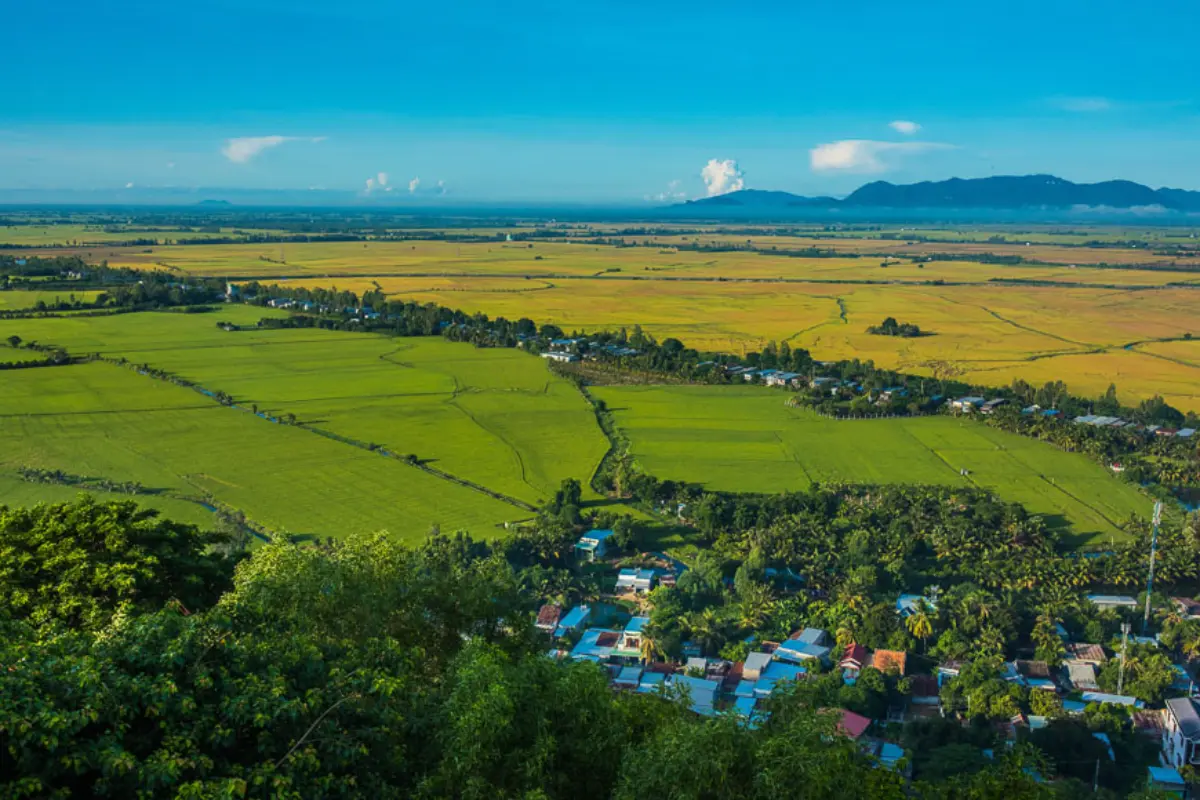
Sam Mountain: The Holy Peak
A Mountain of Temples and Legend
Sam Mountain rises 230 meters above the flat delta — a solitary limestone outcrop that has been a site of pilgrimage for centuries. The mountain is dotted with pagodas, temples, and shrines, each with its own story. A cable car offers panoramic views of the surrounding countryside — rice fields stretching to the horizon, the Mekong River snaking toward Cambodia. But the true experience of Sam Mountain is on foot, climbing the stone steps that lead from one sacred site to another, the air heavy with incense, the sound of chanting echoing off the limestone walls. At the summit, the view is reward enough; in the temples below, you’ll witness the deep faith that draws thousands of pilgrims here each year.
The Lady of the Realm
Vietnam’s Most Revered Goddess
At the base of Sam Mountain, the Bà Chúa Xứ Temple is one of Vietnam’s most important pilgrimage sites. Dedicated to the Lady of the Realm — a goddess of prosperity and protection — the temple draws hundreds of thousands of visitors each year, particularly during the annual festival in April and May. The statue of Bà Chúa Xứ, adorned in flowing robes, is the focus of devotion; pilgrims offer flowers, fruit, and prayers for good fortune. The architecture is a blend of Vietnamese, Khmer, and Chinese influences — a reflection of the region’s multicultural heritage. Whether you come as a pilgrim or an observer, the energy of the temple is unmistakable.
Temples of the Mountain
Indian, Vietnamese & Khmer Architecture
Tây An Pagoda, on the slopes of Sam Mountain, is a striking blend of Indian and Vietnamese architectural styles — its facade reminiscent of a Hindu temple, its interior a traditional Buddhist sanctuary. Built in 1847, it is recognized as a national heritage site, and its seven‑story tower offers panoramic views of the surrounding countryside. Hang Pagoda (Cave Pagoda) is built into a natural cave, its entrance framed by towering trees, its interior cool and shadowed. Both are active places of worship, and a visit here offers a quieter, more contemplative experience than the bustling Bà Chúa Xứ Temple.
Trà Sư: The Flooded Forest
A Sanctuary of Birds and Water
Twenty kilometers from Châu Đốc, the Trà Sư Cajuput Forest is a protected wetland of extraordinary beauty. During the rainy season, the forest floods, transforming into a vast expanse of water punctuated by cajuput trees. A traditional wooden boat glides through the narrow channels, the only sounds the splash of oars and the calls of birds. Over 140 species of birds inhabit the forest — herons, storks, egrets — and at dawn or dusk, the sky is alive with their flight. A viewing platform rises above the canopy, offering a perspective on this watery landscape that feels like a secret world. Trà Sư is the Mekong Delta at its most wild — a reminder that this region is not only cultivated but also deeply, abundantly natural.
Life on the Water
Houses, Temples, and Markets on the River
The floating village of Châu Đốc is a community built entirely on the water. Houseboats line the canals, their decks a network of laundry lines, fish cages, and children playing. The village includes a floating market — smaller and less touristed than Cái Răng, but no less authentic. Here, you can buy fresh snakehead fish, tropical fruit, and breakfast from boats that specialize in hủ tiếu (noodle soup). The market is busiest in the early morning, when the sun is low and the water is calm. A boat tour through the village offers a glimpse into a way of life that has sustained the delta for generations.
The Taste of the Frontier
Bún Cá Lóc, Bánh Bò Thốt Nốt & Cham Influences
Bún Cá Lóc (Snakehead Fish Noodle Soup): The signature dish of Châu Đốc — a savory broth with freshwater snakehead fish, fresh herbs, and rice noodles. The fish is caught in the Mekong, and the broth is infused with the flavors of the delta.
Bánh Bò Thốt Nốt (Palm Sugar Honeycomb Cake): A delicate dessert made with rice flour, coconut milk, and palm sugar from the thốt nốt (sugar palm) trees that grow in the region. The cake is soft, fragrant, and not too sweet — a perfect accompaniment to Vietnamese coffee.
Cham Cuisine: The Cham community in Châu Đốc offers distinctive dishes — curries, rice dishes, and sweets — that reflect their Malay‑influenced culinary heritage. A visit to the Cham village near the floating market is an opportunity to taste these traditions.
The Rhythm of the Delta
When to Visit the Borderlands
Dry Season (December–May): The most comfortable time to visit — sunny skies, lower humidity, and easy access to all sites. The Bà Chúa Xứ Festival (April–May) draws crowds but offers a unique cultural experience.
Wet Season (June–November): The delta is at its most lush. Trà Sư Forest floods, making boat tours particularly atmospheric. While afternoon rains are common, they rarely disrupt travel for long. This is the season for photographers, when the landscape is saturated with color.
Chau Doc Tour Packages
Sam Mountain Pilgrimage: A half‑day exploration of Bà Chúa Xứ Temple, Tây An Pagoda, and the summit views.
Trà Sư & Floating Village: A full day on the water — a boat tour through the cajuput forest and the floating village, with a stop at the floating market.
Mekong Delta Multi‑Day: Combine Châu Đốc with Cần Thơ, Cái Bè, and a border crossing to Cambodia.
Cultural Discovery: Focus on the region’s ethnic diversity — visits to Cham, Khmer, and Hoa communities, with insights into their traditions.
The Essence of Châu Đốc — Châu Đốc is a place where the sacred and the everyday are woven together. Here, a mountain becomes a pilgrimage, a forest becomes a sanctuary, a river becomes a home. It is a city of contrasts — the quiet of a pagoda and the bustle of a market, the solidity of Sam Mountain and the fluidity of the floating village. To visit Châu Đốc is to understand that the Mekong Delta is not a single story but many — and that at its edges, where cultures meet and the river flows toward the sea, its stories are most diverse.
Frequently Asked Questions
A minimum of 2 days allows you to explore Sam Mountain, Trà Sư Forest, and the floating village. For a more relaxed pace or to include a border crossing to Cambodia, 3 days is ideal.
The dry season (December–May) offers the most comfortable conditions. The Bà Chúa Xứ Festival (April–May) is a unique cultural experience but draws large crowds. The wet season (June–November) is ideal for Trà Sư Forest, which is at its most lush and flooded.
By private car from Ho Chi Minh City (5–6 hours), by bus to An Giang, or by boat from Cần Thơ or Cambodia. The nearest airport is Cần Thơ International Airport (95 km away).
Held annually in April–May, this is one of Vietnam’s largest religious festivals, drawing pilgrims from across the country to honor the Lady of the Realm. The temple is crowded but the atmosphere is vibrant and deeply spiritual.
Light, breathable clothing, a hat, sunscreen, insect repellent, and a rain jacket (especially in wet season). For temple visits, modest dress is appropriate; a scarf to cover shoulders is useful.
Bún cá lóc (snakehead fish noodle soup), bánh bò thốt nốt (palm sugar cake), and fresh seafood from the floating market. For the adventurous, try the Cham community’s curries and sweets.