Yên Bái: Terraces in the Clouds
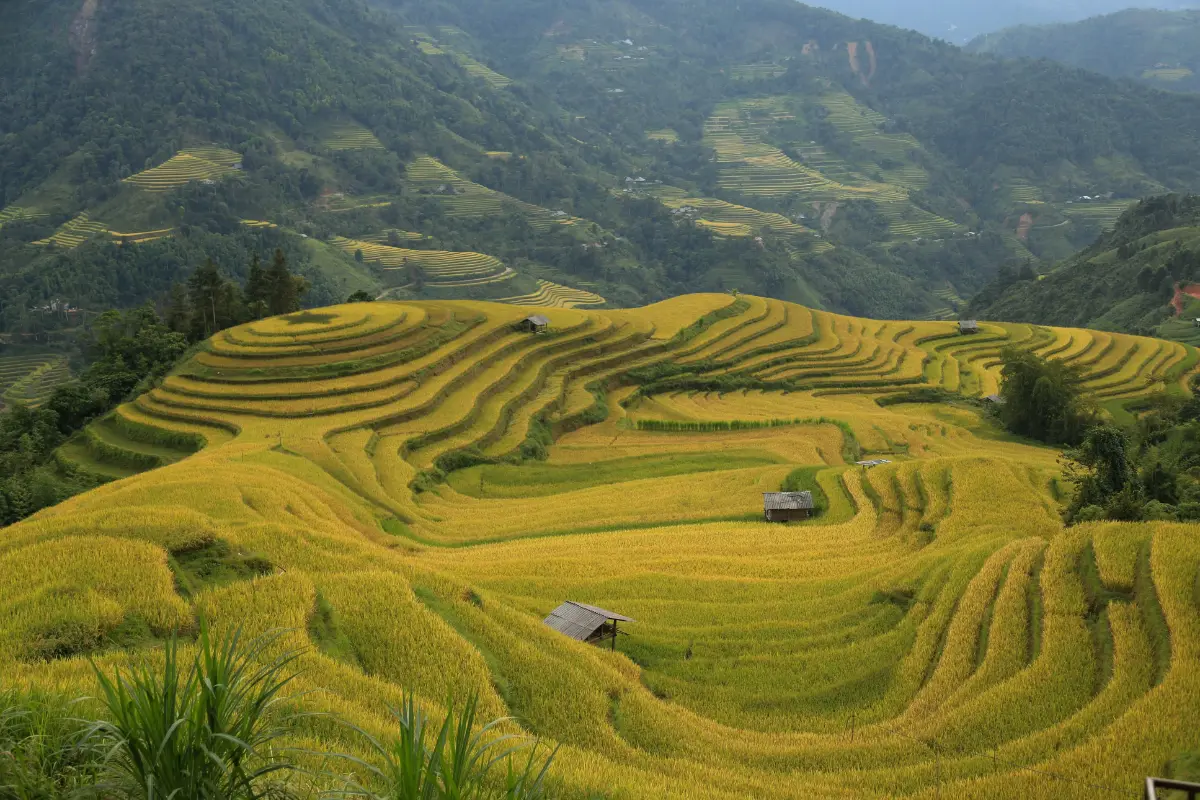
The Golden Stairway: Mù Cang Chải
Rice Fields That Climb to the Sky
The terraced rice fields of Mù Cang Chải are among Vietnam’s most iconic landscapes. Carved into the mountains over centuries by the H’Mông people, these fields are a testament to human ingenuity — each terrace a narrow shelf of green or gold, following the contour of the land. The fields are at their most spectacular during the water‑flooding season (May–June), when they mirror the sky, and during harvest (September–October), when they transform into cascades of gold. The district has been recognized by UNESCO for its cultural and natural significance, but its true power lies in the quiet awe it inspires: standing at the edge of a terrace, looking out over a mountain sculpted by generations, you understand that this is not just agriculture — it is art.
Khau Phạ: The Pass Above the Clouds
One of Vietnam’s Four Great Passes
Khau Phạ Pass, stretching 20 kilometers across the mountains, is one of the four great passes of northern Vietnam. Its name means “sky horn” in the Thái language — a reference to the road’s dramatic ascent. From the summit, at 1,500 meters, the view is breathtaking: terraced fields cascade down the slopes below, and in the distance, peaks disappear into clouds. The pass is a destination in itself, with vantage points that reward the journey. For photographers, the golden hour — sunrise or sunset — transforms the terraces into a landscape of light and shadow that is unforgettable.
Chasing the Clouds: Trạm Tấu
Walking Above the Sea of Mist
The communes of Tà Xùa and Tà Chì Nhù in Trạm Tấu District have become legendary among Vietnam’s adventure travelers. Here, at elevations over 2,800 meters, the peaks are often submerged in a “sea of clouds” — a phenomenon that draws photographers and trekkers from across the country. The trek to the summit of Tà Xùa involves a steep, challenging climb, but the reward is a sunrise that seems to take place above the world itself. For those who prefer a less strenuous experience, the roads that wind through the area offer panoramic views of the cloudscape, particularly in the early morning. December is the prime “cloud hunting” season, when the weather is cool and the skies are clear.
Thác Bà: Halong Bay in the Mountains
A Reservoir of Islands
Thác Bà Lake was created by the construction of one of Vietnam’s first hydroelectric plants in the 1970s. Today, it is a sprawling reservoir dotted with hundreds of small islands, their forested peaks rising from emerald water. The lake has earned the nickname “Hạ Long Bay in the mountains” — an apt description for a landscape of limestone outcrops and calm waterways. A boat tour takes you through the islands, past floating villages, and to the hydroelectric plant itself, where guided tours explain the engineering that transformed this region. For a slower pace, the lake offers kayaking, fishing, and homestays on its shores — a chance to experience the quiet beauty of Yên Bái’s inland waters.
The Tea Mountain: Suối Giàng
Shan Tuyết: The Snowy Tea of the Highlands
At 1,300 meters above sea level, the village of Suối Giàng is home to ancient tea forests. The tea trees here — some over 300 years old — produce Shan Tuyết (“snowy mountain”) tea, prized for its delicate, naturally sweet flavor. The name comes from the white fuzz that covers the young buds, giving them the appearance of being dusted with snow. Visitors can walk through the tea gardens, learn the traditional harvest and processing methods from the H’Mông villagers, and sit with a cup of tea that tastes of the mountain mist. The village is also the starting point for treks into the surrounding mountains, and on clear days, offers views across the Muong Lo Valley.
Muong Lo: The Valley of Rice
The Granary of the Northwest
Stretching across Nghĩa Lộ District, the Muong Lo Valley is one of the largest rice‑producing areas in the northern highlands. Unlike the steep terraces of Mù Cang Chải, the valley is broad and flat, framed by mountains. The Thái people who have lived here for centuries cultivate the valley in a patchwork of rice paddies that turn gold at harvest. The valley is also the site of the annual Muong Lo Culture and Tourism Festival, where visitors can experience traditional Thái dances, taste local specialties, and witness the communal spirit that defines life in these mountains.
The Taste of the Northwest
Buffalo Meat, Black Sticky Rice & Forest Herbs
Thịt Trâu Gác Bếp: A signature of Suối Giàng — buffalo meat smoked over an open fire, seasoned with forest herbs. The result is tender, aromatic, and deeply savory — best enjoyed on a cool evening with a glass of corn wine.
Bánh Chưng Đen (Black Sticky Rice Cake): A specialty of the Muong Lo Valley, made with Tú Lệ sticky rice and wrapped in dong leaves. The black color comes from a local herb, and the flavor is richer than its northern counterpart.
Gà Nướng Mắc Mật: Chicken grilled with “mắc mật” leaves — a native spice that imparts a unique, citrusy fragrance. Served with chẩm chéo, a dipping sauce of herbs, chili, and salt that is essential to the cuisine of the northwest.
Tú Lệ Sticky Rice: A prized variety grown in the highlands, known for its fragrant, chewy texture.
Yen Bai Tour Packages
Mu Cang Chai Discovery: A 2‑day journey to the terraced fields — Khau Phạ Pass, La Pán Tẩn, and a H’Mông homestay.
Cloud Hunting in Tram Tau: Trek to Tà Xùa or Tà Chì Nhù for sunrise above the clouds (3–4 days).
Thac Ba & Suoi Giang: Combine the tranquility of Thác Bà Lake with the tea hills of Suối Giàng.
Northwest Loop: Combine Yên Bái with Mộc Châu, Sơn La, and Điện Biên for a comprehensive journey through Vietnam’s northwestern highlands.
The Essence of Yên Bái — Yên Bái is a province of quiet revelations. It is the moment you round a corner on Khau Phạ Pass and see terraces cascading down a mountain; the first sip of Shan Tuyết tea on a misty morning; the sight of a valley turning gold at harvest. It does not announce itself with the fame of Hạ Long Bay or the energy of Saigon, but for those who make the journey, it offers something equally valuable: a landscape that has been shaped by human hands for centuries, and a culture that welcomes visitors with the simplicity of mountain hospitality.
Frequently Asked Questions
A minimum of 3 days allows you to explore Mù Cang Chải and Khau Phạ Pass, with time for a homestay. For cloud hunting in Trạm Tấu or a boat tour on Thác Bà, add 1–2 days.
September–October for golden rice terraces; May–June for the water‑flooding season (mirrored fields); December–February for cloud hunting in Trạm Tấu. Spring (February–April) brings peach and plum blossoms.
By private car (2–3 hours) or bus (3–4 hours) to Yên Bái City, then onward to Mù Cang Chải or Trạm Tấu. For the terraces, a private vehicle is recommended due to winding mountain roads.
The trek to the Tà Xùa peak is challenging — steep, with uneven terrain. It is suitable for experienced trekkers. Less demanding routes offer cloud views without the full climb.
Layered clothing (mountain weather changes quickly), sturdy shoes for trekking, a rain jacket, insect repellent, and a camera. For cloud hunting, a warm jacket is essential (temperatures near freezing at dawn).
Thịt trâu gác bếp (smoked buffalo meat), black bánh chưng, chicken grilled with mắc mật leaves, and Tú Lệ sticky rice. Don’t miss a cup of Shan Tuyết tea in Suối Giàng.