Cao Bằng: Waterfalls, History & Stone Villages
The Waterfall on the Border
Vietnam’s Most Majestic Cascade
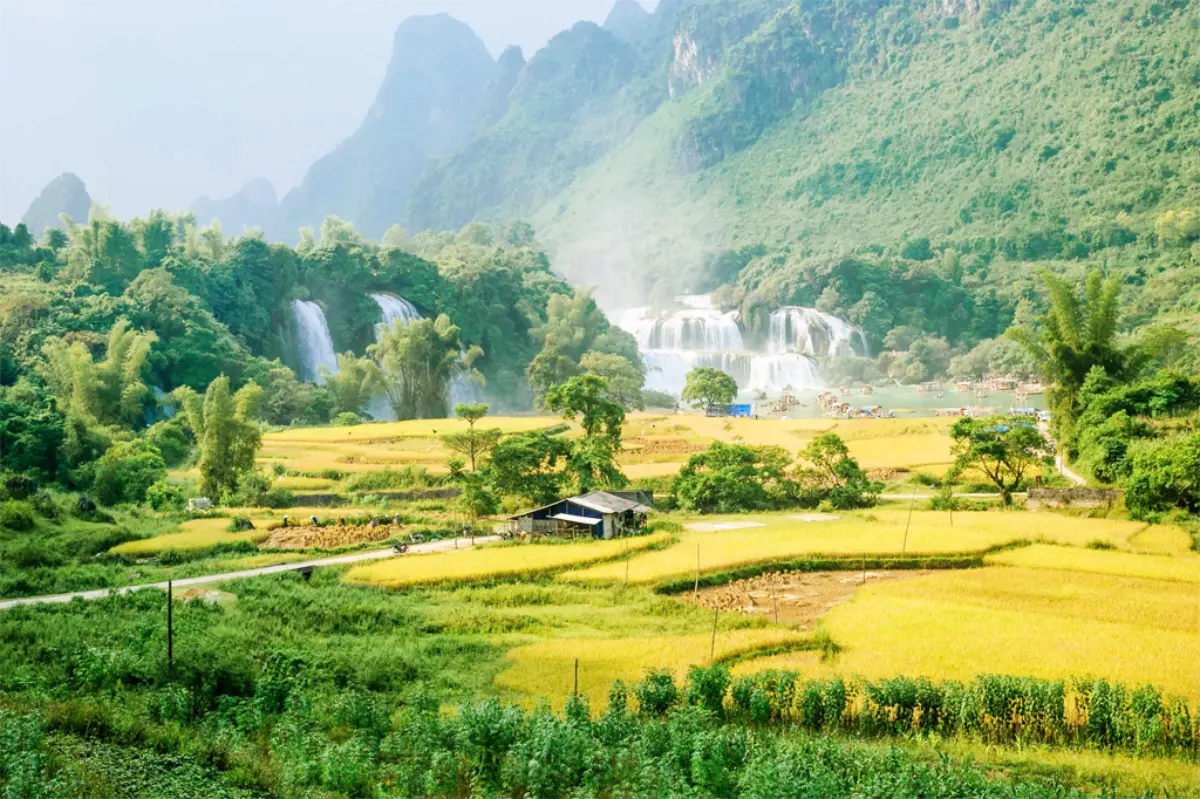
Bản Giốc Waterfall is the largest waterfall in Vietnam, and one of the most beautiful in Southeast Asia. Straddling the border with China, its tiers of limestone steps send curtains of white water into a turquoise pool below. The falls are fed by the Quây Sơn River, which emerges from the mountains and, at this point, divides two nations. To truly appreciate the scale, visitors hire a bamboo raft that drifts across the pool, bringing you close enough to feel the spray. The setting is spectacular: limestone karsts rising on either side, bamboo groves framing the view, and the mist rising from the falls creating an ever‑changing veil of light. It is a place that demands time — to sit, to watch, to absorb the elemental power of water moving over stone.
The Revolutionary Sanctuary
The Cave Where a Nation Was Forged
In 1941, after 30 years of exile, Hồ Chí Minh returned to Vietnam and established his base at Pác Bó, a remote mountain area in Cao Bằng. Here, in a cave called Cốc Bó, he lived and worked, writing the documents that would inspire the August Revolution. The site today is a pilgrimage for Vietnamese visitors, but for all travelers, it offers a profound connection to modern Vietnamese history. You can see the cave where he slept, the stone table where he worked, and Lê Nin Stream — named by Hồ himself — flowing beside it. The landscape is beautiful, with limestone peaks and clear water, but it is the sense of history — of a nation’s independence taking shape in this quiet corner — that lingers.
The Stone Village of Khuổi Ky
Houses of Stone, Centuries of Memory
Three kilometers from Bản Giốc, Khuổi Ky Ancient Stone Village preserves a way of building that has all but disappeared. The stilt houses here are made not of wood but of stone — slabs of local rock stacked without mortar, topped with tiled roofs. These structures, some dating from the Mạc Dynasty (1594–1677), have sheltered the Tày people for generations. Walking through the village, you’ll see the craftsmanship that has kept these houses standing for centuries — the careful fitting of stone, the wooden interior frames, the cool shelter they provide from the mountain heat. The village remains a living community, and visitors are welcomed with the quiet hospitality of the Tày.
Mã Phục: The Pass of the Reclining Horse
A Road Through the Limestone
The Mã Phục Pass, on the road between Cao Bằng City and Bản Giốc, is a spectacle in its own right. Rising to 700 meters, the pass winds through a landscape of karst peaks and deep valleys. Its name — “the horse lies down” — comes from the way the road appears to squeeze between the mountains, as though a horse has knelt to let travelers pass. The pass is part of the Cao Bằng Global Geopark, a UNESCO‑recognized landscape of geological significance. Stop at the summit for views that stretch across the valley below — a reminder that in this province, the journey itself is as rewarding as the destination.
Phúc Sen: The Village of Hammers
Forging Tradition
For generations, the Nùng people of Phúc Sen Village have practiced the art of blacksmithing. The village is known across northern Vietnam for its knives, farming tools, and ceremonial objects — each piece forged by hand, the rhythm of hammers echoing through the valley. Visiting Phúc Sen is to witness a craft that has sustained this community for centuries. You can watch the process — the heating of steel, the shaping of blades, the quenching in water — and learn how the knowledge has been passed down through families. It is a reminder that in Cao Bằng, tradition is not preserved in museums but practiced in daily life.
The Taste of the Frontier
Sour Phở, Grilled Fish & Chestnuts
Phở Chua (Sour Pho): Cao Bằng’s signature dish — a tangy, cold noodle salad with herbs, peanuts, and a distinctive sweet‑sour dressing. Unlike its famous northern cousin, this is a dish for warm days, refreshing and complex.
Bản Giốc Grilled Fish: Fresh from the river below the waterfall, stuffed with dill, chili, and shallots, wrapped in banana leaves, and grilled over charcoal. The aroma alone will draw you in.
Chestnuts (Hạt Dẻ): The hills around Trùng Khánh produce chestnuts of exceptional sweetness. Roasted, boiled, or ground into sticky rice cakes, they are a seasonal delicacy.
Smoked Meat: Pork smoked over charcoal and sugarcane, marinated with honey and forest herbs — a specialty that keeps well and makes a perfect gift.
The Rhythm of the Seasons
When to Visit the Northeast
Autumn (September–October): The most celebrated time. The rice terraces turn gold, the weather is mild, and the Bản Giốc falls are at their most spectacular. Clear skies and comfortable temperatures make this ideal for exploring.
Spring (February–April): The hills burst with peach and plum blossoms. The weather is cool, with occasional mist that lends the landscape a poetic quality.
Summer (May–August): Lush and green, but with frequent rain. The falls are at their fullest, and the countryside is vibrant. Be prepared for showers and possible storms.
Winter (November–January): Cold and often foggy, with temperatures dropping near freezing. A quiet time to visit, when the landscapes take on a stark, dramatic beauty.
Cao Bang Tour Packages
Bản Giốc & Pác Bó (2 Days): The essential Cao Bằng journey — the waterfall, the revolutionary site, and the stone village of Khuổi Ky.
Northeast Loop (4–5 Days): Combine Cao Bằng with Hà Giang and Ba Bể Lake for a comprehensive exploration of Vietnam’s northeastern highlands.
Cultural Discovery: Focus on the region’s ethnic heritage — Phúc Sen blacksmithing, traditional villages, and local markets.
Private Tour: For those who prefer comfort, private vehicles with experienced drivers navigate the mountain roads, allowing you to focus on the landscapes.
The Essence of Cao Bằng — Cao Bằng is a destination for those who seek authenticity over ease. The roads are winding, the distances longer than they appear on maps, the weather unpredictable. But for those who make the journey, the rewards are profound: a waterfall that rivals any in the world, a village of stone that has stood for centuries, a landscape that feels as though it has been left untouched by time. It is Vietnam at its most remote — and, in that remoteness, its most memorable.
Frequently Asked Questions
A minimum of 2 days allows you to visit Bản Giốc Waterfall, Pác Bó, and Khuổi Ky village. For a more relaxed pace, including Phúc Sen and Mã Phục Pass, 3 days is ideal.
September–October offers golden rice fields, mild weather, and the waterfall at its most spectacular. February–April brings spring blossoms and pleasant temperatures for trekking.
By bus from Hanoi (6–7 hours) to Cao Bằng City, then by private car or motorbike to the sites. For the most flexibility, a private car with a driver is recommended.
The waterfall is accessible only from the Vietnamese side for most visitors. Crossing the border requires appropriate visas and is not part of standard tours.
Layered clothing (mountain weather changes quickly), sturdy shoes for walking, a rain jacket, insect repellent, and a sense of flexibility. In winter, warm layers are essential.
Phở chua (sour pho), Bản Giốc grilled fish, and roasted chestnuts (in season). For gifts, smoked meat and local chestnuts are excellent choices.